8 min read
4.4
· 95 Amazon ratingsShare This Review
Roman History: A Captivating Guide to Ancient Rome by Captivating History Review: Broad, Accessible Survey for Curious Beginners
Captivating History's Roman History: A Captivating Guide to Ancient Rome, Including the Roman Republic, the Roman Empire and the Byzantium is a three-part popular history guide covering Roman civilisation from its mythological foundations through the Republic and Empire to the final days of the Byzantine state. Published in 2018 via CreateSpace Independent Publishing Platform as part of the Exploring Rome's Past series, it is designed to give general readers a compact overview of more than a thousand years of history without the density of academic textbooks. The breadth of its scope — from Romulus and Remus to Constantine Dragases at the fall of Constantinople — is its defining feature, and that same breadth naturally limits how deep it can go on any single period or figure.
LuvemBooks Verdict
Best for
Curious general readers — students, history enthusiasts, or complete newcomers — who want a single, coherent narrative connecting the Roman Republic, the Roman Empire, and Byzantium without wading through academic textbooks.
Worth it if
You want an accessible, chronologically structured entry point that traces more than a millennium of Roman and Byzantine history in one compact volume, and you're happy to follow it up with deeper specialist reading.
Skip if
You already have a working knowledge of Roman history, or you're looking for primary-source engagement, footnoted citations, and historiographical debate — this introductory format won't satisfy those needs.
What readers & critics say
Reader commentary retrieved from bookfever11.com describes the Captivating History approach as delivering "a quick and accurate read," while also conceding the book "could've been a little more specific and detailed" — a trade-off that fairly reflects the popular-history format's inherent limitations. No dedicated critical reviews of this specific combined volume were found among the retrieved sources.
Sources: bookfever11.comAsk LuvemBooks
Was this helpful?
- Is it worth reading?
- For readers new to Roman and Byzantine history, this guide offers genuine value: it connects the Republic, the Empire, and Byzantium as a single continuous narrative — a perspective that individual specialist volumes rarely provide. Reader commentary describes it as 'a quick and accurate read,' and the clear chapter structure makes navigating more than a millennium of history manageable. The honest caveat is depth: the same source acknowledges it 'could've been a little more specific and detailed,' and the popular-history format cannot accommodate the political, theological, or military complexity each era warrants on its own. Those already versed in Roman history, or seeking scholarly rigour, will find it thin — but as an orientation or a connective thread before tackling longer works, it earns its place.
- Similar books
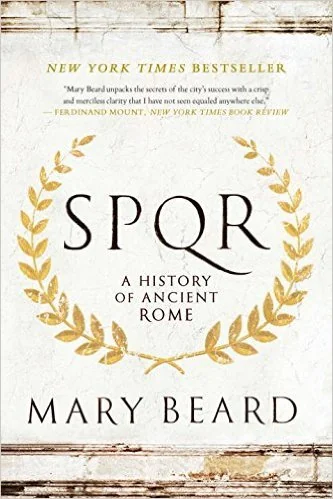
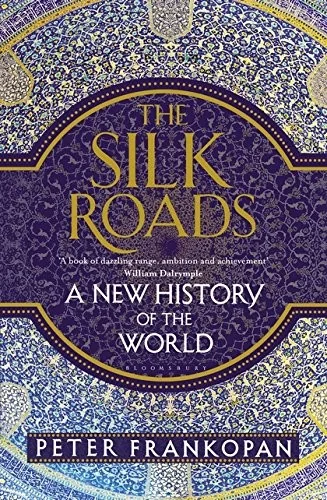
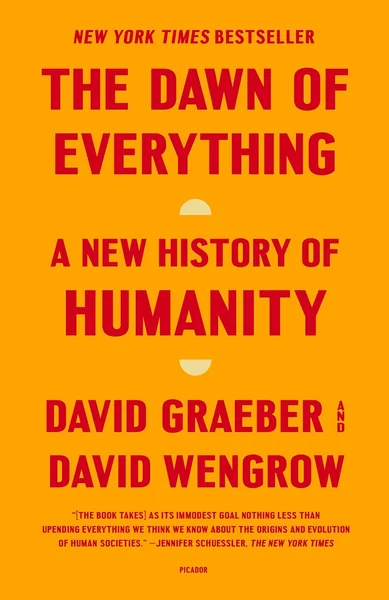
- Readers who enjoy this kind of accessible sweep through ancient history will find strong company in the curated titles below. Mary Beard's SPQR: A History of Ancient Rome is the obvious next step for those wanting more depth and scholarly authority on Rome specifically. For a similarly ambitious wide-angle view of world history, Peter Frankopan's The Silk Roads: A New History of the World and Yuval Noah Harari's Sapiens: A Brief History of Humankind both share the popular-history instinct for grand chronological arcs. Jared Diamond's Guns, Germs, and Steel: The Fates of Human Societies takes a more analytical approach to civilisational rise and fall, while David Graeber's The Dawn of Everything: A New History of Humanity challenges conventional narratives about early societies in a way that pairs well with a foundational text like this one.
- Who should read this?
- This guide is squarely aimed at general readers encountering Roman and Byzantine history for the first time — students wanting a structured overview, history enthusiasts curious about how the Republic, the Empire, and Byzantium connect as a continuous story, or anyone who finds standard textbooks discouraging. Its three-part architecture also makes it useful as a companion to other Captivating History series titles, providing a unified narrative spine that individual volumes on the Roman Republic, the Roman Empire, or Byzantium alone cannot supply. Readers comfortable with detailed scholarly history, or those seeking footnoted sources and engagement with primary evidence, would be better served by specialist works such as Mary Beard's SPQR.
- About Captivating History
- Captivating History is an author name associated with a wide range of history-focused books, including titles on subjects such as Charlemagne and the Romanovs, as confirmed by its Waterstones presence. The Captivating History website lists Matt Clayton as an associated author, though no further verified biographical details are available from sourced references. Beyond that association, little verifiable information about the people behind the Captivating History imprint has been confirmed in accessible sources.
- What are the main themes?
- The book's central organising theme is continuity: it traces Roman civilisation not as a story that ends with the fall of the Western Empire in 476 CE, but as one that continues through the Byzantine Eastern Roman Empire until Constantinople's fall in 1453. Within that arc, it touches on the tension between myth and documented history in Rome's foundations, the political dynamics of the late Republic under figures such as Pompeius, Crassus, and Caesar, the consolidation of imperial power under Octavian, and the military and theological dimensions of Byzantine rule through figures including Justinian, Belisarius, and Constantine Dragases. The format prioritises chronological narrative over analytical argument, so themes are illustrated through events and personalities rather than debated at length.
- What's the reading level?
- The book is written for general adult readers with no prior knowledge of Roman or Byzantine history, and its prose is deliberately accessible rather than academic. The Captivating History series is built on the premise that major historical subjects should be approachable without specialist vocabulary or prior reading, making this suitable for confident secondary-school readers upwards as well as adult general readers. It does not require engagement with footnotes, primary sources, or historiographical terminology.
Summarize this book
Follow up
Synthesized from verified book data & published reviews · How we review
Press Enter to ask. Answers come from our editorial Q&A — start typing to see related questions.
Age & Reading Level
Recommended age
Adult
Reading level
Adult
who it suits
Skip if you want scholarly depth, primary-source engagement, or historiographical debate on Roman or Byzantine history.
Our Review
What the Book Actually Contains

Scope, Ambition, and Place in the Genre
Strengths: Coverage and Narrative Drive
Limitations: Depth and Specificity
Who This Book Is For
Sources & Further Reading
The key facts and claims in this review are grounded in the retrieved, verified sources listed below.
- Cited in this review
- 1
- Further reading
- 2
Books like Roman History
Curated picks for readers who enjoyed Roman History, with our reasoning for each match.
If you liked Roman History