Skip to content
Reviewed

Read Time

7 min read

Reader rating
4.6 · 9,808 Amazon ratings, as of Nov 2026
reader ratings, not a LuvemBooks score
Curated & edited by

LuvemBooks Editorial

How we create our reviews →
Share This Review
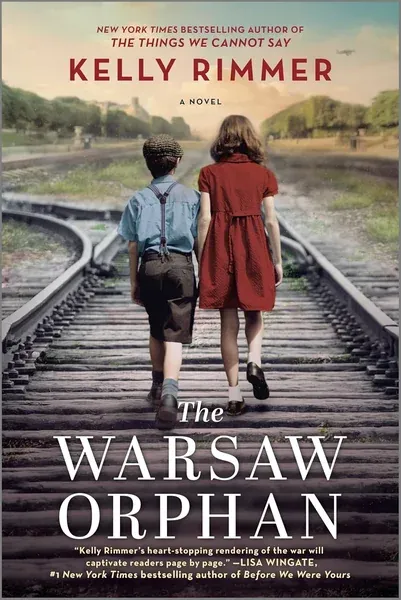
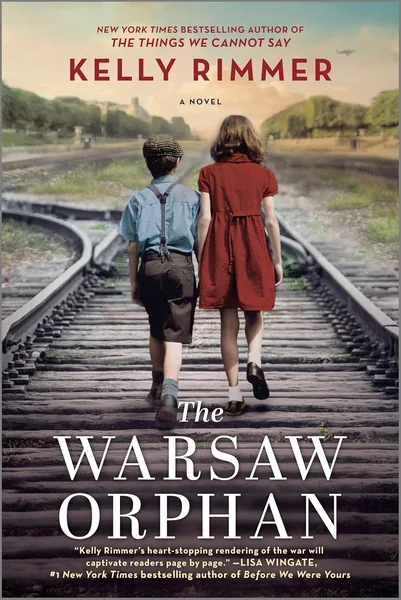
The Warsaw Orphan: A WWII Historical Fiction Novel – A NYT Bestseller of Jewish History and World War 2 Resistance by Kelly Rimmer front cover

Our review

The Warsaw Orphan

The Warsaw Orphan by Kelly Rimmer Review: A WWII Survival Story

Kelly Rimmer’s The Warsaw Orphan delivers a vivid, emotionally charged account of teenage survival in Nazi-occupied Poland, though its narrative choices divide critics on how it resolves. Readers seeking harrowing historical fiction with a hopeful core will find a compelling, if occasionally uneven, journey.

Our age band: Ages 13+graphic sexual assault · wartime brutality

LuvemBooks Verdict

Best for

Readers seeking emotionally charged WWII historical fiction with a dual-perspective narrative will find a vivid, character-driven survival story grounded in the real-life heroism of Irena Sendler.

Worth it if

Worth reading if you appreciate historically grounded narratives that balance harrowing wartime events with an ultimately hopeful and inspirational resolution.

Skip if

Skip it if you require strictly unflinching historical accounts, as Toby A. Smith criticizes the final third for veering into a trite and conveniently lucky resolution.

Where reviewers agree and split

Readers rate it 4.6 on Amazon. The reviews we read that discuss it in depth split on some points:

  • Mixed

    Toby A. Smith · Book blog: mixed due to trite ending, but overall recommended

  • Positive

    Military Press · Book blog: highly praises the compelling and emotional story

    Overall verdicts are our summary of each review we read, from its headline, rating and conclusion.

    Reviewers generally praise the novel's vivid historical backdrop and emotional weight, though Toby A. Smith notes the pacing falters in the last third and the ending veers into the trite. Military Press and Toby A. Smith commend its compelling storytelling and hopeful conclusion despite the heavy subject matter.

    Sources: Toby A. Smith, Military Press, ReadingLadies
    4.6from 9,808 Amazon ratings, as of Nov 2026— reader ratings, not a LuvemBooks score

    Ask LuvemBooks

    Was this helpful?

    The Warsaw Orphan follows teenage protagonists Elzbieta and Roman Gorka through the harrowing realities of Nazi-occupied Poland, drawing inspiration from the real-life heroism of nurse Irena Sendler. While reviewers praise its vivid historical backdrop and emotional resonance, critical reception splits on its conclusion, with some finding the resolution too convenient. Worth reading for those seeking a character-driven survival story with a hopeful core, though it may frustrate readers expecting an unrelentingly grim historical account.
    Is it worth reading?
    The book delivers a compelling journey for fans of WWII historical fiction, particularly those who appreciate narratives and survival themes. Military Press and ReadingLadies highlight its vivid details and page-turning pacing, while Toby A. Smith acknowledges the powerful setup despite critiquing the conclusion. Readers should be aware that the ending leans toward a hopeful, inspirational resolution rather than a strictly unflinching historical account.
    Similar books
    Readers who enjoy this dual-perspective wartime survival story will likely appreciate We Were the Lucky Ones for its focus on Jewish family survival, The Tattooist of Auschwitz for its harrowing Holocaust setting, and Salt to the Sea for its multi-POV narrative during World War II. The book is also positioned alongside The Secret Sewing Society and Before We Were Yours for its blend of historical resilience and emotional family dynamics.
    Who should read this?
    This title is best suited for readers who appreciate WWII historical fiction. It appeals to fans of survival stories and those interested in the heroism of Irena Sendler. However, it may frustrate readers seeking strictly unflinching historical accounts or those who prefer unrelentingly bleak wartime narratives.
    What age is it for?
    Best for ages 13 and up. The narrative centers on characters navigating wartime survival, but the intense historical trauma necessitates reader maturity.
    About Kelly Rimmer
    Kelly Rimmer is an Australian author of romance fiction and historical fiction. She has stated that a historical fiction author needs research and daydreaming.
    How is the pacing and structure?
    The novel utilizes a dual-perspective structure that effectively captures the contrasting experiences of teenage survival and resistance. Reviewers note strong initial pacing driven by curfews and deportations, though Military Press and Toby A. Smith observe that the narrative drags slightly before resolving.
    How does the author handle the historical backdrop?
    Rimmer grounds the narrative in the heroism of Polish nurse Irena Sendler. Military Press highlights how the book uses this foundation to explore the complex reality of Nazi occupation, detailing the Warsaw Ghetto's isolation and the suffering under Soviet liberation.
    Summarize this book

    Summarize this book

    Spanning four years in WWII Poland, the novel tracks 13-year-old Elzbieta and 16-year-old Roman Gorka as they navigate the Warsaw Ghetto, the black market, and the resistance. Elzbieta discovers a nurse smuggling Jewish children, pulling her into a dangerous world of deception, while Roman, half-Jewish and driven by family tragedy, joins the fight against the occupation. Their paths intertwine as they face interrogations and the constant threat of capture, ultimately attempting to reclaim their lost lives.

    Follow up

    Is it based on a true story?
    How long does it take to read?

    Synthesized from verified book data & published reviews · How we review

    Ask LuvemBooks

    What would you like to know about The Warsaw Orphan?

    Answers come from our editorial notes on this book. If we haven't covered something, we'll say so.

    Readers often ask

    Our Review

    We review the evidence: reader verdicts, gathered and weighed with AI assistance and edited by LuvemBooks, rather than one reader's first-hand take.
    Kelly Rimmer’s The Warsaw Orphan delivers a vivid, emotionally charged account of teenage survival in Nazi-occupied Poland, though its narrative choices divide critics on how it resolves. Readers seeking harrowing historical fiction with a hopeful core will find a compelling, if occasionally uneven, journey.
    The Warsaw Orphan: A WWII Historical Fiction Novel – A NYT Bestseller of Jewish History and World War 2 Resistance by Kelly Rimmer front cover
    The Warsaw Orphan: A WWII Historical Fiction Novel – A NYT Bestseller of Jewish History and World War 2 Resistance by Kelly Rimmer front cover

    The Warsaw Orphan: Plot Summary and Characters

    The Warsaw Orphan follows 13-year-old Elzbieta and 16-year-old Roman Gorka across four years of World War II in Poland. Elzbieta, a Catholic concealing her true identity, befriends Sara, a nurse who uses her credentials to smuggle Jewish children out of the Warsaw Ghetto.
    This discovery pulls Elzbieta into a dangerous world of deception and resistance. Meanwhile, Roman, raised Catholic but half-Jewish, witnesses the brutality of the occupation and his family’s plight.
    The Gorka family faces the impossible decision to give up their newborn daughter to avoid starvation. Driven by regret and righteous anger, Roman joins the resistance.
    His path intertwines with Elzbieta’s as they navigate interrogations, injuries, and the constant threat of capture. Together, they attempt to reclaim the life they once knew.

    Historical Significance and Inspiration

    The novel is inspired by the real-life Polish nurse Irena Sendler, who saved thousands of Jewish children during the war. Military Press notes that Sendler’s story was largely lost to history until rediscovered by Kansas schoolchildren in the 1990s.
    Kelly Rimmer uses this foundation to explore the complex reality of Nazi occupation. The narrative highlights the diverse responses of Poles, ranging from courageous acts to neutrality and outright collaboration.
    The author frames the book as a gateway to understanding this era. She aims to show the intersection of cruelty and compassion through the eyes of her characters.
    Toby A. Smith highlights the historical backdrop, detailing the isolation of the Warsaw Ghetto.

    Strengths and Narrative Execution

    Reviewers consistently praise the vivid details and emotional weight of the narrative. ReadingLadies describes the book as heart wrenching, emotional, and tragic.
    Military Press notes that Rimmer’s writing remains well-written and page-turning despite the heavy subject matter. Military Press commends the author for successfully portraying the stark contrast between life inside the ghetto and life under Nazi occupation outside its walls.
    The pacing is viewed differently, though it is noted that the last third drags. It moves from the initial curfews and deportations to the violent uprisings.
    The narrative also addresses the looming threat of a communist regime. Toby A. Smith acknowledges the powerful events and descriptions.
    Toby A. Smith notes that the setup successfully draws the reader into the terror and loss experienced by the young protagonists.

    Limitations and Critical Disagreement

    Critical reception reveals a notable split regarding the novel’s conclusion. Toby A. Smith finds that the narrative veers into the trite in its final third.
    Toby A. Smith argues that the teenage protagonists become unbelievably lucky as violence and interrogations resolve in a too pat manner. This critique contrasts sharply with the praise from other readers, who view the hopeful ending as an intentional and necessary counterpoint to the historical tragedy.
    Additionally, ReadingLadies warns of a graphically described sexual assault in the text. ReadingLadies advises that readers may need to take breaks due to the intense content.
    These factors mean the book may frustrate readers seeking a strictly unflinching historical account.

    Is The Warsaw Orphan Worth Reading?

    Weighing these reviews, the book emerges as a passionate, character-driven entry into WWII historical fiction. It prioritizes emotional resonance and survival over unrelenting grimness.
    The tension reviewers circle lies in its balancing act. It offers a hopeful, inspirational core that some find deeply moving.
    Others feel this approach undermines the historical horror with a convenient resolution. The publisher and promotional materials position it for fans of All the Light We Cannot See and The Tattooist of Auschwitz.
    Its focus on a young, dual-perspective romance and its ultimately uplifting ending set it apart from those bleaker counterparts. It is best suited for readers who appreciate historically grounded survival stories with a romantic subplot.
    Those expecting a relentlessly bleak or strictly documentary-style account may find its narrative choices jarring.

    Sources & Further Reading

    The key facts and claims in this review are grounded in the retrieved, verified sources listed below.

    1. Cited in this review
    2. 1
    3. Further reading
    4. 2

      Kelly Rimmer, LuvemBooks

    5. 3
    6. 4
    7. 5
    8. 6
    9. 7
    10. 8

    Age & Reading Level

    Our age band

    Ages 13+

    Reading level

    Young adult

    Our age band groups books for browsing; it isn't an age a review gave.

    Content to know about

    graphic sexual assault
    wartime brutality
    Jewish persecution

    Best for: Ages 13+ — features graphic sexual assault and wartime trauma

    Skip if you require strictly unflinching historical accounts without a hopeful resolution

    From our readers

    Reader reviews

    No LuvemBooks readers have answered yet.

    Read it? Was it right for you?

    Books like The Warsaw Orphan

    Curated picks for readers who enjoyed The Warsaw Orphan, with our reasoning for each match.

    Discussion

    Reader comments