8 min read
4.5
· 2,594 Amazon ratingsShare This Review

Our review
The Secret Sewing Society by Siobhan Curham Review: Gripping Dual-Timeline Historical Fiction Spanning Generations
Siobhan Curham's The Secret Sewing Society is a dual-timeline historical novel set in Ukraine — moving between the present day and World War Two — that follows a devastating family mystery and generations of women bound together across conflict and secrecy. Published by Bookouture on January 26, 2026, it has drawn an enthusiastic wave of early reader and blogger response, with reviewers describing it as heartbreaking, gripping, and emotionally resonant.
LuvemBooks Verdict
Best for
Readers of emotionally driven multi-generational women's historical fiction — particularly fans of Evie Woods or Fiona Valpy — who want a propulsive family-mystery structure set against the deeply resonant backdrop of Ukraine across two wars.
Worth it if
Worth committing to if you want a 464-page novel that pairs topical urgency (the ongoing war in Ukraine) with deep historical roots in WW2, held together by the covert solidarities of women across generations.
Skip if
Skip it — or at least brace yourself — if you prefer historical fiction with a cooler emotional register, find sustained heartbreak demanding, or are looking for formally unconventional narrative structures rather than a well-crafted entry in the established dual-timeline tradition.
What readers & critics say
Early reader reception, reflected across blog tour stops and retailer pages, has been consistently enthusiastic: carlalovestoread.wordpress.com reports readers calling it "unforgettable," "totally gripping," and "utterly swept away," while amazon.co.uk surfaces Goodreads reviewers describing it as "a moving read that lingers" and "both heartbreaking and hopeful." Blogger drbethnolan.com notes the novel as "intriguing," capturing readers through its dual WW2-and-present-day Ukraine structure.
Sources: carlalovestoread.wordpress.com, amazon.co.uk, drbethnolan.comAsk LuvemBooks
Was this helpful?
- Is it worth reading?
- For readers already drawn to emotionally immersive, multi-generational women's historical fiction, The Secret Sewing Society delivers squarely on the genre's promise — early reader response across NetGalley, Goodreads, and blog tours is consistently enthusiastic, with reviewers describing it as "both heartbreaking and hopeful," "gripping," and a novel that "lingers." The Ukrainian setting — spanning WW2 and the present conflict — gives the story topical urgency that distinguishes it from more distantly historical genre entries. The key caveat is emotional intensity: multiple reviewers cite tears and tissue warnings, so readers seeking lighter fare or cooler emotional register should go in with clear expectations.
- Similar books
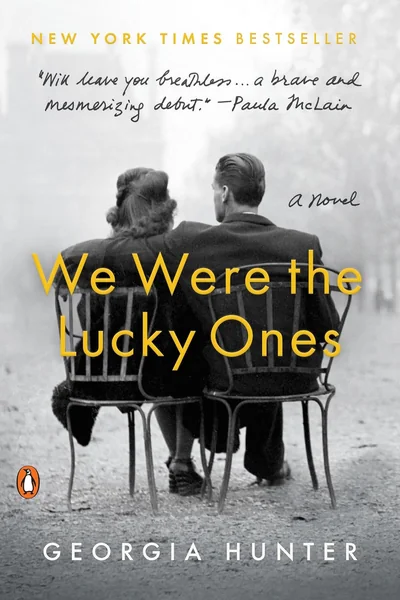
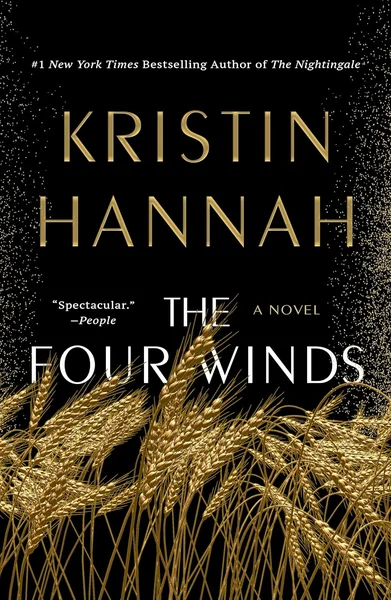
- Readers drawn to The Secret Sewing Society will find compatible territory in several titles. We Were the Lucky Ones by Georgia Hunter follows a Jewish family separated by World War Two in a similarly sweeping, emotionally driven multi-generational structure. The Four Winds by Kristin Hannah delivers the same brand of women-centred historical fiction shaped by large-scale conflict and family survival. The Girls Left Behind by Emily Gunnis shares the family-secrets-across-generations framework, while Before We Were Yours by Lisa Wingate mines comparable emotional depth from buried family history. The Book Club for Troublesome Women by Marie Bostwick rounds out the group with its focus on women's solidarity and community across difficult times.
- Who should read this?
- The Secret Sewing Society is aimed squarely at readers of emotionally driven women's historical fiction — specifically those who respond to narratives in which the domestic lives and covert solidarities of women become the true story beneath the headline of war. Fans of Evie Woods and Fiona Valpy, or readers who loved The Keeper of Happy Endings, are the publisher's stated comparable audience. It also speaks directly to readers with a connection to Ukrainian history or the ongoing conflict, given the novel's dual-timeline span across WW2 and the present day. Readers who prefer lighter emotional register, formally experimental structures, or action-forward war narratives are less likely to find it their ideal fit.
- What are the main themes?
- The novel's central themes revolve around secrecy, survival, and the covert solidarities women forge in wartime — the title's sewing motif acting as the literal and figurative thread connecting generations across two conflicts. The question of whether some wartime secrets are too dangerous to uncover drives dramatic tension across both timelines. Intergenerational trauma and resilience, the domestic as a site of resistance, and the particular experience of women living through Ukraine's two defining modern conflicts — World War Two and the present-day war — all run through the narrative. The publisher frames it as a story about "generations of women coming together against the odds."
- Is this a good book club pick?
- The Secret Sewing Society has strong book-club credentials: the central moral question — whether some wartime secrets are too dangerous to uncover — generates the kind of ethical debate that sustains discussion well beyond plot summary. The dual-timeline structure across WW2 and present-day Ukraine also invites readers to reflect on historical and contemporary parallels, a topic with obvious real-world resonance. Early readers across platforms report a uniform emotional impact, which tends to create the shared experience that makes group discussion productive. At 464 pages, it offers enough substance for extended engagement without being unwieldy.
- What's Siobhan Curham's background?
- Siobhan Curham is an award-winning author, ghostwriter, editor, and writing coach whose journalism has appeared in outlets including The Guardian, Cosmopolitan, and Breathe magazine. That professional range — spanning literary craft, journalism, and editorial work — informs a novel that takes an emotionally immediate subject and anchors it in deep historical context. The publisher positions The Secret Sewing Society within a tradition of women's multi-generational historical fiction, drawing comparisons to the work of Evie Woods and Fiona Valpy.
Summarize this book
Follow up
Synthesized from verified book data & published reviews · How we review
Press Enter to ask. Answers come from our editorial Q&A — start typing to see related questions.
Age & Reading Level
Recommended age
Adult
Reading level
Adult
3 content notes · who it suits
Content to know about
Skip if you're looking for historically grounded fiction with a lighter emotional register or a cool, unsentimental tone.
Our Review
What the Novel Is and What It Covers
Significance and Place in the Genre
Strengths: Emotional Pull and Reader Response
Genuine Limitations and Who May Be Challenged
Who This Novel Is For
Sources & Further Reading
The key facts and claims in this review are grounded in the retrieved, verified sources listed below.
- Cited in this review
- 1
- 2
- Further reading
- 3
- 4
fantasticfiction.com
- 5
Books like The Secret Sewing Society
Curated picks for readers who enjoyed The Secret Sewing Society, with our reasoning for each match.
If you liked The Secret Sewing Society