BOOKS
Published

Read Time

3 min read

Reader rating

4.3

· 7,509 Amazon ratings
reader ratings, not a LuvemBooks score
Curated & edited by

LuvemBooks Editorial

How we create our reviews →
Share This Review

The Mapmaker's Daughter by Clare Marchant Review: A Dual-Timeline Tudor Adventure

Clare Marchant's The Mapmaker's Daughter is a dual-timeline historical fiction novel published by Avon, set partly in 1569 and following Freida Ortelius, a young Dutch Protestant refugee who uses her exceptional mapmaking skills to build a new life in London — and is ultimately drawn into the dangerous orbit of Queen Elizabeth I. NetGalley reviewers and fellow historical fiction authors alike praised its intertwining storylines and depth of research, positioning it as a strong entry in the tradition of Lucinda Riley and Kathryn Hughes.

LuvemBooks Verdict

Best for

Readers who love emotionally driven, dual-timeline historical fiction in the tradition of Lucinda Riley and Kathryn Hughes — particularly those drawn to strong female protagonists navigating Elizabethan England, religious persecution, and the interplay of past and present.

Worth it if

The dual-timeline, sweeping-saga format is your comfort zone and you want a historically grounded story rooted in the real Dutch Protestant refugee experience and the Ortelius mapmaking dynasty.

Skip if

You prefer restrained, minimalist prose or seek formal experimentation in your historical fiction — the novel's emotionally heightened register and well-worn dual-timeline structure offer little novelty to seasoned timeslip readers.

The Historical Novel Society notes the novel's specific grounding in Dutch Protestants fleeing Spanish persecution to Elizabethan London, anchored by its heroine's connection to a real mapmaking dynasty. The Review Universe describes it as "a vibrant, moving, and intelligently crafted historical novel," while NetGalley advance readers praised the dual-timeline construction enthusiastically, with the Bashful Bookworm further highlighting its blend of historical detail and a dash of magical realism.

Sources: Historical Novel Society, The Review Universe, NetGalley, The Bashful Bookworm
4.3from 7,509 Amazon ratings— reader ratings, not a LuvemBooks score
In This Review
  • What Works & What Doesn't
  • What the Novel Is and What Happens
  • Dual Timelines and Structural Design
  • Historical Research and Authenticity
  • Reception and Comparable Authors
  • Who It Is For and Where It May Challenge

What Works & What Doesn't

What Works
  • Grounded in a historically specific setting — the flight of Dutch Protestant refugees to Elizabethan London — rooted in real events and the real Ortelius mapmaking family
  • Dual-timeline structure praised by NetGalley advance readers for intertwining its storylines with skill and emotional coherence
  • Author Clare Marchant brings a history degree and an MA in women's studies to the research, a depth multiple reviewers acknowledged
  • Strongly endorsed by fellow historical fiction authors including Christina Courtenay, Rosie Hendry, Jenni Keer, and Natalie Meg Evans
  • Published by Avon with broad positioning for fans of Lucinda Riley and Kathryn Hughes, making it accessible to a wide historical fiction readership
What Doesn't
  • The sweeping, emotionally heightened register — ideal for fans of Lucinda Riley — is likely to feel overly familiar to readers seeking more restrained or experimental historical fiction
  • Dual-timeline structuring, while well-received by advance reviewers, is a widely used device in the genre and will offer little formal novelty to seasoned readers of timeslip fiction
This review covers the content and reception of The Mapmaker's Daughter as drawn from published sources, not hands-on reading.
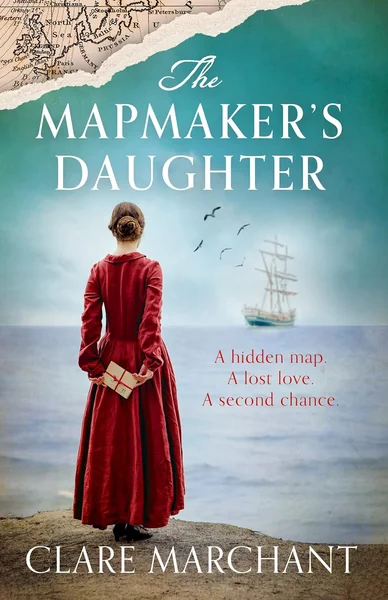
The Mapmaker's Daughter: The most spellbinding and heartbreaking historical fiction novel for 2026 by Clare Marchant front cover

What the Novel Is and What Happens

The Mapmaker's Daughter is a dual-timeline historical fiction novel by Clare Marchant, published by Avon. At its historical heart is Freida Ortelius — a twenty-year-old woman from a distinguished Dutch mapmaking family — who is forced to flee Holland in 1569 to escape the Spanish persecution of Dutch Protestants. Arriving in London, Freida deploys her rare cartographic talent to rebuild her life, only for that talent to draw the attention of Queen Elizabeth I herself. The queen then compels Freida into a deadly mission tied to the Spanish threat, the consequences of which, as the synopsis states, "will echo down the ages." The Historical Novel Society notes that the book's historical focus on Dutch Protestant refugees seeking sanctuary in Elizabethan London gives the novel a grounding in a specific, well-documented chapter of religious conflict and migration — with Freida's lineage connecting her to the real, celebrated family of Dutch cartographers.
an atmospheric story sure to please all fans of timeslip novels.

Dual Timelines and Structural Design

Like many entries in contemporary historical fiction, the novel weaves two narrative strands together. NetGalley reviewers responding enthusiastically to advance copies highlighted precisely this structure — one wrote that the stories "intertwine so beautifully, it's truly amazing," adding that the evident depth of research made the dual-timeline construction feel richly earned. Author Christina Courtenay, whose own work operates in the timeslip tradition, described it as "an atmospheric story sure to please all fans of timeslip novels." The design intent is clearly to let the past and present illuminate each other, with the rediscovery of a map serving as the connective tissue between timelines — a device that also literalises the novel's central metaphor of navigation and inheritance.

Historical Research and Authenticity

Marchant brings a genuine academic grounding to the material: she holds a degree in history and an MA in women's studies, and multiple sources point to the research burden the novel carries. One five-star NetGalley reviewer remarked that "such a lot of research must have been done but so worth it," suggesting the historical detail registers as purposeful rather than decorative. The setting — Tudor London as a refuge for persecuted Protestant communities from the Low Countries — is historically specific, and Freida's connection to the real Ortelius mapmaking dynasty gives the fictional narrative a traceable root in the historical record. Fellow author Rosie Hendry credited Marchant with writing a story that "pulls you in and whisks you away to another time," calling her "a fabulous new talent."

Reception and Comparable Authors

Advance reception, primarily from the NetGalley community, was strongly positive. Jenni Keer described the book as "a charming and engaging mystery, beautifully told," while Natalie Meg Evans called it "an emotionally gripping and page-turning tale of love and loss." The publisher positioned it for readers of Lucinda Riley and Kathryn Hughes — authors associated with sweeping, emotionally driven historical narratives, often with female protagonists navigating extraordinary circumstances. That comparative framing sets clear expectations: this is not revisionist history or literary experimentation, but emotionally generous, plot-propelled storytelling in a well-loved tradition. Readers already invested in that corner of the genre are the most natural audience.

Who It Is For and Where It May Challenge

The novel's broad appeal within historical fiction is clear from the reception record, but that same positioning signals its boundaries. Readers drawn to minimalist prose, non-linear experimentation, or history as intellectual argument rather than emotional journey may find the dual-timeline, sweeping-saga format familiar territory rather than fresh ground. The story's emotional register — foregrounded in the subtitle's language of "heartbreaking" — is pitched high, which is precisely its attraction for fans of Riley and Hughes but may feel pitched too wide for those who prefer restraint. These are genuine matters of taste rather than craft failures, and the novel's design intent is transparent about the experience it offers.

Sources & Further Reading

The key facts and claims in this review are grounded in the retrieved, verified sources listed below.

  1. 1
  2. 2
  3. 3
  4. 4
  5. 5
  6. 6
  7. 7