Reviewed

Read Time

9 min read

Age & reading levelAdult
Reader rating

4.4

· 15,991 Amazon ratings
reader ratings, not a LuvemBooks score
Curated & edited by

LuvemBooks Editorial

How we create our reviews →
Share This Review
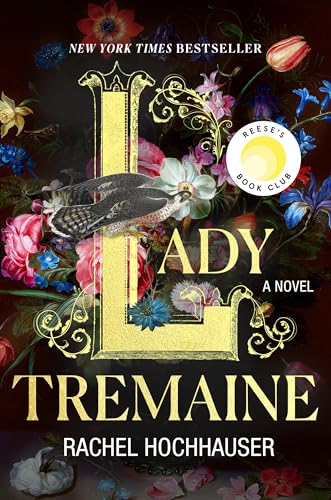
Front cover of Lady Tremaine

Our review

Lady Tremaine by Rachel Hochhauser Review: A Riveting, Perspective-Flipping Debut

Lady Tremaine is Rachel Hochhauser's debut novel, a Cinderella reimagining told entirely from the stepmother's point of view — recasting Lady Etheldreda Verity Isolde Tremaine Bramley not as a villain but as a twice-widowed survivor fighting for her daughters' futures. A Reese's Book Club pick and New York Times bestseller, it is one of the most talked-about fairytale retellings in recent memory.

LuvemBooks Verdict

Best for

Readers drawn to feminist historical fiction who want a fully rehabilitated "villain" — specifically those who enjoy class-conscious, survival-driven narratives and fairytale retellings that interrogate whose story gets told and why.

Worth it if

Worth reading if you are drawn to fairytale retellings that prioritise moral complexity, maternal sacrifice, and the grim economics of womanhood over romance and whimsy.

Skip if

Skip it if you come to Cinderella retellings hoping for a sympathetic or traditionally romantic Cinderella figure — Elin is deliberately portrayed as passive and aloof, and the novel's entire emotional weight rests on Ethel.

Kirkus Reviews (starred review) calls it "a bold and beautifully written examination of a mother's love," while BookPage describes it as "a stunning reimagining that turns this classic tale upside down," praising Hochhauser's success in making readers root for Ethel well before Elin appears. Reader reviewers at thegeekywaffle.com, jessicacrawfordwrites.com, and tobyasmith.com broadly echo this enthusiasm, with tobyasmith.com awarding five stars and calling it "a true delight," and bookbrowse.com describing the prose as "breathtakingly beautiful" and the novel as "destined to be one of the biggest books of the year."

“A bold and beautifully written examination of a mother's love told through the eyes of Cinderella's 'wicked' stepmother.”

— Kirkus Reviews

“A stunning reimagining that turns this classic tale upside down and tips it into a modern state of mind.”

— BookPage
Sources: Kirkus Reviews, BookPage, The Geeky Waffle, Jessica Crawford Writes, Toby A. Smith, BookBrowse
4.4from 15,991 Amazon ratings— reader ratings, not a LuvemBooks score
Buy on Amazon
In This Review
  • What Works & What Doesn't
  • What the Novel Actually Is
  • A Villain Recast as a Heroine
  • Reception and Significance
  • Genuine Strengths
  • Limitations and Who This Is For

What Works & What Doesn't

What Works
  • A fully realized, sympathetic protagonist in Ethel — a twice-widowed survivor whose pragmatism and grit make her a compelling heroine rather than a stock villain
  • Structurally inventive: the novel inverts the traditional Cinderella dynamic, with Elin's passivity and Ethel's resourcefulness challenging the fairytale's original moral framework
  • A New York Times bestseller and Reese's Book Club pick, with blurb praise highlighting the prose for its grace and originality
  • Rich supporting cast, including Ethel's hardworking daughters and two servants who are central figures and romantic partners, according to thegeekywaffle.com
  • Planned publication in more than eleven languages signals exceptional crossover appeal
What Doesn't
  • Readers expecting a sympathetic or traditionally romantic Cinderella figure will not find one — Elin is deliberately portrayed as passive, aloof, and unmotivated
  • The novel's moral and emotional weight rests almost entirely on Ethel; those seeking a balanced ensemble or lighter fairytale tone may find the focus narrow
A bold, sympathetic reinvention of one of fiction's most notorious villains, Lady Tremaine earns its acclaim by grounding a beloved fairytale in the grim economics of survival.

What the Novel Actually Is

Rachel Hochhauser's debut is a work of historical fiction and fairytale retelling that follows Lady Etheldreda Verity Isolde Tremaine Bramley — Ethel — from girlhood through middle age. As BookPage describes, the story opens before dawn with Ethel out hunting with her trained peregrine falcon, not for sport but for food. Twice widowed, she is solely responsible for a crumbling manor, two daughters she loves fiercely, and a stepdaughter named Elin. With her late husbands' assets exhausted and their fancy possessions long sold, Ethel holds together the illusion of prosperity through relentless resourcefulness — because that illusion is the only currency left with which to secure good marriages for her children. The Cinderella skeleton is present: there is a royal ball, a prince seeking a wife, an unexpected arrival, and professions of love. But Hochhauser consistently upends expectations, and, as BookPage notes, "nothing is as it appears, because Ethel is not the only one hiding secrets behind a veneer of propriety."
“nothing is as it appears, because Ethel is not the only one hiding secrets behind a veneer of propriety.”— BookPage

A Villain Recast as a Heroine

The novel's central achievement is its sympathetic reconstruction of a character fairy tale tradition has flattened into pure menace. Hochhauser traces Ethel's origins as a brewer's daughter who grew up without a mother, found genuine happiness in a first marriage, and then remarried Lord Robert Bramley purely for the security it promised — only to be widowed again and left with an additional dependent. BookPage observes that by the time readers encounter Elin, Hochhauser has "successfully convinced us to root for Ethel." Elin herself is portrayed as the privileged product of a doting, wealthy father: pretty, aloof, unmotivated, and absorbed in a book of manners, fantasizing about rescue rather than taking any action. This inversion — the "wicked" stepmother as a competent, dirt-tolerant pragmatist and Cinderella as a passive dreamer — forms the novel's ideological spine. As one blurb on the author's own site frames the project, Hochhauser "insists we include the wicked stepmothers" in the broader cultural reckoning with historically maligned women.

Reception and Significance

Lady Tremaine arrived as a New York Times bestseller and was selected as Reese's Book Club's March pick, with Reese's describing it as a reimagining that explores "motherhood, family, and the pressure to be perfect." The novel is set for publication in more than eleven languages. Blurb praise from Kate Quinn, New York Times bestselling author of The Briar Club, calls Ethel "a heroine to root for with every turn of the page" and names Hochhauser "a major new talent to watch." Fellow NYT bestselling author Emilia Hart credits the novel with keeping "the grim in the fairy tale." One comparator in circulation — drawn from promotional copy — positions the novel as sitting at the intersection of Bridgerton and Circe, which signals both its romantic undercurrents and its mythological rehabilitation impulse. The audiobook version is narrated by Bessie Carter.

Genuine Strengths

Beyond its high concept, the novel draws consistent praise for its prose and character depth. The author's own site carries a blurb calling Hochhauser's prose "a gift" and describing Lady Tremaine as "one of the best novels I've read in a long time — for its sentences, for its grace, and for its originality." A review at thegeekywaffle.com highlights the supporting cast as a particular strength: Ethel's two daughters are portrayed as equally hardworking, and two servants — described as like family and also as romantic partners — are called "strong, independent women," adding texture to what might otherwise be a two-character drama. Hochhauser also broadens the emotional stakes around motherhood in ways that, according to Reese's Book Club, push the narrative well beyond a simple villain redemption arc.

Limitations and Who This Is For

For readers who approach the novel expecting a straightforward Cinderella retelling, the experience may be deliberately disorienting — and that is by design rather than oversight. Elin's characterization as passive and self-absorbed is not softened; a review at jessicacrawfordwrites.com notes that "Lady Tremaine is not perfect" as a novel even while calling Ethel an inspiring heroine worth readers' time. Those seeking a traditionally sympathetic Cinderella figure or a light romantic fairy tale will find neither: BookPage describes Elin as "pretty and frail, aloof, unmotivated," and the novel's emotional weight sits squarely on Ethel's shoulders. Readers who come to fairytale retellings for the romance and whimsy, rather than for the interrogation of class, survival, and maternal sacrifice, may find the novel's moral recalibration more demanding than inviting — though that same demanding quality is precisely what has made it a cultural conversation piece.

Age & Reading Level

Recommended age

Adult

Reading level

Adult

Heat level

Closed door · rated 2/5 spice, behind closed doors

Tropes

royaltyredemption arc

From how readers and romance sites describe it, not our own reading.

Content to know about

poverty and financial desperation
widowhood and grief
class and social survival

Skip if you want a sympathetic Cinderella figure or a light, romantic fairy tale retelling

Sources & Further Reading

The key facts and claims in this review are grounded in the retrieved, verified sources listed below.

  1. Cited in this review
  2. 1
  3. 2
  4. 3
  5. Further reading
  6. 4
  7. 5
  8. 6
  9. 7
  10. 8
  11. 9
  12. 10
  13. 11
  14. 12
  15. 13