BOOKS
Published

Read Time

3 min read

Reader rating

4.4

· 3,838 Amazon ratings
reader ratings, not a LuvemBooks score
Curated & edited by

LuvemBooks Editorial

How we create our reviews →
Share This Review

The Everlasting by Alix E. Harrow Review: A Lyrical, Time-Bending Fantasy Triumph

The Everlasting is a 2025 fantasy novel from New York Times bestselling and Hugo Award–winning author Alix E. Harrow, published by Tor Books on October 28, 2025. It follows Sir Una Everlasting, the legendary lady-knight whose sacrificial death built the nation of Dominion, and Owen Mallory, a failed soldier turned struggling scholar who falls so deeply in love with her tale that he is sent back through time to ensure she plays her fated part — even as doing so breaks his heart. Winner of the 2026 Locus Award for Best Fantasy Novel and a finalist for the 2026 Hugo Award for Best Novel, the book has drawn major critical praise, with Locus Magazine calling it Harrow's "most adventurous and most beautifully crafted novel to date." This review is based on the book's content as described by its publisher and published critical sources, not hands-on reading.

LuvemBooks Verdict

Best for

Readers of literary fantasy who are drawn to prose-forward, myth-interrogating fiction — particularly those who have loved Naomi Novik, V.E. Schwab, or Erin Morgenstern — and who want a formally inventive novel that asks whether quiet, chosen love can ever outweigh the grand destinies history demands.

Worth it if

You're willing to meet its unconventional dual second-person narration and time-loop architecture on their own terms, especially if you're open to a meditative pace that rewards patience once a key early plot turn recontextualises everything that came before.

Skip if

You're expecting a fast-paced knight's-quest action narrative with traditional third-person storytelling — the novel's deliberately slow-building, myth-interrogating structure will likely feel more frustrating than rewarding.

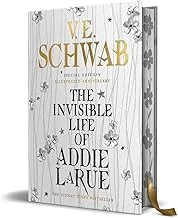
Locus Magazine (via the publisher and Wikipedia) praises the novel's prose as Harrow's most gorgeous and lyrical to date, with its looping timelines handled with exceptional craft. Reader reviewers at bibliosanctum.com, fanfiaddict.com, and bookpage.com echo that enthusiasm, with Biblio Sanctum calling it a wholehearted recommendation comparable to The Invisible Life of Addie LaRue, and BookPage noting the novel is "brimming with soul and longing" — while the more measured tarvolon.com review finds it very well put-together but flags a somewhat flat villain as a limitation.

The Everlasting is brimming with soul and longing, especially between the lead characters.

BookPage
Sources: Biblio Sanctum, FanFiAddict, BookPage, Tarvolon, Bookish Delights, Takes Two to Book Review, SFF World, Spectrum Culture
4.4from 3,838 Amazon ratings— reader ratings, not a LuvemBooks score
In This Review
  • What Works & What Doesn't
  • What the Novel Is and What It Does
  • Its Place in Harrow's Body of Work
  • Craft and Critical Reception
  • Genuine Limitations and Who May Struggle
  • Who This Novel Is For

What Works & What Doesn't

What Works
  • Winner of the 2026 Locus Award for Best Fantasy Novel and a Hugo Award finalist, with major critical recognition from Locus and Shelf Awareness
  • Locus Magazine praises the prose as Harrow's most gorgeous and lyrical to date, with looping timelines handled with exceptional craft
  • Innovative dual second-person narration creates rare emotional intimacy between the two protagonists across centuries
  • Tackles layered themes — war, national myth, love, and the politics of history — through a focused and inventive central premise
  • Audiobook edition nominated for an Audie Award for Fantasy, with dual narrators Sid Sagar and Moira Quirk
What Doesn't
  • The time-loop structure and second-person narration demand patience; some readers report slow early engagement before a key plot turn recontextualizes the story
  • Readers expecting a straightforward action-driven knight's quest may find the novel's meditative, myth-interrogating pace a significant adjustment
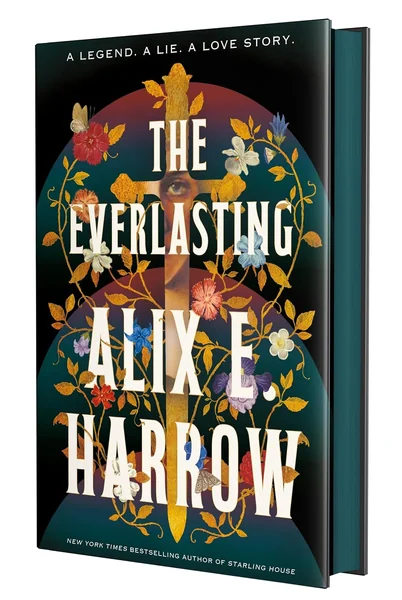
The Everlasting is a moving, genre-defying fantasy that examines the cost of legend, the violence of national myth, and whether history can ever truly be rewritten — and it does so with prose that Locus Magazine describes as Harrow's "most adventurous and most beautifully crafted" to date.
The Everlasting by Alix E. Harrow front cover

What the Novel Is and What It Does

At its center are two figures locked together across centuries: Sir Una Everlasting, the orphaned girl who became Dominion's greatest knight and died for queen and country, and Owen Mallory, a cowardly historian who travels back through time to ensure Una fulfills the legend he has spent his life studying. The publisher describes them as "tangled together in time, bound to retell the same story over and over again, no matter what it costs." The structural conceit that drives this premise is striking: the novel employs two second-person narrators, each addressing the other — Una and Owen speaking in "you," collapsing the distance between character and reader, and between past and present. That formal choice places the reader inside the loop itself, feeling the weight of a story that always ends the same way.
tangled together in time, bound to retell the same story over and over again, no matter what it costs.

Its Place in Harrow's Body of Work

Harrow has built a reputation — confirmed by her Hugo Award win and New York Times bestseller status — for feminist retellings of myth and history, from The Ten Thousand Doors of January to The Once and Future Witches to Starling House. The Everlasting sits at the far edge of that evolution. Where earlier novels reimagined folklore within more contained narrative frames, this one folds time travel, cyclical myth-making, and questions of historiography into a single structure. Tor's own description calls it "genre-defying," and the novel's 2026 Locus Award for Best Fantasy Novel — along with its Hugo Award nomination for Best Novel — confirm that the critical and fan communities have recognized it as a significant step forward in Harrow's work, not simply a continuation of an established mode.

Craft and Critical Reception

The most consistently cited strength of The Everlasting is its prose. Gary K. Wolfe, reviewing for Locus, stated that Harrow offers "some of her most gorgeous and lyrical prose to date," and the broader Locus review, excerpted by the publisher, praises "its looping timelines and parallel histories" as evidence of the novel's ambition. Shelf Awareness has called Harrow "an exceptional, undeniable talent." Beyond style, the book is noted for tackling a layered set of themes — war, love, family, national power, and the politics of historical narrative — through its central question: what happens when a person realizes they are not living their own life but performing a story written for them by forces they cannot see? The dual second-person narration, unusual for a novel of this length, is positioned as both a formal risk and an emotional payoff, creating an intimacy between Una and Owen that mirrors their entanglement in time.

Genuine Limitations and Who May Struggle

The novel's unconventional structure is precisely the quality that will divide readers. Some readers have noted that The Everlasting requires patience before its larger architecture clicks into place — the time-loop mechanics and second-person address can feel disorienting in the early chapters before the first major plot turn recontextualizes what has come before. Readers who prefer linearly plotted fantasy with traditional third-person narration may find the novel's deliberate formal choices more demanding than rewarding. The book's thematic preoccupation with the construction of national myth and the quiet heroism of opting out of destiny is also genuinely central to its purpose, meaning readers seeking a more action-driven quest narrative — despite the lady-knight premise — may find the pace more meditative than expected.

Who This Novel Is For

The Everlasting is designed for readers drawn to literary fantasy that interrogates the stories societies tell themselves — how legends are built, sustained, and at whose expense. Readers who have responded to the prose-forward, myth-conscious fiction of authors such as Naomi Novik, V.E. Schwab, or Erin Morgenstern are the natural audience here. Its audiobook edition, narrated by Sid Sagar and Moira Quirk, earned an Audie Award nomination for Fantasy, suggesting the novel's voice-driven structure translates particularly well to that format. For anyone willing to meet the novel's structural ambitions on their own terms, The Everlasting offers a story that asks whether love — personal, quiet, chosen — can ever be more powerful than the grand, public destinies history demands of us.

Sources & Further Reading

The key facts and claims in this review are grounded in the retrieved, verified sources listed below.

  1. Cited in this review
  2. 1
  3. 2
  4. 3
  5. Further reading
  6. 4
  7. 5
  8. 6
  9. 7
  10. 8
  11. 9
  12. 10
  13. 11
  14. 12
  15. 13
  16. 14
  17. 15

    us.macmillan.com