Skip to content
Reviewed

Updated

Read Time

8 min read

Our age bandAdult
Curated & edited by

LuvemBooks Editorial

How we create our reviews →
Share This Review
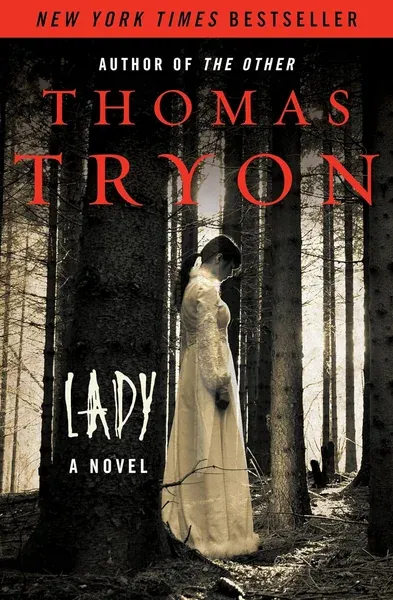
Lady: A Novel by Thomas Tryon front cover

Our review

Lady

Lady: A Novel by Thomas Tryon Review: A Slow-Burn Small-Town Drama with a Dark Twist

Thomas Tryon's Lady is the third novel set in the fictional Connecticut village of Pequot Landing, following the New York Times bestseller The Other and Harvest Home. Narrated through the adoring eyes of a boy named Woody, it unspools as an unhurried portrait of 1930s American small-town life before pivoting to a deeply shadowed revelation about the elegant, mysterious Lady Harleigh. The novel sits in the tradition of richly atmospheric popular fiction — think Peyton Place and Kings Row — and rewards patient readers willing to let Tryon build his slow crescendo toward its genuinely surprising close.

Our age band: Adultmelodramatic climactic revelation involving a woman's hidden traumatic past · child loss and grief

LuvemBooks Verdict

Best for

Readers who love immersive 1930s American small-town atmosphere and character-driven storytelling, and who are willing to invest in a slow, patient build-up for a genuinely surprising and emotionally resonant payoff at the close.

Worth it if

Worth reading if you can embrace an unhurried, nostalgia-rich pace for three-quarters of a novel, trusting that Tryon's carefully seeded foreshadowing will culminate in a dark, melodramatic revelation that earns its emotional gut-punch.

Skip if

Skip it if you're coming to Lady expecting the supernatural menace of The Other or Harvest Home, or if slow-burn domestic fiction without consistent tension tends to lose you before a late-arriving twist can land.

Kirkus Reviews at publication called the novel "rather uneventful (until the crowded close)," noting its nostalgic period texture while acknowledging the emotional payoff arrives very late; openroadmedia.com surfaces the Des Moines Register's blurb describing it as "a spellbinder with a twisted ending… You can't put it down," reflecting the more enthusiastic popular reception the book enjoyed on release and reissue.

“Tryon's rather uneventful (until the crowded close) novel is full of all those nostalgic fillers of the '30s — a copacetic stroll down memory lane.”

— Kirkus Reviews
Sources: Kirkus Reviews, Open Road Media

Ask LuvemBooks

Was this helpful?

Lady: A Novel by Thomas Tryon is a slow-burning, nostalgia-drenched portrait of 1930s small-town Connecticut narrated through the eyes of a boy named Woody, whose adoration for the elegant, secretive Lady Harleigh masks a dark truth that only surfaces in the novel's final act. It completes Tryon's Pequot Landing trilogy and rewards patient readers with a genuinely surprising, emotionally resonant close — but those expecting the supernatural menace of The Other will find something far more restrained and domestic. Best suited to readers who prize immersive period atmosphere and character-driven storytelling over propulsive plotting.
Is it worth reading?
Patience is a real prerequisite, not a polite warning.
Similar books
Readers drawn to Lady's combination of nostalgic Americana and buried dark secrets will find natural companions in several of the curated titles below. Dandelion Wine by Ray Bradbury shares the same quality of a boy's-eye view of small-town American life rendered in vivid period atmosphere. A Tree Grows in Brooklyn by Betty Smith offers a similarly immersive, character-driven portrait of a bygone American community. To Kill a Mockingbird by Harper Lee echoes Lady's use of a child narrator uncovering adult secrets in a tightly drawn Southern community. Beloved by Toni Morrison, while set earlier, similarly uses a haunted domestic space and a woman's devastating hidden past as its emotional core. For readers interested in Tryon's own fictional world, The Other and Harvest Home — the two preceding Pequot Landing novels — provide essential context, though both carry more overt supernatural menace than Lady.
Who should read this?
Lady is ideal for adult readers who love immersive period atmosphere and are willing to let a narrative build slowly toward a powerful emotional conclusion. Fans of richly textured Americana — the kind of reader who responds to 1930s detail like Jack Benny on the radio and Ipana toothpaste advertisements — will find the novel's extended mood-building rewarding rather than frustrating. It is also the natural next read for anyone who has finished The Other and Harvest Home and wants a third, more domestic angle on Tryon's Pequot Landing world. Those who prefer consistent tension or supernatural horror should look elsewhere.
About Thomas Tryon
Thomas Lester Tryon was an American actor and novelist.
What are the main themes?
Lady is built around the tension between surface respectability and buried truth — Lady Harleigh presents as a figure of grace and elegance, but the novel's architecture is constructed around what Woody, and through him the reader, does not yet know. Themes of grief, loss, and the cost of secrets kept within a tightly knit community run throughout, as does a sustained meditation on childhood innocence giving way to adult understanding. The 1930s small-town American setting is not merely backdrop but a thematic argument: the icebox, the radio programs, and the town Green are the architecture of a world that looks wholesome and cohesive until it doesn't.
Where should I start with Thomas Tryon?
For most readers, The Other is the natural entry point — it spent nearly six months on the New York Times bestseller list and established the Pequot Landing world with considerable supernatural force. Harvest Home followed as a second Pequot Landing novel, and Lady completes the trilogy as its most domestic and restrained installment. Readers who want Tryon at his most atmospheric and psychologically intense should begin with The Other; those drawn specifically to period character study and slow-burn revelation may find Lady a satisfying starting point in its own right.
Summarize this book

Summarize this book

Lady is the third novel Thomas Tryon set in the fictional Connecticut village of Pequot Landing, following The Other and Harvest Home. Narrated by Woody, a boy who grows up across the Green from the widowed Lady Harleigh, the novel spends its first three-quarters as a leisurely, detail-rich portrait of 1930s American small-town life — Jack Benny on the radio, Little Orphan Annie in the funny pages, the icebox before it became a refrigerator — before pivoting sharply as Lady Harleigh's carefully kept secrets are finally laid bare. The foreshadowing is visible in retrospect, which means the dark climactic revelation reflects genuine craft rather than arbitrary surprise.

Follow up

Who is Lady Harleigh?
Do I need to read the other Pequot Landing novels first?
What kind of ending does it have?

Synthesized from verified book data & published reviews · How we review

Ask LuvemBooks

What would you like to know about Lady?

Answers come from our editorial notes on this book. If we haven't covered something, we'll say so.

Readers often ask

Our Review

We review the evidence: published reviews and reader verdicts, gathered and weighed with AI assistance and edited by LuvemBooks, rather than one reader's first-hand take.

Thomas Tryon's Lady is a deliberate, nostalgia-soaked novel that saves its darkest secrets for last — a genuine slow-burn that demands patience before it pays off.

What the Novel Is and What It Contains
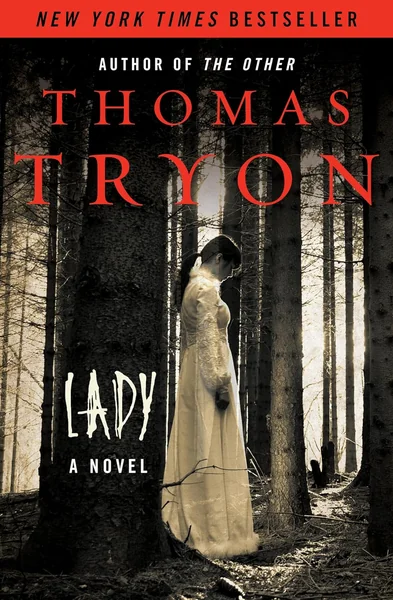
Lady: A Novel by Thomas Tryon front cover
Lady, published by Knopf in 1974, is the third work of fiction Thomas Tryon set in the fictional Connecticut village of Pequot Landing — the same small-town world he established in The Other and Harvest Home. The story is told from the perspective of Woody, a boy who grows up across the Green from the widowed Lady Harleigh, a figure of grace, chiffon-trailing elegance, and carefully kept secrets.
Woody knows fragments of her history — that she lost her husband, and that she never carried a child to term — but the full, scarring truth of her life emerges only as the novel draws toward its close. As one passage in the book reads, "The wind sang old songs, as the tale went, and like the wind we too sang; sang 'Good Night, Lady' at her doorway on Christmas Eve, but she would not come out."
That sentence captures the novel's essential posture: something beautiful, something withheld, and the quiet ache of not yet understanding why.

Atmosphere, Setting, and Period Detail

For roughly the first three-quarters of its length, Lady functions as an old-fashioned, leisurely portrait of growing up in a particular time and place. The 1930s are rendered through a dense accumulation of period texture — Jack Benny on the radio, Little Orphan Annie in the funny pages, the icebox before it became a refrigerator, Ipana toothpaste advertisements — details that, as Kirkus Reviews noted at publication, give the book the quality of "a copacetic stroll down memory lane."
One blogger writing about the novel compared its feel to a 1940s black-and-white film, and the comparison holds: Lady is warm, wide-eyed, and deliberately unhurried in its early sections. Readers who enjoy immersive period atmosphere and the rhythms of postwar American community life will find much to appreciate in this sustained mood-building.

The Structural Twist and Tryon's Craft

Where Lady distinguishes itself from straightforward nostalgia fiction is in the controlled release of its darker material. Sinister hints are seeded throughout, but the plot takes an abrupt and much darker turn as Lady Harleigh's past is finally laid bare — and the construction is fair.
Looking back at the earlier portion of the novel, the foreshadowing is visible, which means the shock of the ending reflects genuine craft rather than arbitrary revelation. Tryon, as one observer put it, "doesn't cheat" with his twist.
The Des Moines Register described the book as "a spellbinder with a twisted ending... You can't put it down." You can't put it down." Readers familiar with Tryon's earlier Pequot Landing novels will recognize his interest in the secrets that respectable communities keep buried, though Lady is notably without the supernatural elements that defined The Other and Harvest Home.

Place in Tryon's Career and the Wider Genre

Thomas Tryon (1926–1991) was a working actor — known for television work and films including Disney's Moon Pilot — before The Other transformed him into a literary figure. That debut novel spent nearly six months on the New York Times bestseller list and enabled him to leave acting entirely.
The Other was also adapted into a 1972 film with a screenplay by Tryon himself, directed by Robert Mulligan. Lady, his third novel, was a Literary Guild selection and arrived on the back of that considerable momentum.
Contextually, the novel sits in a tradition of long, lush, soapy American popular fiction — in the company of Peyton Place and Kings Row — rather than in the horror genre that made Tryon's name. That distinction is worth holding: readers coming to Lady expecting gothic menace will find something more restrained and domestic, at least until the final act.

Who This Novel Is For and Where It Falls Short

Reader response, particularly from those who have encountered the book on reissue in its e-book edition, has been enthusiastic, with some describing it as among the most memorable love stories they have read. Kirkus Reviews at publication was more measured, regarding it as lacking significant events (until the busy ending) and acknowledging that the emotional payoff, while real, arrives late.
That verdict still holds as an honest calibration: the novel's extended, gentle middle section will test readers who prefer propulsive pacing. Kirkus also noted that the final revelation carries a degree of melodrama — placing Tryon in the company of popular romance-inflected fiction rather than literary psychological suspense.
For readers who appreciate deliberate, character-driven storytelling with a strong sense of place and a genuine emotional gut-punch at the end, Lady delivers. Those seeking the supernatural intensity of The Other should temper their expectations accordingly.

Sources & Further Reading

The key facts and claims in this review are grounded in the retrieved, verified sources listed below.

  1. Cited in this review
  2. 1
  3. 2

    kirkusreviews.com

  4. 3
  5. Further reading
  6. 4

    Thomas Tryon, LuvemBooks

  7. 5
  8. 6

    app.thestorygraph.com

  9. 7
  10. 8

Age & Reading Level

Our age band

Adult

Our age band groups books for browsing; it isn't an age a review gave.

Content to know about

melodramatic climactic revelation involving a woman's hidden traumatic past
child loss and grief

Skip if you want consistent supernatural tension or horror in the vein of The Other and Harvest Home.

From our readers

Reader reviews

No LuvemBooks readers have answered yet.

Read it? Was it right for you?

Books like Lady

Curated picks for readers who enjoyed Lady, with our reasoning for each match.

Discussion

Reader comments