
BOOKS
Published

Read Time

8 min read

Reader rating

4.6

· 28 Amazon ratings
reader ratings, not a LuvemBooks score
Curated & edited by

LuvemBooks Editorial

How we create our reviews →
Share This Review

An Uncharted World by Susan Storer Clark Review: Sweeping Slave-Trade-Era Historical Fiction

Susan Storer Clark's An Uncharted World follows Morayo, a Yorùbá girl captured into slavery in 1574, from Brazil and Peru onto Francis Drake's circumnavigation — a novel inspired by a real African woman. Its global scope and emotional honesty win praise, though its plain prose divides reviewers.
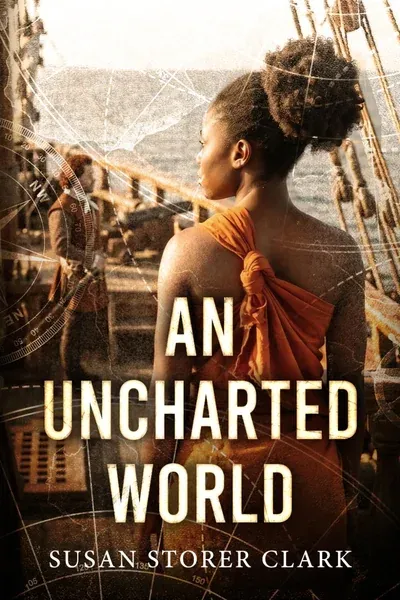
An Uncharted World: A 16th Century Adventure Based On a Real African Woman and Explorer Francis Drake by Susan Storer Clark front coverTap to enlarge

LuvemBooks Verdict

Best for

Historical fiction readers drawn to the age of sail and the transatlantic slave trade who want the story told from the perspective of the enslaved — especially those who value recovered real lives, African spiritual tradition, and vast geographical scope over prose style.

Worth it if

Worth it if you want a genuinely unusual, fact-grounded epic — an enslaved Yorùbá woman's journey across three continents and onto Drake's circumnavigation — and can accept plain, event-driven prose and an abrupt homecoming in exchange for that rare scope and unflinching honesty.

Skip if

Skip it if you read historical epics for lush sentence-level prose, prefer a single tight point of view over a sprawling multi-voice structure (including a divine narrator), or want lighter escapism — and note the ending is described as abrupt after a 400-page voyage.

Independent Book Review called it an eloquent yet plot-driven story that never sugarcoats the realities of slavery, while Foreword Reviews deemed it a compelling novel of survival and resistance about maintaining dignity in a world that refuses it. BlueInk Review was cooler on the style — simple sentences and plain vocabulary with telling over showing — but still found historical fiction fans would enjoy its cross-cultural perspectives; The Book Revue praised Clark's controlled writing and distinctly textured settings, and Book Review Directory credited her with bringing Morayo to life as a figure of lasting strength and resilience.

Sources: Independent Book Review, BlueInk Review, Foreword Reviews, The Book Revue, Book Review Directory
4.6from 28 Amazon ratings— reader ratings, not a LuvemBooks score
Buy on Amazon

Age & Reading Level

Recommended age

Ages 16+

Reading level

Adult

Content to know about

capture into slavery and the transatlantic slave trade
sustained depictions of enslavement and exploitation
loss and death across a long voyage
a child born into the violence of the era

Best for: Adults / mature 16+ — sustained depictions of capture, enslavement, and exploitation demand a reader prepared for heavy subject matter

Skip if you're looking for lighter, escapist historical fiction or lush, ornamented prose

In This Review
  • What Works & What Doesn't
  • A Kidnapped Girl, a World in Chains
  • The Real Woman Behind the Fiction
  • Where the Novel Earns Its Praise
  • Where It Falls Short
  • Who Should Set Sail

What Works & What Doesn't

What Works
  • Based on the true story of a real African woman recorded as sailing with Francis Drake — a genuine act of historical recovery
  • Exceptional geographical and cultural scope: West Africa, Brazil, Peru, Macau, and three oceans
  • Praised for refusing to sugarcoat the realities of slavery while sustaining reader engagement
  • Balances tragedy with credible hope, including the romance subplot with Pablo
  • Multi-perspective narration — priests, pirates, freed slaves, the trickster Èṣù — broadens the world beyond one testimony
What Doesn't
  • Prose criticised by BlueInk Review as simple sentences and plain vocabulary lacking stylistic flair
  • Conclusion described as rather abrupt after a 400-page journey
  • Unremittingly heavy subject matter — capture, enslavement, exploitation — not suited to readers wanting lighter historical fiction
  • Multi-perspective structure, including a divine narrator, may frustrate readers who prefer a single point of view
A genuinely unusual historical novel — one that follows an enslaved African woman across three continents and onto Francis Drake's circumnavigation — whose global ambition and real-life inspiration outshine its plainly styled prose.

A Kidnapped Girl, a World in Chains

An Uncharted World is a work of historical fiction set in the late 16th century, against the backdrop of the worldwide slave trade. In 1574, as the transatlantic slave trade ravages West Africa, Morayo, a Yorùbá girl, is captured into slavery near her home in what is now Nigeria. What follows is a journey of almost unimaginable scope: slavery in Brazil, servitude in Peru, and eventual capture by the privateer Francis Drake on his way around the world. The novel's settings span West Africa, Brazil, Peru, and Macau, across the Atlantic, Pacific, and Indian Oceans — a geographical canvas few novels about this era attempt.
maintains historical accuracies and deep reader engagement while never sugarcoating the realities of slavery
The publisher frames Morayo's arc as "a tale of resilience," told through her own eyes and through those of a wide-ranging cast: priests and pirates, aristocrats, freed slaves, and the divine trickster Èṣù of Yorùbá cosmology. That multi-perspective structure means the book is as much about the world that enslaved her — its commerce, its faiths, its empires — as it is about one woman's survival within it.

The Real Woman Behind the Fiction

The novel's central claim on a reader's attention is that Morayo was real. The book is billed as inspired by the true story of an African woman erased by history, and the record that survives of her — that she spent much of her life at sea, including time with Drake, whose child she bears in the novel — gives the fiction its spine. Clark, per her publisher's framing, approaches history by asking questions, and the novel functions as an act of historical recovery: giving interiority, motive, and voice to a woman the official record reduced to a footnote.
This places the book in a growing tradition of historical fiction that re-centres figures marginalised by the archive, and it shapes the reading experience. Reviewer Jaylynn Korrell, writing for Independent Book Review, observes that some of the novel's events really happened to its heroine, and credits the book with saving her from being lost to history — praise directed squarely at the project's real-world grounding rather than at invention for its own sake.

Where the Novel Earns Its Praise

The strongest notices for the book highlight its refusal to flinch. Korrell describes an eloquent yet plot-driven story that "maintains historical accuracies and deep reader engagement while never sugarcoating the realities of slavery," engaging themes of loss, romance, history, culture, passion, and resilience. Crucially, she notes that the tragedy is balanced: there are glimpses of hope along Morayo's journey, among them Pablo, a young man who believes religious life will be his escape from tragedy but falls in love with Morayo nonetheless. That counterweight — darkness lit by moments of connection — is what elevates the premise above a catalogue of horrors.
Back cover with synopsis, opening quote, publisher logo, and barcode.
BlueInk Review, while cooler on the book's style (see below), nonetheless concludes that historical fiction fans will enjoy the story's cross-cultural perspectives and its compelling depictions of early global exploration and the transatlantic slave trade. For an independently published novel tackling this much history, that is a meaningful convergence: the worldbuilding, the cultural range, and the sheer sweep of the voyage are the qualities reviewers consistently single out.

Where It Falls Short

The same BlueInk assessment is blunt about the prose: Clark writes in simple sentences with plain vocabulary, lacking stylistic flair. Readers who come to historical epics for lush, sentence-level pleasure should calibrate expectations — this is a novel whose power lies in event and perspective, not in ornament. BlueInk also finds that the story concludes rather abruptly, with Morayo sailing from Macao back to her African village, where she is received first with suspicion and eventually with acceptance; a 406-page odyssey that ends quickly may leave some readers wanting more time in that homecoming.
Two further cautions are matters of fit rather than fault. The subject matter is unremittingly heavy at its core — capture, enslavement, and exploitation across oceans — and the publisher's own framing promises a "terrifying journey," so readers seeking lighter escapism should look elsewhere. And the multi-voice structure, which includes a deity among its narrators, asks for a reader willing to move between registers and worldviews; those who prefer a single tight point of view may find the sprawl dilutes the intimacy of Morayo's own testimony.

Who Should Set Sail

An Uncharted World, published by HistoryMuse Press in 2026, is for historical fiction readers who value scope, authenticity of setting, and recovered lives over prose pyrotechnics. It will particularly suit readers drawn to the age of sail, to narratives of the slave trade told from the perspective of the enslaved rather than the enslavers, and to fiction that braids African spiritual tradition into a global story. The real Morayo deserved a chronicler; on the evidence of its reviewers, Clark has given her one whose reach matches the voyage itself — even when the telling stays plain.

Sources & Further Reading

The key facts and claims in this review are grounded in the retrieved, verified sources listed below.

  1. Cited in this review
  2. 1
  3. Further reading
  4. 2
  5. 3
  6. 4
  7. 5
  8. 6
  9. 7