Skip to content
Reviewed

Read Time

9 min read

Our age bandAdult
Reader rating
4.5 · 175,479 Amazon ratings, as of Nov 2026
reader ratings, not a LuvemBooks score
Curated & edited by

LuvemBooks Editorial

How we create our reviews →
Share This Review
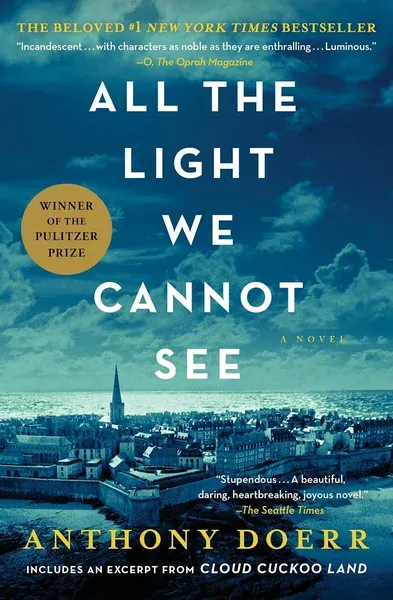
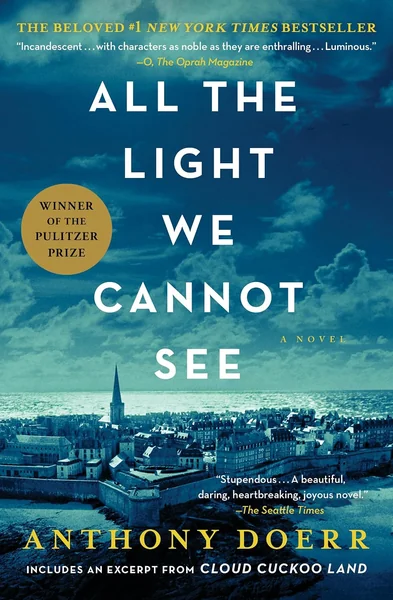
All the Light We Cannot See: A Novel by Anthony Doerr front cover

Our review

All the Light We Cannot See

All the Light We Cannot See by Anthony Doerr Review: A WWII War Novel

Anthony Doerr’s historical novel follows a blind French girl and a German orphan whose lives intersect in occupied France during the Second World War. The book rewards patience with a meticulously researched narrative balancing intimate struggles against a vast conflict. Readers seeking a character-driven epic will find a deeply moving exploration of survival.

Our age band: Adultwar violence · brutal military training

LuvemBooks Verdict

Best for

Readers seeking meticulously researched historical fiction with intricate scientific motifs and complex, interwoven timelines will find a deeply moving exploration of human resilience.

Worth it if

Worth reading if you appreciate slow-burn narratives that reward patience with a powerful emotional payoff and carefully balanced dual perspectives.

Skip if

Skip it if you prefer fast-paced thrillers or find lyrical, heavily descriptive prose tedious and demanding.

Where reviewers agree and split

Readers rate it 4.5 on Amazon. The reviews we read that discuss it in depth split on some points:

  • Mixed

    The Guardian · Press review: engaging page-turner with stylistic inadequacies, best in its war school sections

  • Mixed

    The Guardian · Press review: absorbing page-turner with stylistic weaknesses, strongest in Nazi school chapters

  • Mixed

    Whispering Gums · Book blog: engaging and readable but sprawling, imperfect with imagery issues

  • Positive

    Book Club Chat · Book blog: outstanding historical fiction, complete story with memorable characters and impact

    Overall verdicts are our summary of each review we read, from its headline, rating and conclusion.

    The Guardian praised the novel as an absorbing page-turner but cautioned that its stylistic flourishes can overwhelm, calling it a book where 'the talent of the storyteller surmounts stylistic inadequacies'. Book Club Chat affirmed the payoff, noting the short chapters help it 'move at a good pace'.

    “one of those books in which the talent of the storyteller surmounts stylistic inadequacies”

    — The Guardian
    Sources: The Guardian, Book Club Chat
    4.5from 175,479 Amazon ratings, as of Nov 2026— reader ratings, not a LuvemBooks score

    Frank James reviews All the Light We Cannot See: A Novel

    A detailed review and analysis of Anthony Doerr's novel All the Light We Cannot See.

    A BookTube review by Frank James, 2018 · 58K views · 1.4M subscribers · Watch on YouTube ·

    Their views, not ours. The points are our AI summary of what they say, each playing from where they say it.

    Dual wartime storylines

    The book follows two teenagers on opposing sides of World War II: a blind French girl fleeing Paris and an orphaned German youth with technical skills.

    Suspenseful museum jewel subplot

    A German officer hunts across Europe for a legendary, possibly cursed diamond from a French museum, adding tension to the narrative.

    Alternating chapters create momentum

    Switching back and forth between the two main perspectives injects energy into the reading experience as their lives begin to subtly intersect.

    Storytelling trusts the reader

    The novel avoids heavy-handed exposition, offering just enough information for readers to connect the plot points and relationships independently.

    Ask LuvemBooks

    Was this helpful?

    Anthony Doerr’s All the Light We Cannot See traces the intersecting lives of a blind French girl and a German orphan in occupied France during the Second World War. While the deliberate pacing and lyrical prose demand patience, readers will discover how the novel rewards sustained attention.
    Is it worth reading?
    Readers will find the novel deeply rewarding. The Guardian praised the Nazi school chapters as the strongest, calling it an absorbing page-turner where the storyteller's talent surmounts stylistic inadequacies. The deliberate pacing ultimately justifies the investment with a powerful conclusion.
    Similar books
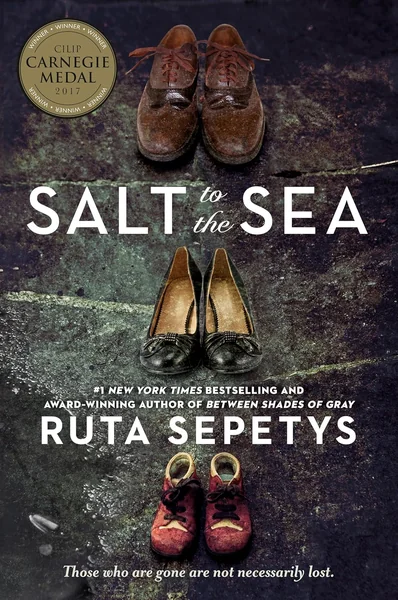
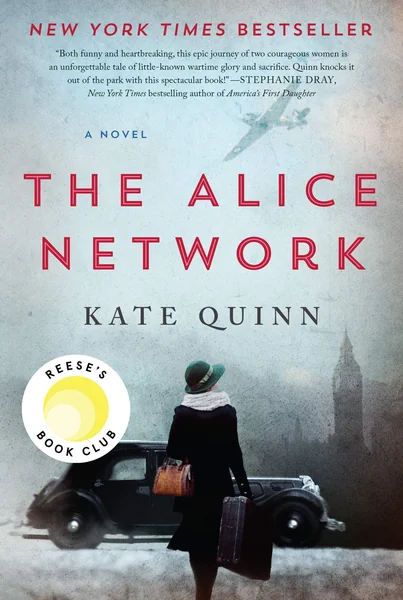
    Fans of meticulously researched wartime narratives will likely enjoy Ruta Sepetys's Salt to the Sea and Kate Quinn's The Alice Network, which share a focus on overlooked historical figures during the Second World War. Min Jin Lee's Pachinko also appeals to readers drawn to morally gray protagonists navigating oppressive regimes. Kristin Hannah's The Nightingale is another strong recommendation for those seeking character-driven stories of survival under occupation.
    Who should read this?
    The novel is best suited for readers who enjoy narratives that reward patience. It appeals to audiences interested in moral ambiguity and the intersection of science and technology. Readers who appreciate Dickensian depth or Darwinian observations of nature will likely embrace the text.
    What age is it for?
    This novel is written for adults, featuring complex historical themes and war violence that require mature comprehension. The narrative explores the brutal environment of a Nazi paramilitary academy and the psychological toll of occupation, making it unsuitable for younger readers. Parents should consider the abstract ideas and substantial length before sharing it with teenagers.
    Did it win any awards?
    The novel won the 2015 Pulitzer Prize for Fiction and the Andrew Carnegie Medal for Excellence in Fiction. It also achieved significant commercial success, selling over 15 million copies by September 2021 and spending over 200 weeks on The New York Times Best Seller list.
    What are the main themes?
    The work examines survival and loyalty during the Second World War. A central theme is the quiet power of doing the right thing against overwhelming odds, illustrated through Marie-Laure's resilience and Werner's moral conflict. The story also examines the destructive nature of war and obsession, particularly through the pursuit of the Sea of Flame gem.
    Summarize this book

    Summarize this book

    Anthony Doerr’s novel follows two protagonists whose lives converge in occupied France during the Second World War. Marie-Laure LeBlanc, a blind French girl, flees to the walled citadel of Saint-Malo with her father, who builds her a tactile miniature of their neighborhood to help her navigate. Werner Pfennig, a German orphan with a talent for radio technology, is recruited into a brutal Hitler Youth academy. Their paths eventually intersect through a radio broadcast centered around a legendary diamond known as the Sea of Flame.

    Follow up

    Who are the protagonists?
    What historical period does it cover?
    What happens to the characters?

    Synthesized from verified book data & published reviews · How we review

    Ask LuvemBooks

    What would you like to know about All the Light We Cannot See?

    Answers come from our editorial notes on this book. If we haven't covered something, we'll say so.

    Readers often ask

    Our Review

    We review the evidence: published critics, reader verdicts and BookTube reviews, gathered and weighed with AI assistance and edited by LuvemBooks, rather than one reader's first-hand take.
    Anthony Doerr’s sprawling historical novel delivers a meticulously researched portrait of survival during the Second World War.

    All the Light We Cannot See by Anthony Doerr Review: A WWII War Novel

    Readers seeking an immersive historical epic will find a compelling, character-driven narrative that balances intimate personal struggles against the vast machinery of conflict. The book rewards patience with a deeply moving exploration of how ordinary people maintain their humanity under extreme duress.

    Plot Summary of All the Light

    The narrative follows two central figures whose lives intersect in occupied France. Marie-Laure LeBlanc is a blind French girl who flees Nazi-occupied Paris with her father to the walled citadel of Saint-Malo.
    Her father works as the master of locks at the Museum of Natural History. He builds a perfect miniature of their neighborhood so she can memorize it by touch.
    Werner Pfennig is a gifted German orphan whose technical prowess with radios lands him in a brutal academy for Hitler Youth. Both characters navigate a devastating war while carrying secrets that could alter their fates.
    Doerr structures the novel through a nonlinear timeline that alternates between the two protagonists. Sections depicting the Battle of Saint-Malo in August 1944 are interspersed with chronological chapters tracing their childhoods back to 1934.
    This alternating perspective gradually builds toward a tense convergence in the coastal city. The story centers on a legendary gem known as the Sea of Flame, which becomes a dangerous obsession for a Nazi collector.
    Marie-Laure relies on intricate tactile miniatures built by her father to navigate her surroundings. Werner discovers a natural talent for circuitry that eventually connects him to Marie-Laure through a radio broadcast.
    The narrative also explores the brutal environment of the Nazi academy. Werner endures harsh training while watching his friend Frederick suffer under the regime's ideology.
    Despite the overwhelming darkness of the war, the characters find moments of connection. They try to be good to one another against all odds in a fractured world.

    Critiques of Structure and Style

    The Guardian praised the novel as an entirely absorbing page-turner.
    The outlet saw the storyteller's talent as overcoming stylistic flaws.
    The Guardian highlighted the chapters detailing Werner’s schooling and the tragic fate of his friend Frederick as the strongest sections of the book.
    Doerr's prose requires no embellishment during those intense sequences. The narrative gently probes the question of how ordinary German people could have participated in the Third Reich.
    However, the same critic argued that the rest of the text suffers from excessive decoration. Adjectives like "glittering" and "glowing" appear too frequently, ultimately making the novel feel far too long.
    The book blogger behind Book Club Chat acknowledged the slow-burn pacing but argued the payoff justifies the investment. The blogger appreciated the nonlinear style for clearly demonstrating the events leading up to a major climax.
    Short chapters help the narrative maintain momentum despite its substantial length. The author spent ten years writing the book, dedicating much of that time to researching the historical setting.
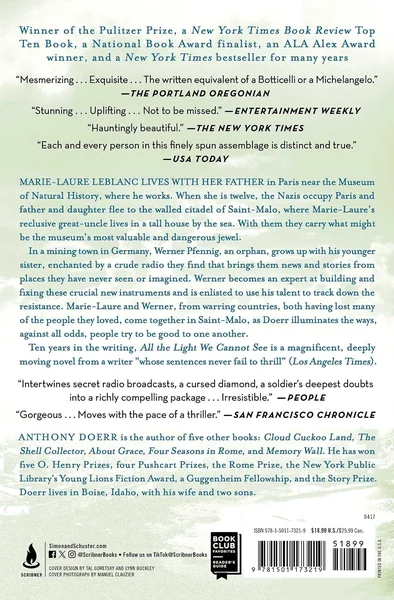
    Back cover with synopsis, author biography, and review quotes from major publications.
    Back cover with synopsis, author biography, and review quotes from major publications.

    Is It Worth Reading?

    The novel won the 2015 Pulitzer Prize for Fiction and the Andrew Carnegie Medal for Excellence in Fiction. It sold over 15 million copies by September 2021 and spent over 200 weeks on The New York Times Best Seller list.
    A four-part television adaptation premiered on Netflix in November 2023, further cementing its cultural footprint. The production was announced in 2019 and brought Doerr's intricate narrative to a global audience.
    Weighing these reviews reveals a tension between the book's immense emotional payoff and its demanding prose.
    The Guardian found the stylistic flourishes occasionally overwhelming, while Book Club Chat viewed the deliberate pacing as a necessary build toward a heartbreaking conclusion.
    Readers who appreciate Dickensian character studies or Darwinian observations of nature will likely embrace the text.
    Those seeking a fast-paced thriller may find the lyrical descriptions tedious.

    Historical and Scientific Themes

    The novel is deeply rooted in the historical reality of the Second World War. Doerr visited Saint-Malo in 2005.
    He spent ten years writing the book, dedicating much of that time to historical research. Scribner published the novel in 2014, and the narrative explores the destructive nature of war through the eyes of its young protagonists.
    Marie-Laure survives the Occupation through the books she can read in braille. Werner's talent brings him to the attention of the Nazis, forcing him into a brutal paramilitary school.
    Science and nature serve as central motifs throughout the text. Marie-Laure devours works like Darwin's The Voyage of the Beagle and Jules Verne's Twenty Thousand Leagues Under the Sea.
    These influences shape her understanding of the world around her. The Sea of Flame gem represents the danger of possession and obsession.
    A Nazi gem collector named Von Rumpel pursues the treasure with extreme lengths. The stone serves as a deeper thematic anchor rather than a fantasy element.

    Who Should Pick It Up?

    This historical epic is designed for readers who enjoy meticulously researched wartime narratives. The story appeals to audiences who prefer character-driven plots over action-heavy sequences.
    Fans of complex, interwoven timelines and morally gray protagonists will find the material rewarding. The novel also suits readers interested in the intersection of science, technology, and human resilience.
    Werner's fascination with radio technology and Marie-Laure's reliance on tactile miniatures highlight Doerr's enduring interest in how people perceive their world. The story ultimately serves as a meditation on sacrifice and the quiet power of doing the right thing.

    Sources & Further Reading

    The key facts and claims in this review are grounded in the retrieved, verified sources listed below.

    1. 1
    2. 2
    3. 3
    4. 4
    5. 5
    6. 6
    7. 7

      The Guardian

    Age & Reading Level

    Our age band

    Adult

    Our age band groups books for browsing; it isn't an age a review gave.

    Content to know about

    war violence
    brutal military training
    obsession with a cursed gem

    Best for: Adults — complex historical themes and war violence require mature comprehension

    Skip if you prefer fast-paced thrillers or find lyrical, heavily descriptive prose tedious

    Anthony Doerr on All the Light We Cannot See

    Anthony Doerr explains the historical inspirations and characters behind his novel All the Light We Cannot See.

    Uploaded by Simon & Schuster Books, 2014 · Watch on YouTube ·

    More from this interview on Anthony Doerr's page →

    The underground inspiration behind the novel

    Doerr was inspired in 2004 after seeing an irritated commuter complain about cell phone reception underground in Penn Station, which prompted him to reflect on the forgotten miracle of electromagnetic transmissions.

    Discovering Saint-Malo's wartime destruction

    During a book tour in Brittany, Doerr admired the walled seaside town of Saint-Malo until his editor told him it was nearly destroyed by American bombing in 1944, instantly giving him his novel's setting.

    Evacuating museum treasures before the Nazi invasion

    Doerr built Marie-Laure's storyline after learning how staff at the Louvre and the Natural History Museum hastily packaged and hid gems, fossils, and artwork before the German army occupied Paris in 1940.

    Radio as an instrument of state propaganda

    Doerr conceived the orphan Werner and his induction into the Hitler Youth to explore how radio could be weaponized to hammer nationalist ideology directly into children's minds.

    From our readers

    Reader reviews

    Be one of the first readers to answer.

    Read it? Was it right for you?

    Discussion

    Reader comments