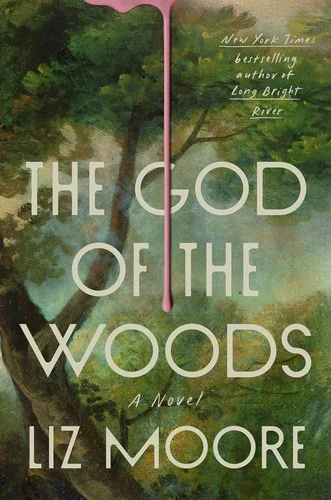
At a glance

LuvemBooks Verdict
Best for: Readers who want their crime fiction to carry the weight of a family saga and social novel — particularly those drawn to multi-timeline, ensemble-cast stories where class dynamics, parental failure, and community trauma matter as much as the mystery itself.
Worth it? Skip it? Read the full verdict →Ask LuvemBooks
Was this helpful?
- Is it worth reading?
- For readers drawn to the literary crime tradition — where setting, character psychology, and class dynamics matter as much as the mystery itself — The God of the Woods represents exactly the kind of work the genre produces at its most accomplished. The New York Times named it both a best thriller and a best crime novel of the year, People Magazine named it its number-one book of the year, and Rebecca Makkai called it a novel that "will stick with me for a very long time." The key caveat is scope: at nearly 450 pages with multiple timelines and a large ensemble, the novel rewards patient readers rather than those seeking lean, propulsive crime fiction.
- Similar books
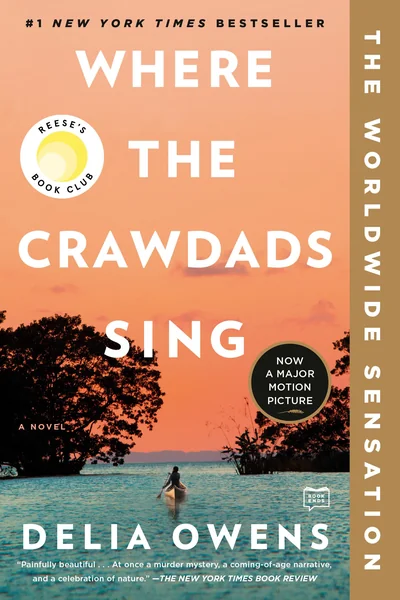
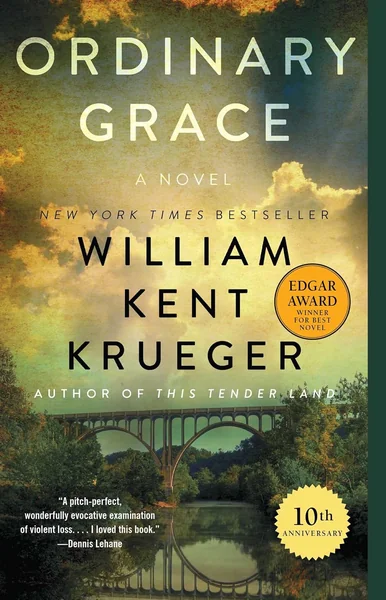
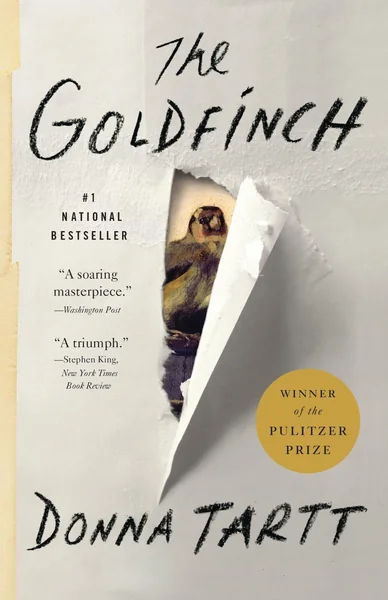
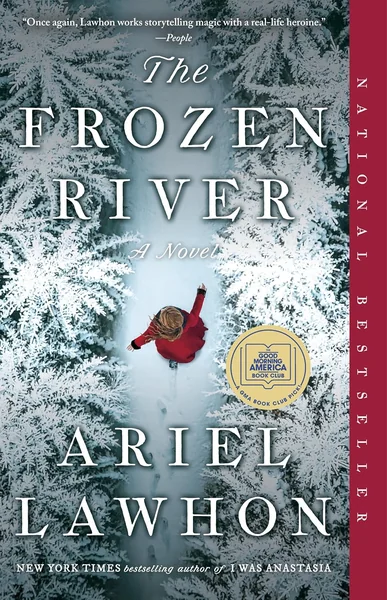
- Readers who love The God of the Woods tend to gravitate toward richly atmospheric literary mysteries and family sagas with strong social undercurrents. Delia Owens' Where the Crawdads Sing shares the novel's sense of a lush, isolated natural setting, a missing-person mystery, and a deeply felt portrait of class and outsider status. William Kent Krueger's Ordinary Grace offers a comparable mix of small-town tragedy, family grief, and moral reckoning told through a multi-character lens. Donna Tartt's The Goldfinch — like The God of the Woods — is a long, densely peopled novel that follows the long shadow of a single traumatic event across years and lives. For readers drawn to the historical legal and social texture Moore deploys, Ariel Lawhon's The Frozen River and Claire Lombardo's The Most Fun We Ever Had both deliver the kind of multi-generational family architecture and patient, reward-heavy storytelling that characterizes Moore's work.
- Who should read this?
- The God of the Woods is designed for adult readers who want their crime fiction to carry the weight of a family saga and the density of a social novel. It is ideal for fans of literary crime fiction who appreciate slow-burn revelations, richly drawn ensemble casts, and novels that probe class dynamics, parental failure, and institutional power as deeply as they pursue a mystery. Readers who enjoyed Long Bright River, or who are drawn to comparisons with Donna Tartt's The Secret History, are particularly well-positioned for this book.
- About Liz Moore
- Liz Moore is an American novelist, screenwriter, and producer.
- Tell me about the adaptation
- Netflix has greenlighted a series adaptation of The God of the Woods, to be written and produced by Liz Moore alongside Liz Hannah. Maya Hawke has been cast as Judy Luptack — the young assistant investigator at the center of the mystery — and Kerry Condon is set to play Alice Van Laar, the grief-shattered mother of the missing Barbara. The high-profile cast signals the story's wide crossover appeal beyond the page, and Moore's direct involvement as writer and producer suggests the adaptation will stay close to her original vision.
- What are the main themes?
- The God of the Woods operates on several interlocking thematic levels simultaneously. At its core, it examines parental failure and the long aftermath of child loss — one character's grief is described by critics as "acutely, painfully real" — alongside sustained depictions of domestic abuse and psychological cruelty within the Van Laar family. The novel is equally a social novel: critics called it "chillingly astute about the invisible boundaries demarcating social class," tracing the power the Van Laars hold over the working-class community left adrift after their paper mill closed. Gender and institutional power run through the investigation strand, as Judy Luptack navigates a bullying father and male colleagues who openly question whether women are suited for investigative work.
- Where should I start with Liz Moore?
- The God of the Woods is Liz Moore's most acclaimed novel to date and works as a standalone, making it a natural starting point for new readers. For those who want to begin with her earlier work, Long Bright River — which explores families fractured by trauma, addiction, and systemic failure — is the most direct predecessor in terms of theme and approach, and reading it illuminates how Moore has expanded those concerns into the larger historical and social canvas of The God of the Woods. Moore's publisher has described The God of the Woods as her most ambitious novel, so readers can move in either direction.
Summarize this book
Follow up
Synthesized from verified book data & published reviews · How we review
Press Enter to ask. Answers come from our editorial Q&A — start typing to see related questions.
Age & Reading Level
Recommended age
Adult
Reading level
Adult
4 content notes · who it suits
Content to know about
Best for: Adults — sustained depictions of domestic abuse, parental cruelty, and child loss make this best suited to mature adult readers
Skip if you want a lean, fast-paced crime thriller rather than a dense, multi-timeline literary family saga
Editorial Review
Liz Moore's The God of the Woods is a New York Times bestseller and one of critics of the Year — a multi-threaded literary thriller set in the Adirondacks that weaves a decades-spanning mystery of two disappearing children into a sharply observed portrait of class, family abuse, and inherited power. Published in 2024 by The Borough Press, the novel spent 38 weeks on the New York Times Best Seller List as of April 2025 and earned starred reviews from both Publishers Weekly and Booklist, cementing Moore's standing as one of contemporary fiction's most ambitious voices.
Read the Full ReviewBooks like The God Of The Woods
Curated picks for readers who enjoyed The God Of The Woods, with our reasoning for each match.
If you liked The God Of The Woods