At a glance

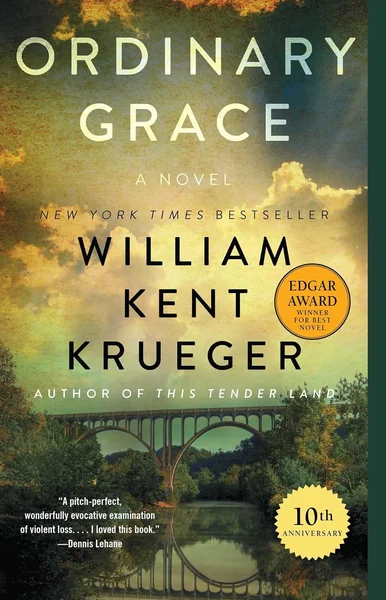
Ordinary Grace
LuvemBooks Verdict
Best for: Readers who love literary mysteries where atmosphere, moral inquiry, and retrospective narration take precedence over genre mechanics — particularly those drawn to coming-of-age stories set against grief, faith, and small-town American life.
Worth it? Skip it? Read the full verdict →Ask LuvemBooks
Was this helpful?
- Is it worth reading?
- For readers drawn to literary mystery — where atmosphere, character, and moral inquiry matter as much as any revelation — Ordinary Grace is a genuinely essential read. It won the Edgar Award for Best Novel in 2014, crime fiction's most prestigious honor, appeared on the New York Times bestseller list, and was named a School Library Journal Best Book of 2013. Kirkus Reviews, in a starred assessment, called it "a novel that transforms narrator and reader alike." The key caveat: readers expecting a tightly resolved whodunit will find the pacing meditative and one central mystery deliberately left open — the novel operates on a different frequency than genre crime fiction.
- Similar books
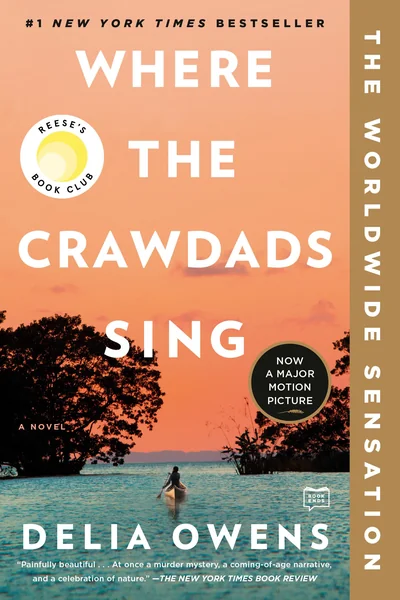
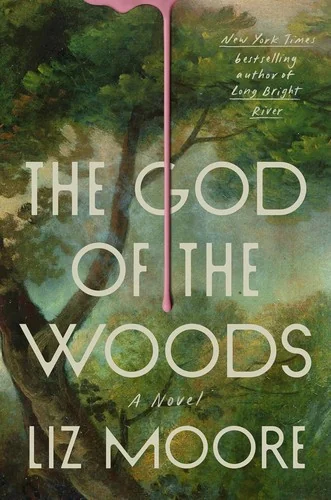
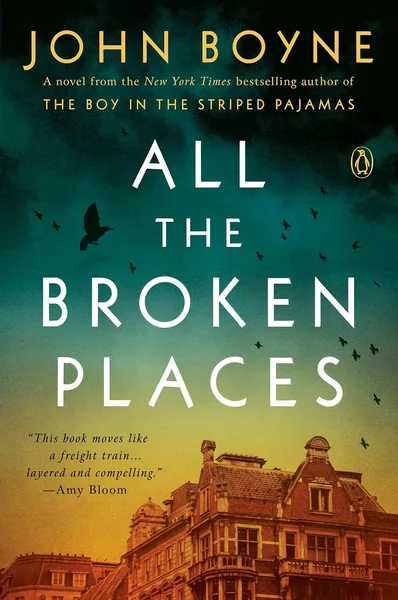
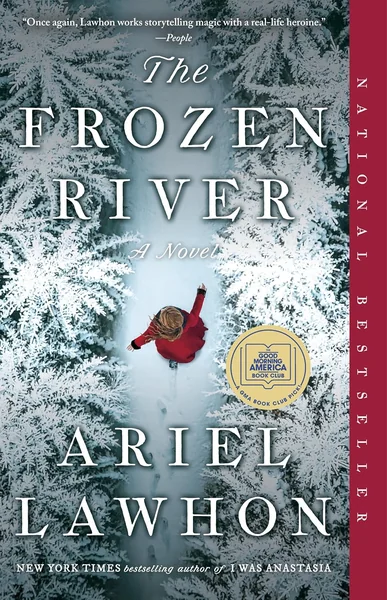
- Readers who loved Ordinary Grace tend to gravitate toward books that blend literary coming-of-age storytelling with mystery and a strong sense of place. Where the Crawdads Sing by Delia Owens shares the Southern gothic atmosphere, a murder at its center, and a deep immersion in nature and isolation. The God of the Woods by Liz Moore offers a similarly layered mystery set in the recent past, with literary ambitions well beyond genre. All the Broken Places by John Boyne, like Ordinary Grace, uses an adult narrator looking back at formative moral catastrophe. The Catcher in the Rye by J. D. Salinger is a natural companion for the adolescent male narrator grappling with a world that doesn't make sense. The Frozen River by Ariel Lawhon similarly reconstructs a historical murder through a narrator piecing together fragmentary knowledge — a structural kinship with Frank Drum's retrospective uncertainty.
- Who should read this?
- Ordinary Grace is ideally suited to adult readers who gravitate toward literary mystery — those who prize retrospective narration, philosophical depth, and the kind of meaning-making that only distance allows. It rewards readers interested in questions of faith without requiring religious belief, and those drawn to honest portrayals of early-1960s American life, including its racial tensions and social fractures. Fans of To Kill a Mockingbird's combination of childhood perspective and adult moral weight will find a natural parallel. Readers who need tightly plotted, procedurally satisfying crime fiction should approach with adjusted expectations.
- About William Kent Krueger
- William Kent Krueger is an American novelist and crime writer, best known for his series of novels featuring Cork O'Connor, which are set mainly in Minnesota.
- What are the main themes?
- The novel's central philosophical argument — drawn from Aeschylus — is that wisdom and grace arrive through suffering rather than despite it, and every major thread feeds into that framework. Faith and doubt run through the Drum family dynamics: Nathan Drum's ministry, his wife's alienation from religion, and Frank's own struggle to find meaning in a season of accumulating death. Grief, moral ambiguity, and the limits of a child's perception are structural concerns, as is the tension between the nostalgic surface of early-1960s small-town Minnesota and its harder social realities — racial tensions involving the region's Native American population, prejudice, mental health, suicide, and alcoholism all complicate any idealized reading.
- Is it a good book club pick?
- Ordinary Grace is among the stronger book club choices in contemporary literary mystery. Its layered structure — suspense, family drama, grief, faith, racial tension, and Aeschylean philosophy woven together rather than kept separate — generates multiple entry points for discussion. The dual-timeline narration raises productive questions about memory, the reliability of a child's perception, and the kind of retrospective understanding only suffering can provide. Beth Hoffman's blurb, collected on the publisher's site, praised Krueger's "artfully layered" construction as exactly the kind of novel that rewards group unpacking.
Summarize this book
Follow up
Synthesized from verified book data & published reviews · How we review
Press Enter to ask. Answers come from our editorial Q&A — start typing to see related questions.
Age & Reading Level
Recommended age
Ages 15+
Reading level
Adult
4 content notes · who it suits
Content to know about
Best for: Adults / mature 15+ — the novel deals seriously with suicide, alcoholism, racial prejudice, and the deaths of children, handled with literary gravity rather than softened for younger readers.
Skip if you want a tightly plotted whodunit with a fully resolved mystery and procedural momentum.
Editorial Review
Ordinary Grace is a New York Times bestselling standalone novel by William Kent Krueger, winner of the 2014 Edgar Award for Best Novel, set in the small Minnesota town of New Bremen during the summer of 1961. Narrated by thirteen-year-old Frank Drum — and filtered through his memory four decades later — the novel follows a season of multiple deaths that shatters a minister's family and forces Frank into hard confrontations with faith, loss, and the limits of what a boy can know.…
Read the Full ReviewBooks like Ordinary Grace
Curated picks for readers who enjoyed Ordinary Grace, with our reasoning for each match.
If you liked Ordinary Grace