15 Must-Read Books Before Their Screen Adaptations Hit
15 books

Fiction
15 Must-Read Books Before Their Screen Adaptations Hit
Curated recommendations for readers who want to experience the story before the screen adaptation
15 Books
4.2 Avg
There's something magical about experiencing a story in its original form before Hollywood transforms it for the screen. These three upcoming adaptations offer readers the chance to dive deep into richly imagined worlds, complex characters, and nuanced themes that often get condensed in visual media. From The Midnight Library's philosophical exploration of life's infinite possibilities to The Count of Monte Cristo's intricate revenge plot, these books reward readers with layers of meaning and detail that screen adaptations simply can't capture. Whether you're drawn to contemporary literary fiction or classic adventure tales, this curated selection ensures you'll appreciate both the source material and its cinematic interpretation. Reading these novels first allows you to form your own mental images of characters and settings, making the eventual viewing experience a fascinating study in adaptation choices.
Featured Books
+7 more
15
Books in Collection4.2/5
Average RatingApr 19, 2026
Published#1
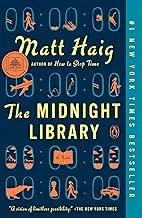
The Midnight Library by Matt Haig
by Matt Haig
4.4/5
Before Netflix brings this philosophical journey to screens, experience The Midnight Library in its original form—where Haig's metaphysical premise works best on the page. Nora Seed's exploration of alternate lives through a mystical library offers genuine insights about regret and choice, even when the narrative occasionally drifts toward self-help territory. Haig constructs his "what if" scenarios with careful logic, allowing readers to contemplate their own unlived possibilities alongside his protagonist. The author's background in mental health advocacy shows in his compassionate approach to depression and suicidal ideation, making this more than just a fantasy about parallel lives. While the explicit metaphors might feel heavy-handed to readers who prefer subtlety, the book's accessible prose and hopeful message have resonated widely for good reason. The visual adaptation will likely streamline the philosophical discussions, so reading first lets you fully absorb Haig's exploration of how we construct meaning from our choices.
"Haig opts for explicit metaphor—a choice that both clarifies and constrains his narrative."
Level: Lexile 890L
#2
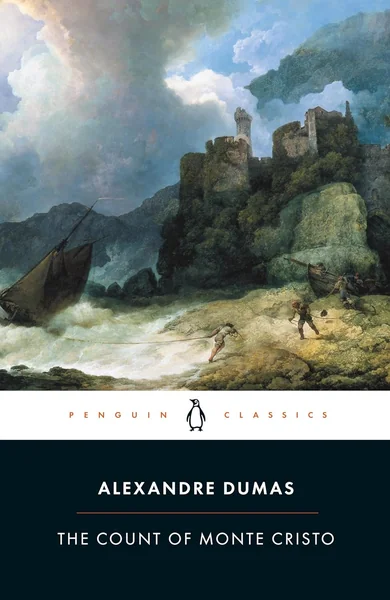
The Count of Monte Cristo by Alexandre Dumas
by Alexandre Dumas
4.7/5
Dumas crafted the ultimate revenge epic long before Hollywood discovered the formula, and his intricate plotting puts modern adaptations to shame. The Count's chess-like precision in orchestrating his enemies' downfall unfolds across a thousand pages of masterful storytelling that rewards patient readers. Edmond Dantès transforms from innocent sailor to mysterious nobleman through fourteen years of imprisonment, emerging with both treasure and an elaborate plan for justice. The novel's theatrical sensibilities—Dumas was a playwright—create memorable scenes of social manipulation and dramatic revelation that translate beautifully to screen, but lose the internal complexity of the Count's moral evolution. While the 19th-century pacing might challenge readers accustomed to modern thrillers, the payoff justifies every subplot and secondary character. Dumas never sacrifices momentum for literary pretension, building methodically toward emotional crescendos that feel earned rather than manipulative.
"The Count's plans unfold with chess-like precision, each move calculated to bring maximum psychological impact."
Level: Lexile 1100L
#3
The Wedding People: A Novel of Second Chances by Elliot Crane
by Elliot Crane
A word of caution before you click "buy": two books currently share this title, and the confusion between them is very real. The Wedding People: A Novel of Second Chances by Elliot Crane is a December 2025 Kindle release with almost no verified critical presence — no synopsis, no character names, no reviews from major outlets. The far more prominent book carrying a nearly identical title is Alison Espach's The Wedding People, a New York Times bestseller about a woman named Phoebe Stone who stumbles into someone else's wedding week at a Newport luxury hotel. If a screen adaptation is what drew you here, double-check which version is actually in development before purchasing. Verify the author name at checkout — this is one of those rare cases where a title search will actively lead you astray.
"Readers should take care to confirm which work they are purchasing, as the titles and subtitle are closely shared."
Level: N/A — verify edition
#4
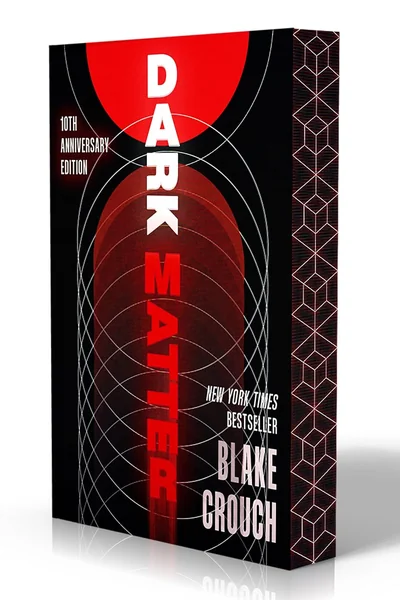
Dark Matter: A Novel by Blake Crouch
by Blake Crouch
4.4/5
Few thrillers make quantum mechanics feel this personal. Blake Crouch's Dark Matter takes one of physics' most abstract ideas — the many-worlds interpretation, the notion that every choice splinters reality into parallel versions of itself — and turns it into a domestic horror story. Jason Dessen isn't trying to save the world. He's trying to get back to his wife and son, which sounds simple until you realize the man now living his life built the machine that stole it.
The novel moves fast, almost uncomfortably so, and Crouch is smart enough to keep the science grounded in emotional stakes rather than exposition. Each parallel Chicago Jason stumbles through feels like a different version of the life he might have lived, and that accumulation quietly becomes the book's real subject: not the physics of alternate worlds, but the weight of the roads not taken.
It's not a novel that lingers — the pacing prioritizes momentum over depth, and readers wanting fully developed supporting characters may find the secondary cast a little thin. But as a propulsive, high-concept ride that rewards the "what if" impulse, it delivers. Dark Matter has already been adapted as an Apple TV+ series, so if you'd rather form your own picture of Jason's Chicago before the show shapes it for you, now is the time.
"An ingeniously personal premise — one that turns the enormity of quantum theory into an intimate, domestic nightmare."
Level: Advanced
#5
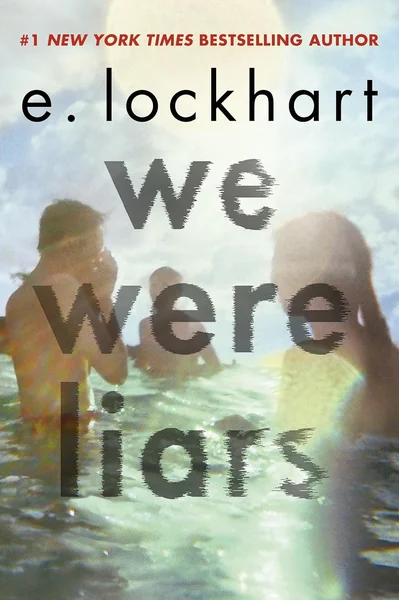
We Were Liars by E. Lockhart
by E. Lockhart
4.2/5
A masterclass in the slow-building twist, We Were Liars by E. Lockhart has been quietly devastating readers since 2014 — and with a screen adaptation now in the pipeline, this is exactly the kind of novel worth experiencing on the page first, where Lockhart's spare, almost incantatory prose does things a camera will struggle to replicate.
The setup is deceptively simple: Cadence Sinclair Eastman, eldest grandchild of a wealthy New England dynasty, returns to the family's private island after two years and a head injury she can't explain. Reuniting with her cousins Johnny and Mirren and their friend Gat, she tries to reconstruct what happened during the summer she lost. Lockhart built the novel around a fairy-tale architecture — deliberate, patterned, quietly mythic — and that structural choice is what makes the ending land so hard. R.L. Stine called the twist the most heartbreaking he'd ever encountered. He's not wrong.
That said, if you tend to resist unreliable narrators or find elliptical storytelling frustrating rather than suspenseful, the novel's withholding quality may test your patience before it pays off. Younger teen readers on the sensitive side should also know the emotional gut-punch is real.
"The devastation accumulates quietly before landing all at once."
Level: Lexile ~830L
#6
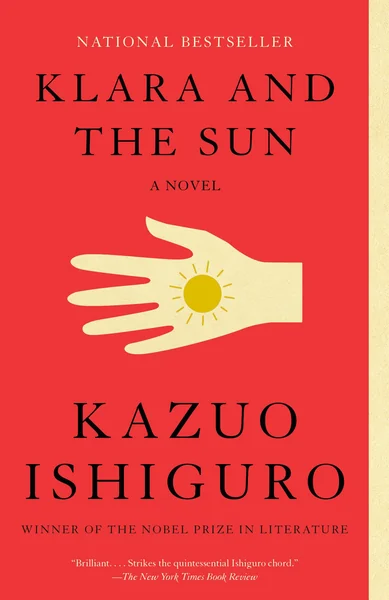
Klara and the Sun: A GMA Book Club Pick: A novel (Vintage International) by Kazuo Ishiguro
by Kazuo Ishiguro
4.2/5
Kazuo Ishiguro's Klara and the Sun is a quieter kind of dystopia — no dramatic collapse, no armed resistance, just a solar-powered robot watching humanity with devastating clarity from a shop window. Klara is an Artificial Friend, designed to companion children through a near-future where genetic enhancement has replaced traditional schooling and social isolation is simply the texture of daily life. She narrates with gentle, methodical precision, and that voice is the novel's great achievement: she misses nothing, yet her innocence means she interprets everything slightly wrong, in ways the reader registers before she does. The story centers on Josie, a girl whose health is failing and whose mother harbors a plan Klara only gradually understands. This is not a fast novel, and readers expecting plot-driven science fiction may find Ishiguro's elliptical, interior style frustrating. But for those willing to sit with its questions — about consciousness, love, what we owe the people we care for — it lingers long after the final page. With a film adaptation in development, now is the ideal moment to encounter Klara's particular way of seeing before a screen tells you how to picture her.
"Critics found [the world] 'entirely too plausible.'"
Level: N/A
#7
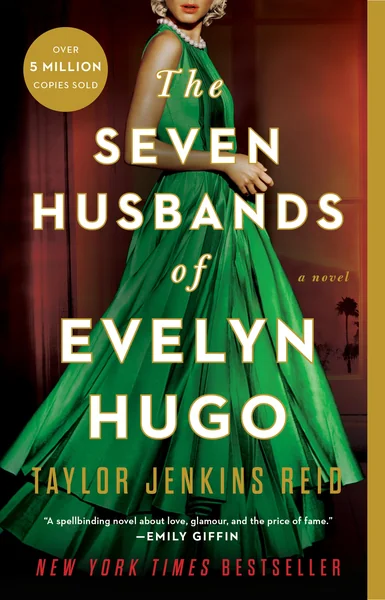
The Seven Husbands of Evelyn Hugo: A Novel by Taylor Jenkins Reid
by Taylor Jenkins Reid
4.6/5
The Seven Husbands of Evelyn Hugo is already a cultural phenomenon, so the short version: if you haven't read it yet, the Netflix adaptation makes now the time. Taylor Jenkins Reid constructs a fictional Hollywood legend whose real love story has been hiding inside seven strategic marriages — and the slow reveal of why reclusive Evelyn Hugo chose an unknown journalist named Monique Grant to finally hear all of it is the engine that keeps this compulsively readable novel running. The bisexual love story at its center is genuinely affecting, and Reid earns her tearjerker ending. Not everyone will love the framing device, and the prose is functional rather than literary, but as a page-turner built around secrets, ambition, and survival, it delivers completely.
"A novel built around a secret worth keeping for a lifetime."
Level: N/A
#8
The Invisible Life of Addie LaRue by V.E. Schwab
by V.E. Schwab
4.7/5
Three centuries of invisibility, condensed into one question: what does it mean to exist if no one can remember you? V.E. Schwab's The Invisible Life of Addie LaRue is the kind of novel that makes you think about legacy long after you've closed it — which is either exactly what you want from a fantasy, or a sign it's not your speed. The premise is genuinely cruel in the best way: Addie strikes a bargain for immortality in 1714 France, only to find she's been erased from every mind she touches. No note she writes survives. No face remembers hers. The dual timeline between her centuries of wandering and a 2014 New York bookshop encounter gives the story room to breathe, though readers who prefer tightly plotted fantasy over meditative character studies may find the pacing indulgent. If you're the type who reads for mood and feeling rather than momentum, this one hits differently. With a screen adaptation on the horizon, reading it first lets you sit with Addie's solitude on your own terms — before the visuals do that work for you.
"A rare fantasy novel that earned simultaneous placement on the New York Times, USA Today, Washington Post, and National Indie bestseller lists."
Level: N/A
#9
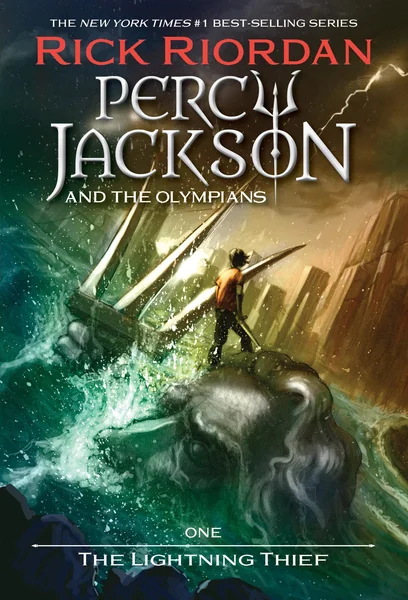
The Lightning Thief by Rick Riordan
by Rick Riordan
4.7/5
If you or a younger reader in your life has been watching the Percy Jackson series and hasn't yet picked up the book that started it all, this Deluxe Collector's Edition is a genuinely handsome reason to start. The story that made Greek mythology feel urgently, hilariously alive for a generation of middle-grade readers — Percy Jackson is twelve, perpetually getting expelled, and about to find out his father is Poseidon. The Lightning Thief is a well-known quantity at this point, so the real question is whether this edition earns its collector's price: new illustrations, foiled slipcase, sprayed edges, and notes from Riordan himself suggest it's designed as much for the shelf as the read. Worth noting this review is based on published descriptions rather than hands-on time with the physical object, so judge the production quality once you have it in hand. For newcomers, the story itself remains as propulsive as advertised.
"Perfectly paced, with electrifying moments chasing each other like heartbeats."
Level: N/A
#10
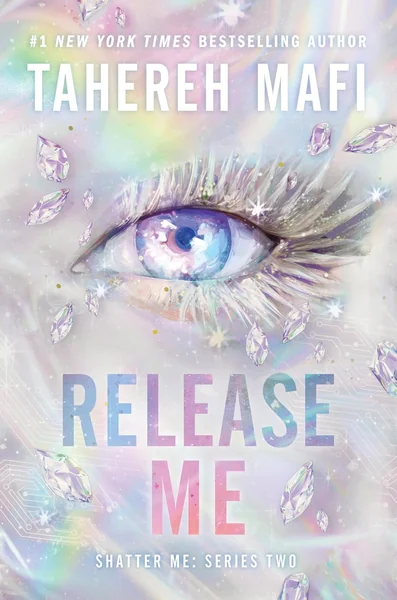
Release Me by Tahereh Mafi
by Tahereh Mafi
4.5/5
If you're already invested in Tahereh Mafi's Shatter Me universe, Release Me delivers what the series does best — volatile chemistry, fractured trust, and narration split across characters who each hide something. This second entry in Series Two follows Rosabelle, a trained killer, and James, the captor she's slowly, reluctantly beginning to trust, until a figure named Sebastian arrives and dismantles everything. The three-act structure (capture, safe-house detente, climactic betrayal) is well-executed, and the cameo from original series protagonist Juliette Ferrars — navigating a difficult pregnancy — will reward longtime fans. Honest caveat: reviewers note this is a step down from its predecessor *Watch Me* in terms of pacing, and as a middle chapter it carries the structural weight of setup rather than resolution. New readers should absolutely start with the original *Shatter Me* before jumping here; this is a series to be read in order, and it earns its emotional stakes only through accumulated history.
"Emotionally charged and dystopian in the Mafi tradition — with a betrayal that resets everything."
Level: Intermediate
#11
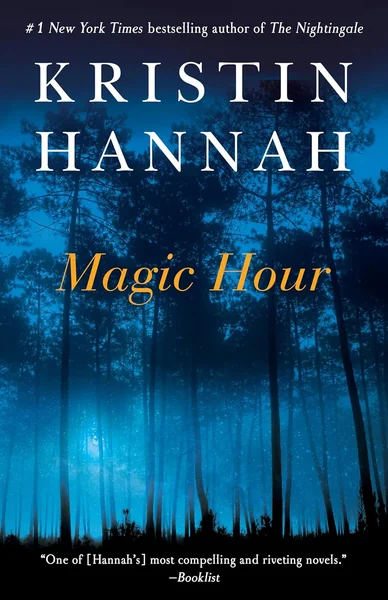
Magic Hour: A Novel by Kristin Hannah
by Kristin Hannah
4.6/5
The feral child at the heart of this novel is genuinely haunting — a wordless girl who walks out of the Washington forest and into the custody of two estranged sisters who aren't sure they can save her, or each other. Magic Hour by Kristin Hannah works best as a psychological mystery: who is Alice, where did she come from, and what happened to her out there among the trees? Julia Cates, the disgraced child psychiatrist summoned home by her police-chief sister Ellie, makes for a compelling guide through Alice's slow, painful rehabilitation. Hannah is at her strongest when she stays close to that central relationship — the silence between Julia and Alice, the incremental rebuilding of language and trust. Where the novel loses some footing is in its romantic subplots and softer emotional beats, which feel a touch formulaic against the rawness of Alice's storyline. Readers drawn to the upcoming adaptation primarily for the mystery and the trauma recovery narrative will find the book rewarding; those hoping for a tidier emotional payoff may find parts of it a little soft around the edges. Worth reading before the screen version makes Alice's world visual — the wordlessness lands differently on the page.
"The feral-child storyline [is] genuinely compelling."
Level: Intermediate
#12
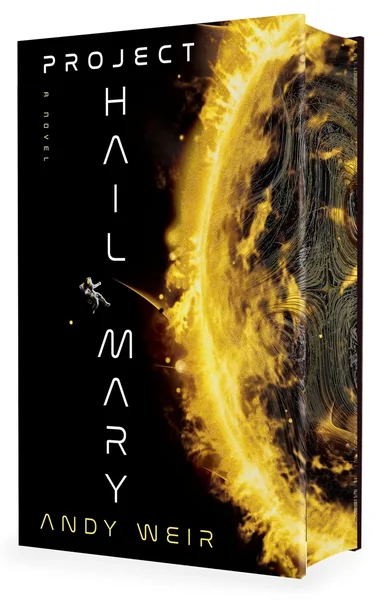
Project Hail Mary: A Novel by Andy Weir
by Andy Weir
4.7/5
Ryan Gosling is already attached to the film, but the book delivers something a movie will struggle to replicate: the slow, electrifying pleasure of watching a scientist think his way out of impossible corners, alone in the dark, millions of miles from home. Project Hail Mary is the rare hard sci-fi novel that earns its sentimentality — Ryland Grace is funny, self-deprecating, and genuinely endearing, and the friendship he forms mid-mission is one of the most unexpected and moving relationships in recent genre fiction. Weir's scientific mechanics are meticulous without being impenetrable; you don't need a physics degree, just a willingness to follow the logic. If you bounced off The Martian's relentless problem-solving energy, this one won't convert you — it runs on the same fuel. But if that's your thing, this is Weir at his best.
"Nothing short of a science fiction masterwork." — *Kirkus Reviews* (starred review)
Level: Advanced
#13
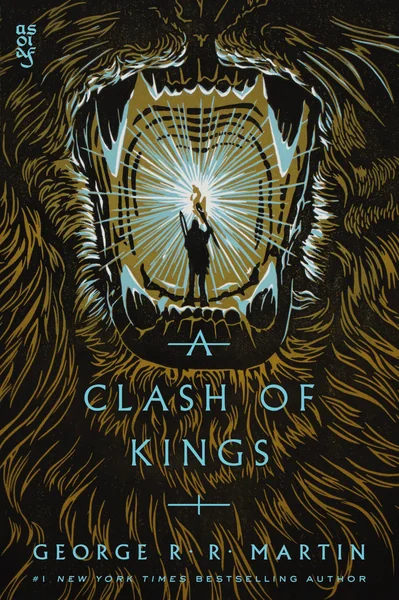
A Clash of Kings by George R. R. Martin
by George R. R. Martin
4.7/5
If you watched HBO's *Game of Thrones* and never picked up the source material, this illustrated edition of A Clash of Kings is a genuinely compelling reason to start. The War of Five Kings hits differently on the page — Martin gives every claimant to the Iron Throne a logic, a grievance, and enough humanity to make you uncertain who, if anyone, deserves to win. Lauren K. Cannon's original illustrations aren't decoration; they give visual weight to a novel that can feel overwhelming in its scope, anchoring readers in specific faces and moments. Bernard Cornwell's foreword is a bonus for anyone curious how Martin fits into the longer tradition of battle-driven historical fiction. Fair warning: this is book two, and jumping in cold will leave you lost. Read A Game of Thrones first, or at minimum recap it. If dense, multi-POV storytelling isn't your thing, Martin won't convert you here. But for readers who want Westeros on their own terms — before the show's choices become the only version in their heads — this collector's edition makes a strong case.
"A substantial object built around a substantial book."
Level: N/A
#14
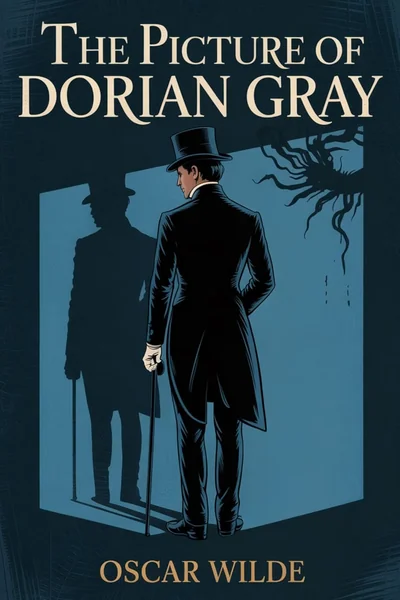
The Picture of Dorian Gray by Oscar Wilde
by Oscar Wilde
4.4/5
The Picture of Dorian Gray remains one of literature's most elegant moral horror stories — and with screen adaptations continuing to find new audiences for Wilde's only novel, now is exactly the right moment to read the original. The premise is deceptively simple: a beautiful young man wishes that his portrait will age in his place, and the wish is granted. What follows is a razor-sharp dissection of vanity, influence, and the hidden cost of a life without consequence. Lord Henry Wotton is one of fiction's great corruptors — witty, charming, and almost entirely without remorse — and watching his philosophy take root in Dorian is genuinely unsettling. Wilde writes with an aphoristic brilliance that makes nearly every page quotable, though readers looking for conventional plot momentum may occasionally find the novel's philosophical digressions slow things down. The Gothic horror elements are real but restrained; this is more a novel of ideas wearing horror's clothing than a straightforward scare. Still, the ending lands with genuine force, and the questions Wilde raises about beauty, art, and moral accountability feel no less urgent than they did in 1890.
"An archetypal tale of a young man who purchases eternal youth at the expense of his soul."
Level: N/A
#15
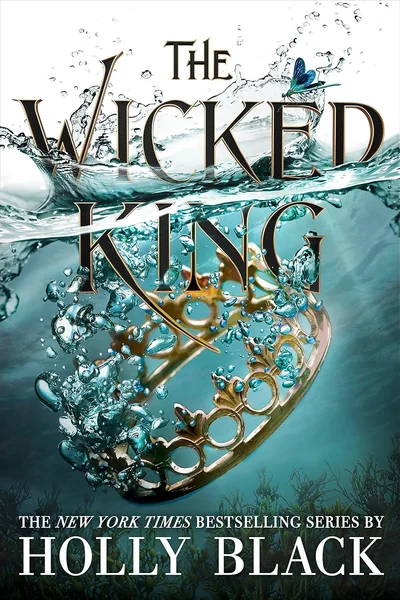
The Wicked King by Holly Black
by Holly Black
4.5/5
Middle books in trilogies live or die by momentum, and The Wicked King is one of the rare ones that actually accelerates. Jude Duarte has won — sort of — and watching her hold that win together is more tense than the fight to get it. She's the real power behind Elfhame's throne, but ruling from the shadows while a bound, resentful Cardan does everything short of open rebellion to undermine her makes for genuinely exhausting, compulsive reading. Holly Black keeps the court politics grounded enough that the scheming never feels decorative — shifting alliances, rival factions, and the question of what power actually costs all get treated with real weight. The undersea Faerie sequences add welcome texture to the world-building without slowing the pace. Fair warning: the ending is a gut-punch cliffhanger, so have the third book ready. If slow-burn antagonist dynamics and morally complicated protagonists aren't your thing, this series probably isn't either — but if they are, this installment delivers.
"The mechanics of political control are treated with genuine seriousness rather than as a backdrop."
Level: Intermediate–Advanced
Final Thoughts
These fifteen novels demonstrate why reading before watching enriches your understanding of both mediums. Each book offers unique rewards—philosophical depth, masterful plotting, or contemporary relevance—that enhance rather than compete with their screen counterparts. Whether you have weeks or months before the adaptations release, diving into these original stories will give you a richer appreciation for the creative decisions filmmakers face. The beauty of experiencing stories across different formats lies in how each medium brings its own strengths to the narrative, creating a layered understanding that neither alone could provide.
Frequently Asked Questions
Should I always read the book before watching the adaptation?
While not mandatory, reading first enhances your experience by letting you form independent interpretations. Books like The Count of Monte Cristo contain intricate subplots that adaptations often compress, giving readers deeper context for character motivations.
How different are book-to-screen adaptations usually?
Adaptations vary widely, but most make significant structural changes for pacing and visual storytelling. The Midnight Library's internal philosophical journey, for example, will likely require creative visual interpretation that differs from Haig's prose style.
Which of these books is easiest for reluctant readers?
The Midnight Library is the most accessible choice at under 300 pages with straightforward prose, while The Count of Monte Cristo requires more commitment due to its length and 19th-century writing style.
Are these adaptations officially confirmed?
Adaptation rights and production timelines frequently change in Hollywood. We recommend checking current entertainment news for official release dates and production updates for these projects.
What genres do these books represent?
This list spans contemporary literary fiction (The Midnight Library), classic adventure literature (The Count of Monte Cristo), and modern social commentary (The Correspondent), offering variety for different reading preferences.
How long should I allow to read these books?
The Midnight Library can be completed in a weekend, The Correspondent needs about a week of casual reading, while The Count of Monte Cristo requires several weeks to a month depending on your reading pace.