

9 min read
4.3
· 21,092 Amazon ratingsShare This Review
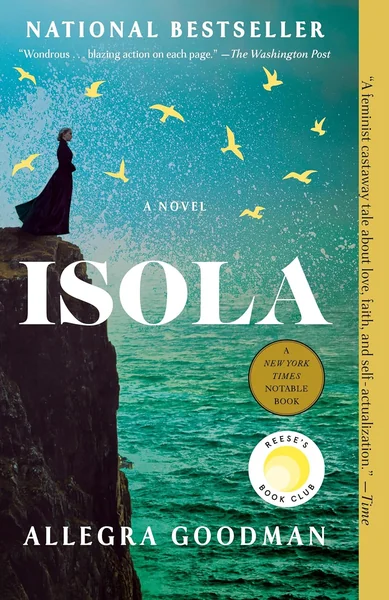
Isola by Allegra Goodman Review: A Gripping Historical Survival Epic
Allegra Goodman's Isola is a national bestseller and Reese's Book Club pick that draws on the true story of a sixteenth-century woman marooned on an island, delivering what Vogue called "an extraordinary book that reads like a thriller, written with the care of the most delicate psychological and historical fiction."
LuvemBooks Verdict
Best for
Readers of literary historical fiction who are drawn to feminist survival narratives, single-protagonist interiority, and stories of largely forgotten women reclaimed from history — particularly those who enjoy Reese's Book Club selections with genuine literary depth.
Worth it if
Worth it if you respond to tightly focused, psychologically rich historical fiction where a woman's fight for physical and spiritual survival — rooted in documented sixteenth-century history — is itself the entire, absorbing world of the novel.
Skip if
Skip it if you prefer expansive, multi-perspective historical epics with large casts and subplots, or if a survival narrative in which faith is central rather than incidental doesn't align with what you want from historical fiction.
What readers & critics say
Isola was named a Best Book of the Year by more than ten major outlets — including TIME, The New York Times Book Review, The Washington Post, NPR, Slate, and Kirkus Reviews — and was a finalist for the Kirkus Prize, according to penguinrandomhouse.com. Bookclubbabble.com praised Goodman's masterful weaving of themes through Marguerite's experiences, calling it no surprise that the novel was selected as Reese's Book Club's February 2025 pick, citing its powerful storytelling and thought-provoking themes.
Sources: Penguin Random House, Book Club Babble, Readers with Wrinkles, Magpie by Jen Shoop, bookclubs.comAge & Reading Level
Recommended age
Adult
Reading level
Adult
3 content notes · who it suits
Content to know about
Skip if you prefer secular historical fiction or multi-perspective narratives with subplot-rich casts
Isola: Reese's Book Club: A Novel by Allegra Goodman is Trending
Reese Witherspoon Picked Isola for Her Book Club — and Readers Are Taking Notice
Isola is a current Reese's Book Club pick, and that stamp of approval has a proven track record of turning books into national bestsellers. If you've been seeing this one everywhere lately, that's why.
Reese Witherspoon's book club has picked Isola as one of its 2026 selections, and that's the main reason it's showing up on so many reading lists right now. Reese's Book Club has been running since 2017 and has a well-earned reputation for launching books — and their authors — into the spotlight. Think Delia Owens, Celeste Ng, Megan Miranda — all names that got a major boost from a Reese pick.
The club specifically focuses on female authors and tends to gravitate toward stories with strong, complex women at the center. Isola fits that to a tee — it's based on the true story of a sixteenth-century woman who survived being stranded alone on an island, and Vogue called it a thriller written with the care of the best historical fiction. It's already a national bestseller, and the Reese pick has only added fuel to that.
If you've been on the fence, now's a good time to grab it. Books in the Reese's Book Club orbit tend to generate a lot of reader conversation, so you'll have plenty of people to talk to about it.
In This Review
- What Works & What Doesn't
- What the Novel Is and What It Argues
- Historical Roots and Cultural Significance
- Craft and Reception
- Genuine Limitations and Who May Be Frustrated
- Who This Novel Is For
What Works & What Doesn't
What Works
- Rooted in the true story of a sixteenth-century heroine, giving its survival narrative exceptional historical and emotional stakes
- Named a Best Book of the Year by more than ten major outlets, including TIME, The New York Times Book Review, and The Washington Post, and a finalist for the Kirkus Prize
- Praised by Vogue for balancing thriller-paced plotting with the attentiveness of psychological and historical fiction
- A Reese's Book Club pick with wide critical and popular reach, making it an ideal selection for book clubs and literary readers alike
- Frames a largely forgotten historical woman's story as both gripping narrative and an act of feminist literary recovery
What Doesn't
- The novel's sustained, insular focus on a single protagonist's survival and spiritual transformation may feel demanding for readers who prefer multi-perspective or subplot-rich historical fiction
- The centrality of faith to Marguerite's arc means readers seeking a secular survival story may find the novel's interior spiritual dimension more prominent than expected
What the Novel Is and What It Argues
Historical Roots and Cultural Significance
Craft and Reception
Genuine Limitations and Who May Be Frustrated
Who This Novel Is For
Frequently Asked Questions
Sources & Further Reading
The key facts and claims in this review are grounded in the retrieved, verified sources listed below.
- Cited in this review
- 1
- 2
reesesbookclub.com
- 3
- Further reading
- 4
Allegra Goodman, Wikipedia
- 5
- 6
magpiebyjenshoop.com
- 7
readerswithwrinkles.com
- 8
odysseybks.com
- 9
bookclubs.com
- 10
- 11
Related Reviews
Reviews of books we picked for readers who enjoyed Isola.

Reader Comments
No comments yet
Be the first to share your thoughts!