Skip to content
Reviewed

Read Time

7 min read

Our age bandAdult
Reader rating
4.6 · 54,395 Amazon ratings, as of Nov 2026
reader ratings, not a LuvemBooks score
Curated & edited by

LuvemBooks Editorial

How we create our reviews →
Share This Review
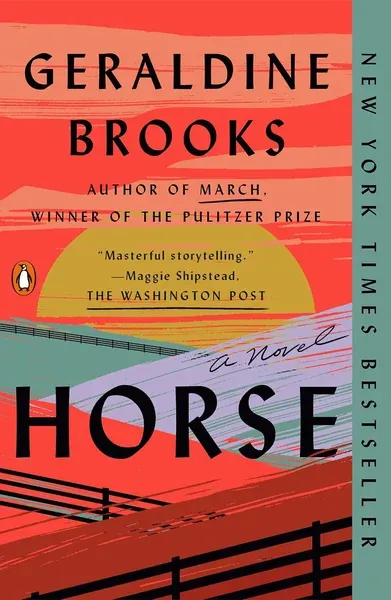
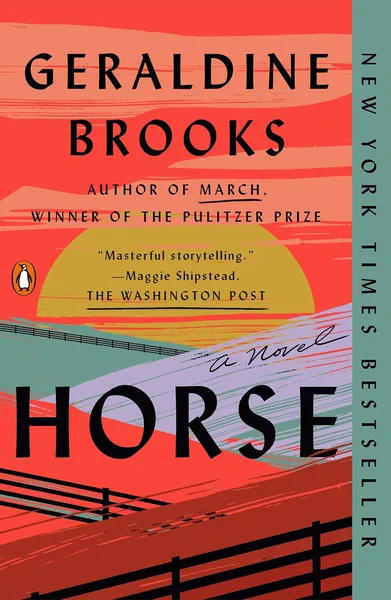
Horse: A Novel by Geraldine Brooks front cover

Our review

Horse

Horse by Geraldine Brooks Review: A Braided Tale of Race and Art

Geraldine Brooks’s novel resurrects the legacy of a legendary 19th-century racehorse to examine the erasure of Black contributions to American culture. While its heavy historical weight and a controversial ending may not suit every reader, the book remains a compelling, prize-winning exploration of obsession, art, and systemic racism.

Our age band: Adultenslavement · systemic racism

LuvemBooks Verdict

Best for

Readers who appreciate prize-winning literature will find this novel a compelling exploration of obsession and art that powerfully examines the erasure of Black contributions to American culture and systemic racism.

Worth it if

Worth reading if you appreciate literary narratives that intertwine archival recovery with sweeping character-driven stories across different eras.

Skip if

Skip it if you prefer lighter tones, as the relentless focus on racial trauma and heavy-handed moral framing may exhaust you.

Where reviewers agree and split

Readers rate it 4.6 on Amazon. The reviews we read that discuss it in depth split on some points:

  • Mixed

    The Guardian · Press review: cautious about good intentions despite confident execution

  • Positive

    Susan Albert · Book blog: compelling narrative braiding history, fiction, and vital themes

  • Positive

    Reading Grrl · Book blog: deeply moving historical fiction that resonates with emotional impact

  • Positive

    Cannonball Read · Book blog: excellent meticulously researched historical fiction with moving narratives

    Overall verdicts are our summary of each review we read, from its headline, rating and conclusion.

    The Guardian offers a cautious take on the novel's moral framing, while BookBrowse and Susan Albert praise its research and narrative craft, and Cannonball Read highlights its riveting factual integration despite some uncomfortable modern dialogue.

    Sources: The Guardian, BookBrowse, Susan Albert
    4.6from 54,395 Amazon ratings, as of Nov 2026— reader ratings, not a LuvemBooks score

    Ask LuvemBooks

    Was this helpful?

    Geraldine Brooks’s Horse resurrects the legacy of a 19th-century racehorse to examine the erasure of Black contributions to American culture across multiple timelines. While its heavy historical weight and controversial denouement may not suit every reader, the novel remains a compelling, prize-winning exploration of obsession and art.
    Is it worth reading?
    Readers who appreciate literature will find this compelling. Critics praise its literary narrative, though some note that its demanding academic focus may exhaust those seeking a lighter escape.
    Similar books
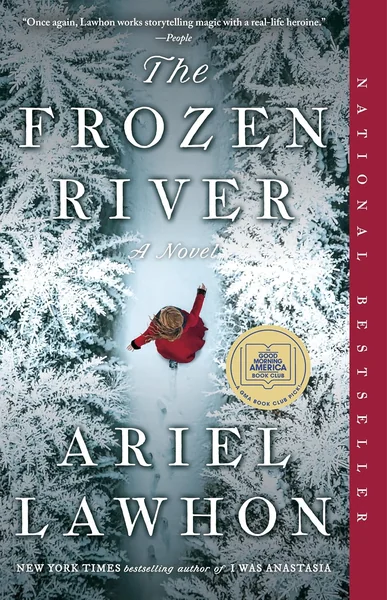
    Readers drawn to this novel’s braided timelines and recovery of marginalized histories may also enjoy The Book of Lost Friends by Lisa Wingate, which reconstructs the search for enslaved families, and The Frozen River by Ariel Lawhon, which reclaims overlooked historical women.
    Who should read this?
    This novel suits readers who appreciate literary works that tackle art history. It is ideal for those who enjoy narratives that intersect across eras and explore the visceral bond between humans and animals. It may feel demanding to readers seeking lighter literature or those who prefer narratives with open-ended moral interpretations.
    What age is it for?
    Written for adults. The novel tackles heavy historical subjects including enslavement and Black contributions to American culture, which require mature comprehension. While not explicitly graphic, its exploration of moral complexity aligns it with adult literary fiction.
    What are the main themes?
    The novel centrally examines the erasure of Black contributions to American culture, using the life of a legendary racehorse to trace these arcs. It also explores the intersection of art history and narrative, and the complex relationship across different eras.
    How is the narrative structured?
    Brooks braids four distinct timelines: 1850s Kentucky, the Civil War era, 1954 New York City, and 2019 Washington, DC. The horse Lexington serves as the central anchor, with the narrative jumping between periods to show how his legacy and the erasure of his Black groom are uncovered across generations.
    Summarize this book

    Summarize this book

    Anchored by the true story of Lexington, a record-breaking 1850s thoroughbred, Brooks braids three timelines to trace the animal’s life alongside his enslaved groom, a 19th-century itinerant artist, and a 1950s gallery owner. The narrative jumps to 2019 Washington, DC, where researchers uncover the horse’s skeletal remains and a discarded portrait, using the animal’s legacy to map the arc of American racism and the erasure of Black horsemen.

    Follow up

    How many timelines are there?
    Is the horse Lexington real?
    Does the book focus more on the horse or the people?

    Synthesized from verified book data & published reviews · How we review

    Ask LuvemBooks

    What would you like to know about Horse?

    Answers come from our editorial notes on this book. If we haven't covered something, we'll say so.

    Readers often ask

    Our Review

    We review the evidence: reader verdicts, gathered and weighed with AI assistance and edited by LuvemBooks, rather than one reader's first-hand take.
    Geraldine Brooks’s historical fiction novel succeeds through its meticulously researched, multi-timeline narrative that resurrects the legacy of a legendary 19th-century racehorse to examine the erasure of Black contributions to American culture.
    Horse: A Novel by Geraldine Brooks front cover
    Horse: A Novel by Geraldine Brooks front cover

    What the Book Is and How It Unfolds

    Originally published in 2022, Horse weaves together three distinct timelines anchored by the true story of Lexington, a record-breaking thoroughbred stallion who raced in the 1850s and became the most successful sire in American history. In Kentucky during the 1850s, an enslaved groom named Jarret forges a profound bond with the bay foal, while an itinerant artist, Thomas Scott, captures the animal on canvas.
    As the nation fractures over the Civil War, the paths of the horse, his groom, and the painter intersect in perilous ways. The narrative then jumps to 1954 New York City, where gallery owner Martha Jackson becomes fixated on a mysterious 19th-century equestrian painting.
    Finally, in 2019 Washington, DC, fictional characters Jess and Theo discover the horse’s forgotten legacy through skeletal remains and a discarded portrait. The book operates as a sweeping story of spirit and injustice, using the animal’s life to trace the arc of American racism and the erasure of Black horsemen.

    Place in the Genre and Historical Context

    The novel occupies a distinct space within historical fiction that blends literary narrative with archival recovery. Brooks draws heavily on real figures and events, including Scott’s Portrait of Lexington and Jackson’s actual role in the mid-century art world.
    The Guardian notes that beneath the romance of the racetrack lies a "dark inevitability: antebellum horseracing was an industry of white prestige built on the plundered labour of Black horsemen." The book won the Anisfield-Wolf Book Award and the Dayton Literary Peace Prize, reflecting its impact on conversations about racial equity.
    Critics have positioned it alongside works that resurrect marginalized histories. TIME called it a moving narrative about race and art rather than a simple animal story.

    What Reviewers Found Strong

    The Guardian delivered a mixed verdict, expressing caution about the author's good intentions despite a confident execution, and characterized the book as "a confident novel of racing and race." Susan Albert concluded with "I hope you will read it."
    Reading Grrl described it as an "amazing story of survival, racism, history and humanity." Cannonball Read stated that "Brooks is back on her game with Horse."
    These distinct perspectives collectively frame the specific critical and reader response to the novel.
    Susan Albert praised Brooks's "deft use of style," observing that each character possesses a distinct vocabulary and syntax. Susan Albert also commended the "wonderfully daring meta-moments" embedded within Theo’s academic work.
    Critics highlighted the book's emotional resonance, writing that it serves as a reminder of the simple, primal power an author can summon by creating characters readers care about and telling a story about them. The narrative momentum was discussed, though reactions to the pacing varied.

    Limitations and Points of Contention

    Despite its acclaim, the novel’s thematic weight and narrative choices have drawn specific criticism.
    This heavy-handed approach to its message may alienate readers who prefer historical fiction that leaves its moral interpretations more open. The novel’s dense academic and historical focus can also feel demanding to some audiences.
    Cannonball Read noted that while the factual information is astounding, certain conversations between the modern-day characters regarding racism can feel "cringy" and overly familiar. The Guardian observed that Brooks’s explicit framing of the novel as a reckoning with race can initially make a reader wary.

    Is It Worth Reading?

    Weighing these reviews, Horse emerges as a demanding but rewarding read for audiences interested in literary historical fiction that tackles systemic racism and art history. The book excels when it focuses on the visceral bond between humans and animals.
    Readers who enjoy meticulously researched narratives that intersect multiple timelines will likely find it deeply engaging. However, those seeking a lighter escape may find the novel’s relentless focus on historical trauma exhausting.
    It is a book that lingers, not for its comfort, but for its unflinching examination of how history is written, painted, and forgotten.

    Sources & Further Reading

    The key facts and claims in this review are grounded in the retrieved, verified sources listed below.

    1. Cited in this review
    2. 1
    3. 2
    4. 3
    5. Further reading
    6. 4

      Geraldine Brooks, LuvemBooks

    7. 5
    8. 6
    9. 7
    10. 8
    11. 9
    12. 10

    Age & Reading Level

    Our age band

    Adult

    Our age band groups books for browsing; it isn't an age a review gave.

    Content to know about

    enslavement
    systemic racism
    historical trauma

    Best for: Adults — themes of enslavement, systemic racism, and historical trauma

    Skip if you prefer historical fiction with lighter tones or want a narrative that leaves its moral interpretations open

    From our readers

    Reader reviews

    No LuvemBooks readers have answered yet.

    Read it? Was it right for you?

    Discussion

    Reader comments