BOOKS
Published

Read Time

8 min read

Reader rating

4.7

· 89 Amazon ratings
reader ratings, not a LuvemBooks score
Curated & edited by

LuvemBooks Editorial

How we create our reviews →
Share This Review

The Return of the King by J.R.R. Tolkien Review: A Towering Conclusion to Middle-earth

The Return of the King is the third and final volume of J.R.R. Tolkien's The Lord of the Rings, first published in 1955, completing one of the most influential works in the history of fantasy literature — and this edition includes the complete appendices and index that give the world of Middle-earth its extraordinary depth.
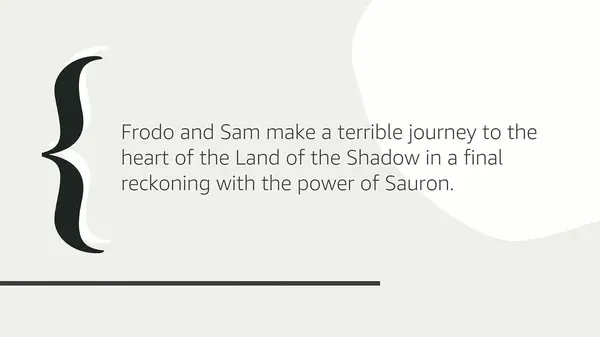
Interior page with a stylized bracket symbol and synopsis text describing the final confrontation in the story's climactic setting.Tap to enlarge

LuvemBooks Verdict

Best for

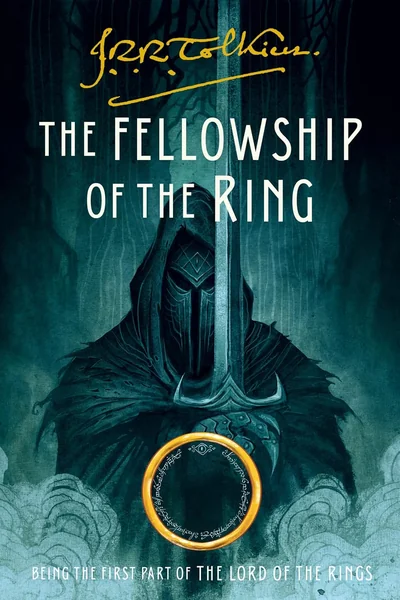
Readers who have completed The Fellowship of the Ring and The Two Towers and are ready to engage with the full thematic and world-building ambitions of Tolkien's trilogy — including its appendices, linguistic depth, and the resonant, myth-inflected cadences of the "Scouring of the Shire."

Worth it if

You are willing to meet Tolkien's elevated, deliberately paced prose on its own terms and value literary myth-making, sustained thematic weight, and the remarkable imaginative architecture of Middle-earth over kinetic, action-forward genre fiction.

Skip if

Readers coming to it expecting the viscerally choreographed battle sequences and propulsive pacing of contemporary epic fantasy are likely to find the prose style dated and the combat writing — including the Battle of the Pelennor Fields — underwhelming by modern genre standards.

Waterstones surfaces period press praise calling the novel "extraordinarily imaginative" (The Times) and "a most remarkable feat" (critical coverage), reflecting its canonical critical standing. The academic journal Mythlore (via dc.swosu.edu) documents early mixed notices — one critic objected that Tolkien's language had "crossed the boundary between mythology and scripture" — showing the novel's reception was not without dissent, even as its long-term stature proved unassailable.

Sources: Waterstones, Mythlore (dc.swosu.edu), Novel Notions, Luke Harkness, Oz Book Snail
4.7from 89 Amazon ratings— reader ratings, not a LuvemBooks score

Age & Reading Level

Recommended age

Ages 12–18

Reading level

Young adult

Content to know about

large-scale warfare and battle
death of major characters
themes of corruption and loss of self

Best for: Ages 12+ — elevated, myth-inflected prose and complex themes of sacrifice and corrupting power suit confident readers with some prior experience of literary fiction.

Skip if you want fast-paced, viscerally choreographed action in the style of contemporary epic fantasy.

Trending Now
Trending

The Return of the King by J.R.R. Tolkien is Trending

Updated Sep 6, 2026
In This Review
  • What Works & What Doesn't
  • What the Book Contains and How It Is Structured
  • Its Place in the Genre and Why It Still Matters
  • Strengths: Thematic Depth and World-Building
  • Genuine Limitations: Prose Style and Pacing
  • Who This Book Is For

What Works & What Doesn't

What Works
  • Concludes one of the most influential works in fantasy literature, first published in 1955, with genuine thematic weight around sacrifice, friendship, and the corruption of power
  • This edition includes the complete appendices and index, providing the linguistic, genealogical, and historical depth Tolkien built for Middle-earth
  • Has generated serious, sustained academic scholarship — from Tom Shippey's mythological analysis to peer-reviewed narrative theory — reflecting its literary reach beyond genre fiction
  • The 'Scouring of the Shire' chapter, studied by scholars as a key thematic focus of the entire trilogy, gives the novel an earned and resonant ending rarely matched in epic fantasy
What Doesn't
  • Tolkien's elevated, myth-inflected prose and measured pacing can feel dated to modern fantasy readers accustomed to contemporary genre styles, as some reader commentary notes
  • Battle sequences, including the Battle of the Pelennor Fields, have drawn criticism from readers who find more viscerally detailed combat writing in newer fantasy novels
The Return of the King stands as one of the most consequential works in twentieth-century literature, closing a trilogy that reshaped the entire landscape of fantasy fiction.

What the Book Contains and How It Is Structured

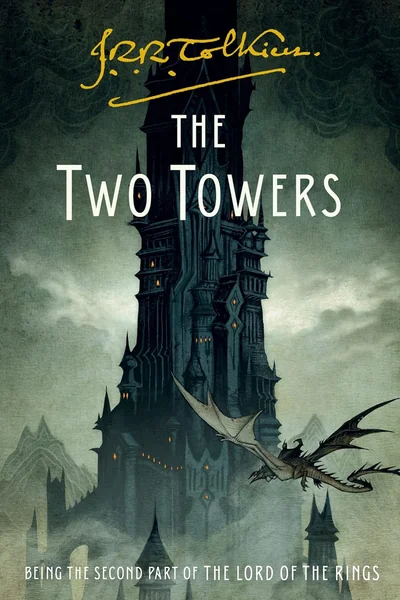
The Return of the King concludes the epic begun in The Fellowship of the Ring and continued in The Two Towers. As Wikipedia's entry on the novel records, the story opens in the kingdom of Gondor as the forces of the Dark Lord Sauron — unleashing hordes of Orcs across Middle-earth — bear down on the realm's white city. On one front, the warrior characters converge for the climactic Battle of the Pelennor Fields; on another, the hobbits Frodo and Sam press deeper into Mordor on their desperate quest to destroy the One Ring in the fires of Mount Doom. The novel also contains what scholars have called the "Scouring of the Shire," a late chapter that — as David M. Waito argued in a 2010 academic study — functions as a key narrative and thematic focus for the entire trilogy rather than a mere coda. This edition, as Barnes & Noble notes, includes the complete appendices and index, the extensive back-matter Tolkien constructed to give his Secondary World its linguistic, genealogical, and historical texture.
the writing may not hold up too well for modern fantasy readers reading this for the first time now

Its Place in the Genre and Why It Still Matters

It is difficult to overstate The Return of the King's significance to the fantasy genre. Tolkien, a distinguished Oxford academic who lived from 1892 to 1973, built the myth-making scaffolding for virtually every epic fantasy that followed. The scholarly conversation the novel has generated is unusually rich: Tom Shippey's The Road to Middle-earth traces how Tolkien synthesised Old English, Norse, and Finnish sources into a new mythology; Mary R. Bowman's 2006 essay in the Journal of the Fantastic in the Arts examines the novel's narrative theory; and Wayne G. Hammond and Christina Scull's The J.R.R. Tolkien Companion and Guide documents the compositional history in detail. This breadth of serious academic attention, spanning decades, reflects a work that rewards analysis far beyond its surface pleasures as adventure fiction. The novel has also proven generative in popular culture — serving as the inspiration for Peter Jackson's film trilogy and, more recently, cited as background context for the Amazon Prime Video series The Rings of Power.

Strengths: Thematic Depth and World-Building

The novel's enduring reputation rests substantially on its thematic ambitions and the coherence of its world. There is, as the blogger at Novel Notions wrote after completing the trilogy, "something magical and timeless in the themes told in The Lord of the Rings" — themes of courage, sacrifice, friendship, and the corrupting nature of power that accumulate full force in this concluding volume. The appendices included in this edition extend those themes into the material of constructed history, offering readers genealogies, annals, and linguistic notes that transform Middle-earth from a story setting into a world with the weight of deep time. For readers who engage with these materials, they represent a remarkable achievement of imaginative architecture that few novelists have attempted, let alone sustained.
Interior page with a stylized bracket symbol and synopsis text describing the final confrontation in the story's climactic setting.

Genuine Limitations: Prose Style and Pacing

Not every reader comes away equally satisfied, and the honest critical record reflects that. The Novel Notions review notes that "the writing may not hold up too well for modern fantasy readers reading this for the first time now" — a candid observation about how Tolkien's elevated, myth-inflected prose and deliberately measured pacing sit against the expectations shaped by contemporary epic fantasy. The same source observes that the battle sequences, including the Battle of the Pelennor Fields, may disappoint readers accustomed to more viscerally choreographed combat writing: "I've read a LOT of fantasy books that have better battle/war scenes," the reviewer writes. These are not reasons to avoid the book, but they are fair warnings for first-time readers who approach it expecting the kinetic momentum of modern genre fiction rather than the cadences of literary myth-making.

Who This Book Is For

This edition — recommended for readers aged twelve and up — is designed for anyone ready to engage with the full sweep of Tolkien's vision, from the military drama of Gondor and Mordor to the quiet, bruised homecoming of the Shire. Readers who have already moved through The Fellowship of the Ring and The Two Towers will find the stakes fully realised here. Those drawn to the scholarship around Tolkien — the philosophical, linguistic, and narrative theory that has occupied academics from Shippey to Bowman — will find that the included appendices make this edition a particularly complete artifact of the author's intentions. Readers seeking a lightning-paced, action-forward fantasy conclusion may need to adjust expectations, but those willing to meet the text on its own terms will encounter a work that, as Novel Notions conceded despite its reservations, confirms that "Tolkien certainly earned his fame."

Sources & Further Reading

The key facts and claims in this review are grounded in the retrieved, verified sources listed below.

  1. Cited in this review
  2. 1
  3. Further reading
  4. 2

    J.R.R. Tolkien, Wikipedia