
9 min read
4.8
· 236 Amazon ratingsShare This Review
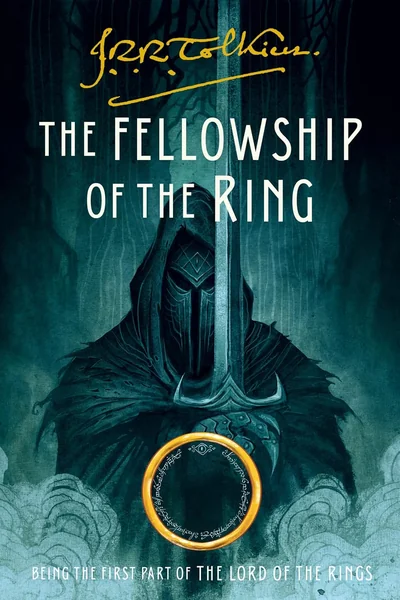
The Fellowship of the Ring by J.R.R. Tolkien Review: The Epic Fantasy That Built a World
The Fellowship of the Ring is the opening volume of J.R.R. Tolkien's landmark epic The Lord of the Rings — a foundational work of fantasy fiction set in the richly constructed world of Middle-earth, following hobbit Frodo Baggins as he sets out on a world-altering quest to destroy the One Ring.
LuvemBooks Verdict
Best for
Readers aged twelve and up who are ready to immerse themselves in a richly constructed secondary world and want to understand the foundational text of modern high fantasy on its own leisurely, lore-dense terms.
Worth it if
You value careful world-building, a clear single-protagonist focus, and landmark chapters — "The Shadow of the Past" and "The Council of Elrond" — that scholars have praised for their expository ambition and cultural scope over propulsive plot momentum.
Skip if
You need swift, unbroken narrative momentum and prefer self-contained stories — the extended hobbit dialogue, long expository flashback chapters, and an ending that deliberately leaves the quest unresolved will frustrate readers unwilling to continue into subsequent volumes.
What readers & critics say
Wikipedia's entry on the book notes that scholars and critics have remarked upon the volume's distinctive narrative structure, which alternates comfortable stays at five "Homely Houses" with episodes of danger, with differing explanations proposed for this rhythm. Literary Hub records that on publication W. H. Auden reviewed the book in critical coverage, and that the novel has since sold over 150 million copies and spawned what many regard as the most successful film trilogy of all time.
“Long before it became the most iconic novel in the now-storied history of the genre, it was reviewed in the pages of the New York Times by no less a literary critic than W. H. Auden.”
— Literary HubAge & Reading Level
Recommended age
Ages 12–18
Reading level
Young adult
2 content notes · who it suits
Content to know about
Best for: Ages 12+ — extended expository chapters, dense mythological history, and a demanding reading level suit confident older readers
Skip if you want a fast-paced, plot-driven adventure with minimal world-building detours
The Fellowship of the Ring: Being the First Part of The Lord of the Rings by J.R.R. Tolkien is Trending
Lord of the Rings TV Series in the Works, Plus Fellowship Film Back on Streaming
Big news is circling Middle-earth again: Amazon Studios and Warner Bros. are developing a multi-season TV series set in Tolkien's world, and Peter Jackson's original Fellowship of the Ring film just had a strong run on PVOD. It's a great time to revisit — or discover — the book that started it all.
Two pieces of news are bringing Middle-earth back into the conversation right now. First, Amazon Studios and Warner Bros. are developing a live-action TV series set during the Second Age of Middle-earth, meant to connect with Peter Jackson's beloved film trilogy. Jackson is reportedly reviewing scripts, with J.A. Bayona (Jurassic World) directing the first two episodes. Second, Jackson's original 2001 film The Fellowship of the Ring recently found a new audience as a PVOD hit ahead of upcoming sequel news — a reminder of just how durable this story is.
For book readers, that's a lot of reasons to dust off (or pick up for the first time) Tolkien's original novel. The TV series being set in the same cinematic universe as the films means fans are going to want to brush up on the lore, and the best place to start is always the source material. Fellowship of the Ring introduces Frodo, the One Ring, and the sprawling world of Middle-earth in a way no screen adaptation has fully captured.
Whether you're a longtime fan who wants to reread before the new series arrives, or someone who loved the movies and never got around to the books, this is a solid moment to start.
In This Review
- What Works & What Doesn't
- What the Book Is and What Happens
- Narrative Architecture and Structure
- Significance and Reception
- Genuine Strengths
- Who the Book Is For — and Where It Tests Patience
What Works & What Doesn't
What Works
- Foundational epic that established the template for modern high fantasy, set in the deeply realized world of Middle-earth
- Distinctive and carefully analyzed narrative structure alternating danger with recuperation, giving the volume a clear rhythmic shape
- Two landmark chapters — 'The Shadow of the Past' and 'The Council of Elrond' — praised by scholars for their expository ambition and cultural scope
- Frodo's single-thread protagonist viewpoint throughout provides unusual clarity of focus for the opening of such a vast work
- Praised on publication by contemporaries including W. H. Auden and Naomi Mitchison, with an enduring critical and popular legacy
What Doesn't
- Extended hobbit dialogue and leisurely early pacing — flagged even by C. S. Lewis and publisher Rayner Unwin during composition — will test readers who prefer swift narrative momentum
- The volume was conceived as part of a single larger work and ends with the Fellowship broken, meaning readers must continue to subsequent volumes for resolution
- The two long flashback chapters, while critically admired, shift away from action into dense expository narration that some readers find demanding
What the Book Is and What Happens
Narrative Architecture and Structure
Significance and Reception
Genuine Strengths
Who the Book Is For — and Where It Tests Patience
Frequently Asked Questions
Sources & Further Reading
The key facts and claims in this review are grounded in the retrieved, verified sources listed below.
- Cited in this review
- 1
tolkiengateway.net
- 2
- 3
- 4
- Further reading
- 5
J.R.R. Tolkien, Wikipedia
- 6
en.wikipedia.org
- 7
- 8
nationalshrineshops.com
Related Reviews
Reviews of books we picked for readers who enjoyed The Fellowship of the Ring.
Reader Comments
No comments yet
Be the first to share your thoughts!