

9 min read
4.8
· 2,122 Amazon ratingsShare This Review
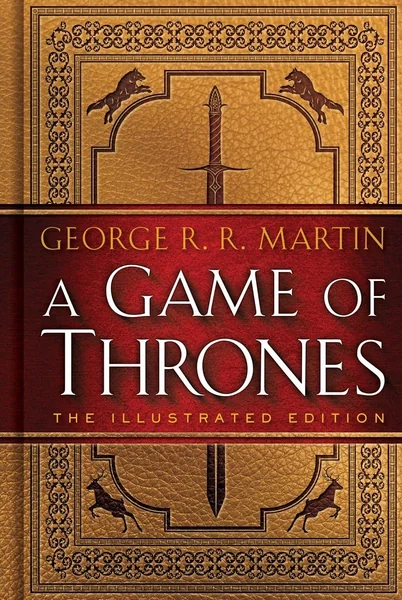
A Game of Thrones: The Illustrated Edition by George R. R. Martin Review: A Landmark Fantasy Reimagined in Visual Splendor
Published by Random House Worlds on October 18, 2016, to mark the twentieth anniversary of the original 1996 Bantam Books release, A Game of Thrones: The Illustrated Edition is a hardcover collector's edition of George R. R. Martin's genre-defining fantasy novel — the opening volume of the A Song of Ice and Fire series — featuring 8 full-color illustrations and more than 70 black-and-white illustrations, alongside a foreword by John Hodgman. The underlying novel has earned a reputation as one of the most consequential works in modern epic fantasy; this edition repackages it as a prestige physical object for devoted fans and new readers alike. Because this review has not examined the physical edition firsthand, assessment of art reproduction, paper quality, and binding is deferred to the buyer's own judgment.
LuvemBooks Verdict
Best for
Devoted fans of A Song of Ice and Fire or HBO's Game of Thrones who already love the novel and want a premium, anniversary-grade hardcover edition — ideally as a gift or collector's upgrade — illustrated with more than 70 black-and-white images and 8 full-color plates giving visual form to Westeros.
Worth it if
You want a celebratory, shelf-worthy physical object built around a text that earned starred and best-of-year notices at its original release, and you can assess the art reproduction and binding quality in person before buying.
Skip if
You're coming to A Game of Thrones purely for the story on a budget — the underlying text is identical to far cheaper paperback or e-book editions, and at 896 pages of dense, multi-POV narrative, the illustrated edition does nothing to ease a demanding read.
What readers & critics say
The original novel earned a starred review from critical coverage (cited on randomhousebooks.com) for its "superbly developed characters, accomplished prose, and sheer bloodymindedness," while Locus placed it "well above the norms of the genre" and BookPage called it "inventive and intricately plotted" — a chorus of approval this illustrated anniversary edition relies on. Reviewer Kitty Marie (kittymariebookreviews.home.blog) noted that 19 contributing artists produce a surprisingly consistent and harmonious result, with each illustration occupying a full page, while Novel Notions (novelnotions.net) praised the edition's production value as "freaking gorgeous" though flagged occasional misalignment between illustrated scenes and their chapter placement.
Sources: randomhousebooks.com, kittymariebookreviews.home.blog, novelnotions.netAge & Reading Level
Recommended age
Ages 16+
Reading level
Adult
3 content notes · who it suits
Content to know about
Best for: Adults / mature 16+ — graphic violence, political brutality, and sexual content including scenes involving a young teenage character make this suitable for mature readers.
Skip if you want a self-contained story with a resolved ending — A Game of Thrones ends on deliberate cliffhangers as the first volume of an unfinished series.
In This Review
- What Works & What Doesn't
- What the Book Is and What It Contains
- The Novel's Standing in the Genre
- The Illustrated Edition's Design Intent
- Genuine Strengths
- Limitations and Who Should Pause
What Works & What Doesn't
What Works
- The complete, critically acclaimed text of one of modern epic fantasy's most celebrated novels, praised by critical coverage (starred review), the Denver Post, the Chicago Sun-Times, Locus, and BookPage at its original release
- Published as a twenty-anniversary collector's edition by Random House Worlds, with 8 full-color illustrations and more than 70 black-and-white illustrations giving visual form to Westeros
- A foreword by John Hodgman adds a distinct cultural framing to the volume
- Two endpaper maps extend the world-building and enhance the edition's reference value
- Book 1 of 4 in the A Song of Ice and Fire Illustrated Edition series, allowing collectors to build a matched set
What Doesn't
- The edition's value rests heavily on the physical object — art reproduction, paper, and binding — which cannot be assessed without handling the book in person
- At a premium price point over standard editions, it is a collectible upgrade rather than a practical first read for the budget-conscious
- The underlying 896-page text is unchanged from other editions; readers who found Martin's dense, multi-POV structure challenging will not find it eased here
What the Book Is and What It Contains
The Novel's Standing in the Genre
The Illustrated Edition's Design Intent
Genuine Strengths
Limitations and Who Should Pause
Frequently Asked Questions
Sources & Further Reading
The key facts and claims in this review are grounded in the retrieved, verified sources listed below.
- Cited in this review
- 1
- 2
- Further reading
- 3
George R. R. Martin, Wikipedia
- 4
- 5
en.wikipedia.org
- 6
- 7
- 8
- 9
- 10
bookmarks.reviews
- 11
- 12
- 13
Related Reviews
Reviews of books we picked for readers who enjoyed A Game of Thrones.
Reader Comments
No comments yet
Be the first to share your thoughts!