9 min read
4.4
· 3,838 Amazon ratingsShare This Review
Our review
The Everlasting by Alix E. Harrow Review: A Lyrical, Time-Bending Fantasy Triumph
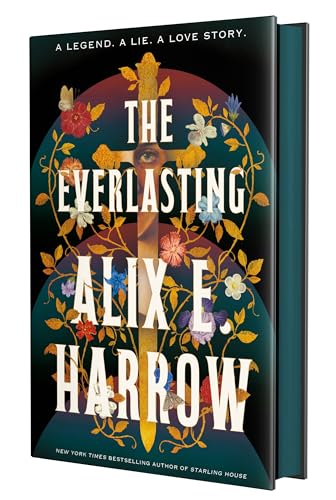
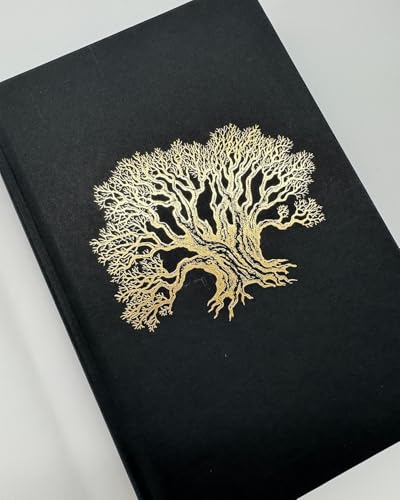
The Everlasting is a 2025 fantasy novel from New York Times bestselling and Hugo Award–winning author Alix E. Harrow, published by Tor Books on October 28, 2025. It follows Sir Una Everlasting, the legendary lady-knight whose sacrificial death built the nation of Dominion, and Owen Mallory, a failed soldier turned struggling scholar who falls so deeply in love with her tale that he is sent back through time to ensure she plays her fated part — even as doing so breaks his heart. Winner of the 2026 Locus Award for Best Fantasy Novel and a finalist for the 2026 Hugo Award for Best Novel, the book has drawn major critical praise, with Locus Magazine calling it Harrow's "most adventurous and most beautifully crafted novel to date." This review is based on the book's content as described by its publisher and published critical sources, not hands-on reading.

 Tap to enlarge
LuvemBooks Verdict
Best for
Readers of literary fantasy who are drawn to prose-forward, myth-interrogating fiction — particularly those who have loved Naomi Novik, V.E. Schwab, or Erin Morgenstern — and who want a formally inventive novel that asks whether quiet, chosen love can ever outweigh the grand destinies history demands.
Worth it if
You're willing to meet its unconventional dual second-person narration and time-loop architecture on their own terms, especially if you're open to a meditative pace that rewards patience once a key early plot turn recontextualises everything that came before.
Skip if
You're expecting a fast-paced knight's-quest action narrative with traditional third-person storytelling — the novel's deliberately slow-building, myth-interrogating structure will likely feel more frustrating than rewarding.
What readers & critics say
Locus Magazine (via the publisher and Wikipedia) praises the novel's prose as Harrow's most gorgeous and lyrical to date, with its looping timelines handled with exceptional craft. Reader reviewers at bibliosanctum.com, fanfiaddict.com, and bookpage.com echo that enthusiasm, with Biblio Sanctum calling it a wholehearted recommendation comparable to The Invisible Life of Addie LaRue, and BookPage noting the novel is "brimming with soul and longing" — while the more measured tarvolon.com review finds it very well put-together but flags a somewhat flat villain as a limitation.
“The Everlasting is brimming with soul and longing, especially between the lead characters.”
— BookPagePreview the book
Ask LuvemBooks
Was this helpful?
- Is it worth reading?
- For readers who gravitate toward literary fantasy with ambitious formal structures and myth-interrogating prose, The Everlasting is a significant achievement — Locus Magazine calls it Harrow's 'most adventurous and most beautifully crafted novel to date,' and its 2026 Locus Award for Best Fantasy Novel and Hugo Award nomination for Best Novel confirm that both the critical and fan communities recognize it as a meaningful step forward in her career. The dual second-person narration creates an unusual emotional intimacy between Sir Una Everlasting and Owen Mallory, and Gary K. Wolfe of Locus praises 'some of her most gorgeous and lyrical prose to date.' The key caveat is that the time-loop mechanics and second-person address can feel disorienting in the early chapters, requiring patience before the first major plot turn recontextualizes the story — readers unwilling to invest in that structural learning curve may struggle.
- Similar books
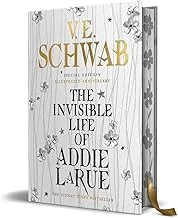
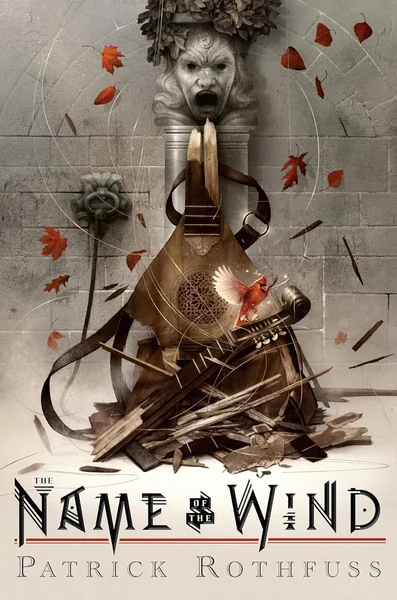
- Readers drawn to The Everlasting are likely to find a similar appeal in V.E. Schwab's The Invisible Life of Addie LaRue, which shares the novel's preoccupation with time, myth, and the cost of being forgotten or remembered. Patrick Rothfuss's The Name of the Wind offers another prose-forward, myth-conscious fantasy built around a legend being retold from the inside. For readers who responded to Harrow's feminist interrogation of fairy-tale structures, Stephanie Garber's Once Upon a Broken Heart and Rachel Gillig's One Dark Window both work in the space where dark folklore meets literary ambition. Susanna Clarke's Piranesi — not currently in the LuvemBooks catalogue — is also frequently cited alongside Harrow's work for its formal innovation and myth-saturated atmosphere.
- Who should read this?
- The Everlasting is designed for adult readers drawn to literary fantasy that interrogates the stories societies tell themselves — how legends are built, sustained, and at whose expense. Locus Magazine and Shelf Awareness position it squarely for readers who have responded to the prose-forward, myth-conscious fiction of authors such as Naomi Novik, V.E. Schwab, or Erin Morgenstern. It is an especially strong fit for readers who prioritize voice, formal innovation, and thematic depth over plot momentum, and for fans of Harrow's earlier novels who want to see her at her most structurally ambitious. Readers seeking a traditional action-driven knight's quest — despite the lady-knight premise — should be aware the novel's pace is meditative and its central concerns are historiographical rather than martial.
- How does this fit in Harrow's career?
- The Everlasting sits at the far edge of Harrow's evolution as a novelist. Where earlier works like The Ten Thousand Doors of January and The Once and Future Witches reimagined folklore and history within more contained narrative frames, The Everlasting folds time travel, cyclical myth-making, and questions of historiography into a single, formally daring structure. Tor's own description calls it 'genre-defying,' and the 2026 Locus Award for Best Fantasy Novel — along with its Hugo Award nomination — confirm that the critical and fan communities read it as a significant step forward in her work, not simply a continuation of an established mode.
- What makes the narration unusual?
- The Everlasting employs a dual second-person narration — both Sir Una Everlasting and Owen Mallory narrate in 'you,' with each character addressing the other directly. This is a rare formal choice for a novel of this length, and LuvemBooks' assessment, grounded in the critical record, is that it functions as both a structural risk and an emotional payoff: it collapses the distance between character and reader, and between past and present, placing the reader inside the loop itself and making them feel the weight of a story that always ends the same way. Gary K. Wolfe of Locus singles out the prose enabled by this structure as 'some of her most gorgeous and lyrical to date.'
- What does it say about myth and legend?
- The Everlasting interrogates how national legends are constructed and at whose expense they are maintained — Sir Una Everlasting's sacrificial death is not just a heroic story but the literal foundation of the nation of Dominion, and the novel asks what it means for Owen Mallory to enforce that sacrifice knowing full well what it costs. The book's central question — what happens when a person realizes they are not living their own life but performing a story written for them by forces they cannot see — is framed as a critique of historiography itself: how history selects its heroes, erases its dissenters, and demands that individuals conform to the roles legends have already assigned them. Locus Magazine praises 'its looping timelines and parallel histories' as evidence of the novel's ambition in pursuing these questions.
Summarize this book
Follow up
Synthesized from verified book data & published reviews · How we review
Press Enter to ask. Answers come from our editorial Q&A — start typing to see related questions.
Our Review
What the Novel Is and What It Does
Its Place in Harrow's Body of Work
Craft and Critical Reception
Genuine Limitations and Who May Struggle
Who This Novel Is For
Sources & Further Reading
The key facts and claims in this review are grounded in the retrieved, verified sources listed below.
- Cited in this review
- 1
- 2
en.wikipedia.org
- 3
aliteraryescape.com
- Further reading
- 4
torpublishinggroup.com
- 5
- 6
takestwotobookreview.com
- 7
bookpage.com
- 8
- 9
spectrumculture.com
- 10
bookish-delights.com
- 11
- 12
sffworld.com
- 13
crissilangwell.com
- 14
booksthatslay.com
- 15
us.macmillan.com
Age & Reading Level
Recommended age
Adult
Reading level
Adult
2 content notes · who it suits
Content to know about
Skip if you want a straightforward, action-driven knight's quest with linear plotting and traditional third-person narration.
Books like The Everlasting
Curated picks for readers who enjoyed The Everlasting, with our reasoning for each match.
If you liked The Everlasting