8 min read
Share This Review

Our review
A Game of Thrones
A Game of Thrones by George R. R. Martin Review: Epic Fantasy That Rewrote the Genre
A Game of Thrones is the first novel in George R. R. Martin's A Song of Ice and Fire series, following the deadly power struggle between House Stark and House Lannister for control of Westeros, while supernatural threats gather beyond a colossal wall of ice and the exiled Targaryens plot their return. It won the 1997 Locus Award for Best Fantasy Novel and has sold more than 100 million copies across the series.
LuvemBooks Verdict
Best for
Readers who relish densely plotted political fiction with a cast of morally compromised characters, high stakes across multiple storylines, and a willingness to see genre conventions upended — particularly those who can commit to a long, as-yet-unfinished series.
Worth it if
Worth reading if you prize intricate world-building, multi-perspective storytelling with unreliable narrators, and political realism over clean moral binaries in your epic fantasy.
Skip if
Skip it if you need a completed series before you start, struggle with very large casts across sprawling geographies, or prefer fantasy that offers moral clarity and lighter emotional territory.
What readers & critics say
Wikipedia's reception summary notes that reviewers commended the novel's focus on political intrigue, with chapter construction praised as consistently effective — each ending on a cliff-hanger while dozens of story strands press urgent questions about the fate of hundreds of characters. The Guardian's Sam Jordison described reading it with "genuine pleasure," calling the prose excellent while also acknowledging its "archaic absurdity," a balanced verdict that captures the experience many readers report.
“I read A Game of Thrones with genuine pleasure. It may be a cartoon, but it's one that is brilliantly drawn. Archaic absurdity...”
— The GuardianAsk LuvemBooks
Was this helpful?
- Is it worth reading?
- For readers who prize complex world-building, political intrigue, and narratives that refuse to honour genre conventions, A Game of Thrones remains the benchmark against which modern epic fantasy is measured. Critics described Martin's prose as 'excellent' and praised a chapter construction that ends each section on an effective cliff-hanger — a structurally ambitious approach that sustains tension across dozens of interwoven story strands. The key caveat is real, however: readers who begin here are entering a story that may continue beyond this book. Those who prefer resolved narratives, lighter moral fare, or smaller casts may find the combination of scale, darkness, and open-endedness a genuine obstacle rather than a feature.
- Similar books
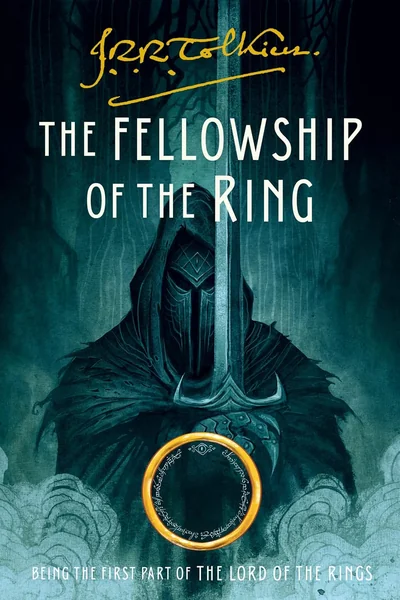
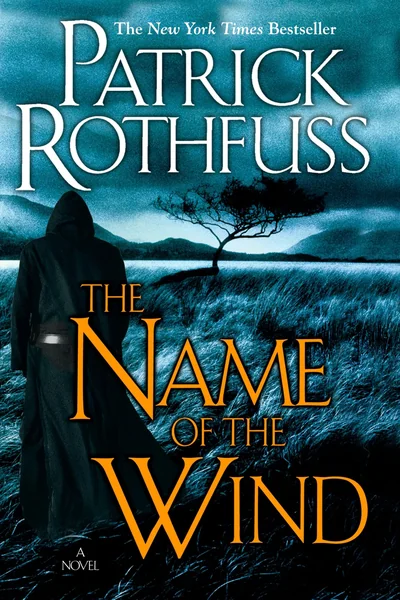
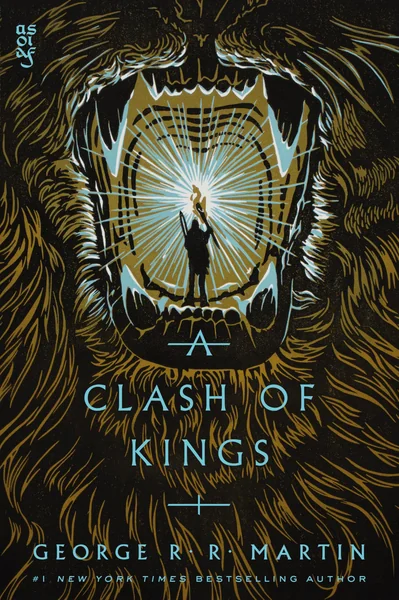
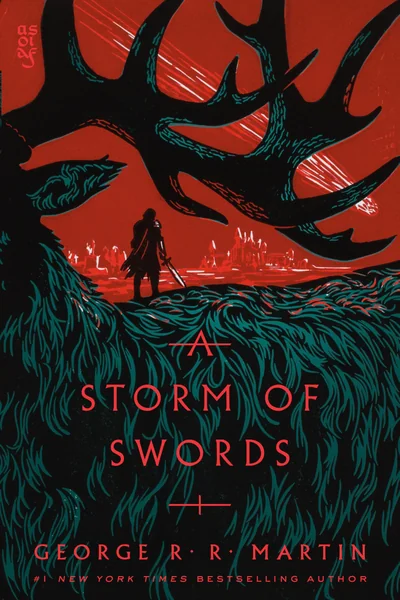
- Readers drawn to A Game of Thrones will find natural next steps in several works catalogued on LuvemBooks. The immediate continuation, A Clash of Kings, picks up the political and military chaos directly where this volume leaves off, while A Storm of Swords is widely considered the high-water mark of the series. For the epic fantasy that most directly invites comparison, J.R.R. Tolkien's The Fellowship of the Ring offers the moral clarity that Martin deliberately subverts — reading both illuminates what makes each distinctive. Patrick Rothfuss's The Name of the Wind shares the large-scale world-building ambition and (notably) the same unfinished-series caveat, while Brandon Sanderson's Stormlight Archive series provides a comparably vast, intricately constructed epic fantasy world with the added assurance of a more prolific publication pace.
- Who should read this?
- A Game of Thrones is best suited to adult readers with an appetite for political complexity, morally ambiguous characters, and large-scale world-building — the kind of reader who finds a cast of hundreds across multiple geographies exhilarating rather than exhausting. It rewards patience: the multi-POV structure and vast cast demand meaningful investment before the central conflicts between House Stark, House Lannister, and the exiled Targaryens fully take hold. Readers who prize resolved narratives, moral clarity, or lighter fare are likely to find the combination of scale, darkness, and an unfinished series a genuine obstacle. It is an essential read for anyone serious about the modern epic fantasy genre, and a natural starting point for those who came to the story through HBO's Game of Thrones adaptation.
- About George R. R. Martin
- George Raymond Richard Martin, also known by the initials GRRM, is an American author, screenwriter, and television producer.
- Tell me about the adaptation
- HBO's Game of Thrones (2011–2019) adapted A Song of Ice and Fire into one of the most-watched television series in the network's history, transforming what had been a dedicated but word-of-mouth readership into a global cultural phenomenon. The adaptation closely follows the novel's structure and major characters — Eddard Stark, Jon Snow, Daenerys Targaryen, and the Lannister family — through its early seasons, though later seasons moved beyond the published books into original territory. The series was a major factor in the novels surpassing 100 million copies sold across 47 languages, and Martin's influence during its production contributed to his inclusion on Time's list of the 100 most influential people in the world in 2011. Readers coming to the novel after watching the show will find the multi-POV chapter structure adds significant depth and unreliability not fully replicable on screen.
- What awards did it win?
- A Game of Thrones won the 1997 Locus Award for Best Fantasy Novel, and a novella drawn from its Targaryen chapters won the 1997 Hugo Award for Best Novella — two of the most prestigious honours in the fantasy and science fiction genre. The novel's critical recognition extended well beyond those early awards: Lev Grossman of Time labelled Martin 'the American Tolkien' in 2005, a descriptor that has since become one of the most-cited in epic fantasy. Martin himself was included on Time's list of the 100 most influential people in the world in 2011, a recognition tied in large part to the cultural reach of A Song of Ice and Fire.
- What order should I read the series?
- A Song of Ice and Fire is designed to be read in publication order, beginning with A Game of Thrones and continuing through A Clash of Kings, A Storm of Swords, A Feast for Crows, and A Dance with Dragons — the five volumes published to date. The political and character foundations established in A Game of Thrones are essential to everything that follows, and the braided narrative threads build cumulatively rather than resetting with each book. LuvemBooks has reviewed A Clash of Kings, A Storm of Swords, and A Feast for Crows: The Illustrated Edition for readers looking for guidance on the subsequent volumes. The sixth novel, The Winds of Winter, remains in progress, so new readers should be aware the series is currently unfinished.
Summarize this book
Follow up
Synthesized from verified book data & published reviews · How we review
What would you like to know about A Game of Thrones?
Answers come from our editorial notes on this book. If we haven't covered something, we'll say so.
Readers often ask
Our Review
We review the evidence: published critics, reader verdicts and BookTube reviews, gathered and weighed with AI assistance and edited by LuvemBooks, rather than one reader's first-hand take.
What the Novel Actually Is
Structural Craft and Narrative Design
Significance and Place in the Genre
Reception and Cultural Impact
Limitations and Who May Struggle
Sources & Further Reading
The key facts and claims in this review are grounded in the retrieved, verified sources listed below.
- Cited in this review
- 1
en.wikipedia.org
- Further reading
- 2
George R. R. Martin, LuvemBooks
- 3
- 4
grimdarkmagazine.com
- 5
bookmarks.reviews
- 6
- 7
- 8
- 9
lukeharkness.com
Age & Reading Level
Our age band
Ages 16+
Reading level
Older teens & adults
Our age band groups books for browsing; it isn't an age a review gave.
4 content notes · who it suits
Content to know about
Best for: Adults / mature 16+ — the novel's political realism, sexual violence, graphic brutality, and morally ambiguous complexity are best suited to adult readers.
Skip if you prefer morally clear narratives, resolved story arcs, or lighter fantasy fare — the series is defined by pervasive moral ambiguity and darkness.
Reader reviews
Be one of the first readers to answer.
Read it? Was it right for you?
Books like A Game of Thrones
Curated picks for readers who enjoyed A Game of Thrones, with our reasoning for each match.
More by George R. R. Martin
If you liked A Game of Thrones