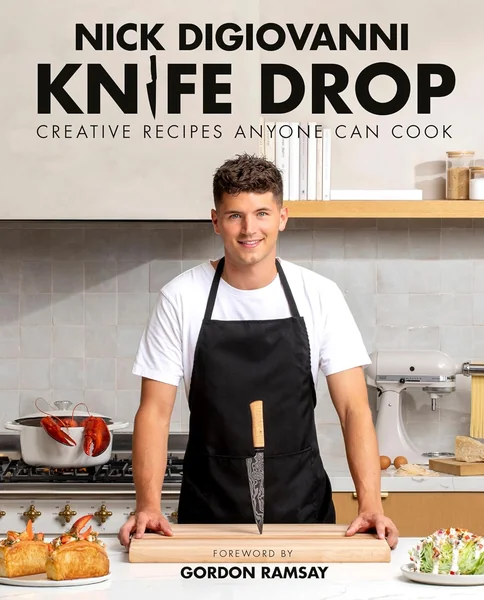
Knife Drop: Creative Recipes Anyone Can Cook
A collection of creative recipes from chef and internet personality Nick DiGiovanni, designed for home cooks who want to cook inventively without professional training.
Read our full reviewAt a glance
LuvemBooks Verdict
Best for: Newer home cooks, fans of DiGiovanni's digital content who want his recipes in collected form, and anyone seeking a warm, personality-driven gateway cookbook that builds confidence without condescension.
Worth it? Skip it? Read the full verdict →Preview the book

Ask LuvemBooks
Was this helpful?
- Is it worth reading?
- For newer home cooks, fans of DiGiovanni's social media content, or anyone seeking an accessible gateway cookbook with genuine personality, Knife Drop delivers well on its promises. Publishers Weekly credits DiGiovanni's light humor — illustrated by asides about dinosaur-shaped chicken nuggets — and personal anecdotes, such as the story of his grandfather teaching him to catch blue crabs tied to his crab and artichoke dip with Old Bay crostini, as warmth that purely technical cookbooks often lack. The New York Times bestseller status and Gordon Ramsay's foreword add credibility, though experienced home cooks should know that the book prioritizes breadth and accessibility over technical depth, and some technique instruction lives in the external QR Code video library rather than within the printed pages.
- Similar books
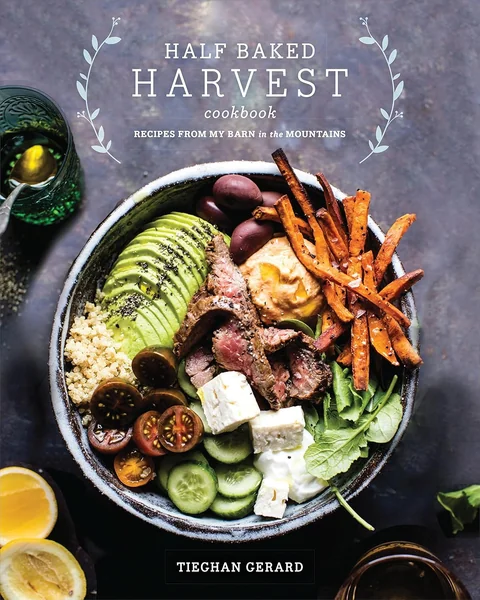
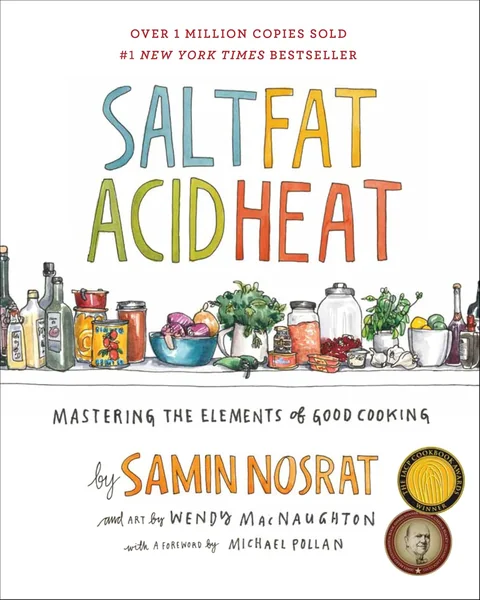
- Readers who enjoy Knife Drop's accessible, personality-driven approach might also appreciate Cook This Book: Techniques That Teach by Molly Baz, which similarly blends strong authorial voice with technique instruction aimed at building home-cook confidence. For a social-media-to-cookbook crossover with an emphasis on ease and flavor, So Easy So Good: Delicious Recipes by Kylie Sakaida is a natural companion. Those drawn to the wide recipe range and warm storytelling may connect with the Half Baked Harvest Cookbook: Recipes from My Barn in the Mountains by Tieghan Gerard. Readers who want a deeper technical grounding alongside the recipes could step up to Salt, Fat, Acid, Heat: Mastering the Elements of Good Cooking by Samin Nosrat or The New Cooking School Cookbook: Fundamentals by America's Test Kitchen for a more rigorous, foundational approach.
- Who should read this?
- Knife Drop is most naturally suited to newer home cooks who want to build confidence in the kitchen without wading through overly technical or fussy methods. Fans of DiGiovanni's social media content will find his recipes collected in a structured format for the first time, with the personality and humor they already associate with his work intact. Readers drawn to collaboration-driven cooking — or curious about how social-media food culture translates to the printed page — will find the collab section with Andrew Zimmern, Robert Irvine, Joanne Chang, and Lynja Davis a particular point of interest. Experienced home cooks seeking deep technical instruction would be better served by more advanced titles.
- About Nick DiGiovanni
- Nick DiGiovanni is a chef, entrepreneur, and content creator with over 50 million followers across his online platforms. In 2023, he released his debut cookbook, Knife Drop: Creative Recipes Anyone Can Cook, which became an instant 6x New York Times Bestseller. He is also the founder of his own pantry ingredient essentials company and has been described as the youngest-ever MasterChef finalist.
- Who are the collaboration chefs?
- Knife Drop includes a dedicated collaboration section featuring recipes developed with a range of culinary personalities: Andrew Zimmern, Robert Irvine, Joanne Chang, and Lynja Davis, among others. The section includes dishes like hot honey lemon pepper wings and Lynja Davis's compost cookies. According to the review, these collaborations add both variety and a sense of community to the collection, reflecting DiGiovanni's position within a broader food culture network rather than presenting cooking as a solitary pursuit.
- Is the QR Code Library a problem?
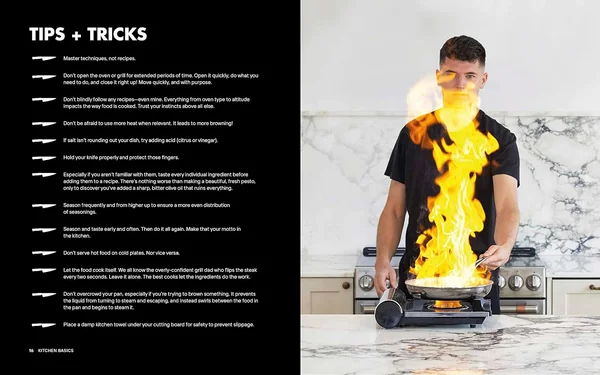
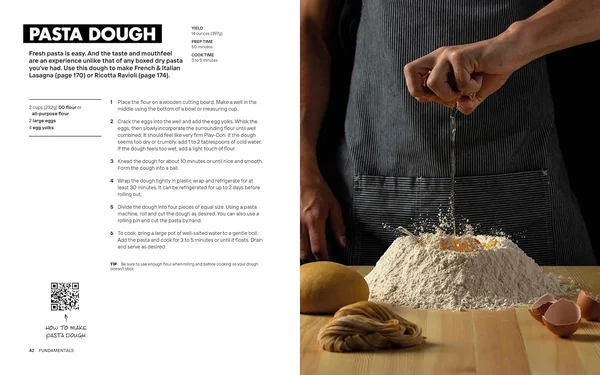
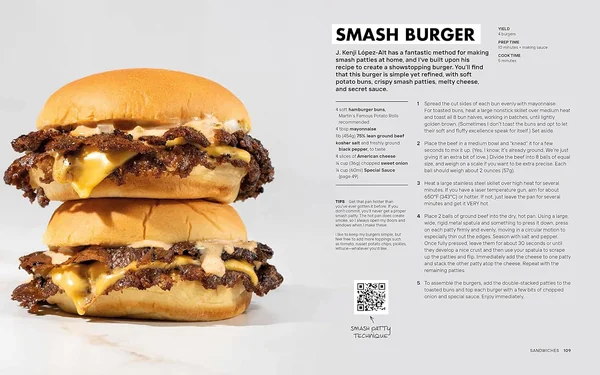
- The QR Code Library is a deliberate structural choice rather than a flaw — it extends the book's teaching reach by linking to video tutorials on techniques like holding a chef's knife, flambéing, making a piping bag, and pronouncing "gnocchi," without cluttering the printed recipes with lengthy technical digressions. However, readers who prefer a fully self-contained print reference should be aware that some of the book's technique instruction lives in this external video content rather than on the page itself. The review frames this as a design trade-off inherent to a cookbook built around lowering barriers for less confident cooks, not as an oversight.
Summarize this book
Follow up
Synthesized from verified book data & published reviews · How we review
Press Enter to ask. Answers come from our editorial Q&A — start typing to see related questions.
Age & Reading Level
Recommended age
Adult
Reading level
Adult
who it suits
Skip if you're looking for deep technical cooking instruction entirely within the printed page.
Editorial Review
Knife Drop: Creative Recipes Anyone Can Cook is a New York Times bestselling debut cookbook from MasterChef finalist and social media personality Nick DiGiovanni, published by DK in June 2023, with a foreword by Gordon Ramsay. Built on a foundation of staple recipes and bolstered by a QR code video library, it ranges from approachable classics to inventive originals, and draws in collaboration recipes from culinary friends including Andrew Zimmern, Robert Irvine, Joanne Chang, and Lynja Davis.…
Read the Full ReviewBooks like Knife Drop
Curated picks for readers who enjoyed Knife Drop, with our reasoning for each match.
If you liked Knife Drop