At a glance
Pages32
First published1999
SettingDeep dark wood, timeless fairy-tale setting
Reading time~6m
AudienceChildren (5-8)
ISBN0142403873
Ask LuvemBooks
Was this helpful?
The Gruffalo follows Mouse, a small but clever creature who invents a fearsome monster to scare off predators in the deep dark wood — only to discover the Gruffalo is terrifyingly real. Julia Donaldson's 1999 picture book earns its 4.5/5 rating through a perfect marriage of rhyming wit and Axel Scheffler's warmly expressive illustrations that delight children and adults alike across dozens of re-reads. It's a genuine modern classic that teaches courage and problem-solving without ever talking down to its young audience.
- Is it worth reading?
- Absolutely, and the 4.5/5 rating reflects genuine excellence rather than nostalgic goodwill. The Gruffalo works on two levels simultaneously: young children aged 3-7 are gripped by the suspense and the reassuring repetitive structure, while parents and carers find Donaldson's trickster plot and Scheffler's expressive illustrations rewarding across repeated reads. Few picture books manage to be this clever without showing off.
- About Julia Donaldson
- Julia Donaldson is one of the UK's most celebrated picture book authors, best known for her mastery of rhyming couplets and repetitive story structures that make her books ideal for reading aloud. Born in 1948, she served as the UK's Children's Laureate from 2011 to 2013. Beyond The Gruffalo, her notable works include Room on the Broom, The Snail and the Whale, Zog, and Sharing a Shell — many illustrated by Axel Scheffler, her long-time creative collaborator. Her stories consistently champion clever, small protagonists who solve problems through wit rather than force.
- Similar books
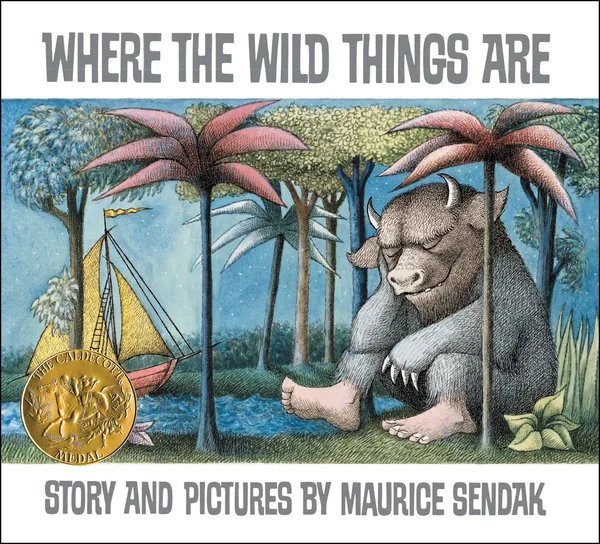
- If The Gruffalo's blend of childhood imagination and a small hero outsmarting bigger threats appeals to you, Maurice Sendak's Where the Wild Things Are is the closest companion — it shares themes of childhood empowerment and imaginary creatures, though Sendak's dreamlike world is slightly more surreal than Donaldson's grounded wood. Other Donaldson titles like Room on the Broom and Zog offer the same rhyming wit and Scheffler illustrations in new settings. Michael Rosen's We're Going on a Bear Hunt and Judith Kerr's The Tiger Who Came to Tea round out the classics shelf for this age group, each with their own distinct flavour of gentle adventure.
- Who should read this?
- The Gruffalo is ideally suited to children aged 3-7 who are beginning to engage with concepts of danger, problem-solving, and the power of quick thinking. The repetitive rhyming structure makes it especially valuable for early readers developing reading confidence. It's also an excellent pick for parents and caregivers looking for a bedtime book they won't mind reading aloud twenty times — the wit holds up.
- What's the reading level?
- The Gruffalo is written for children aged 3-7, with approximately 700 words of rhyming couplets pitched at an early reader level. The repetitive structure — each predator encounter follows the same pattern — actively helps young children learn to read along. It's accessible enough for a confident 4-year-old to follow independently but engaging enough to hold a 7-year-old's interest.
- What are the main themes?
- The Gruffalo's central themes are courage, cleverness, and the power of perception over reality. Mouse demonstrates that being small and physically weak is no barrier to survival if you're quick-thinking — he never uses force, only wit. The story also carries a subtler idea: that storytelling itself is a form of power, since Mouse's invented tale about the Gruffalo shapes reality around him. The Gruffalo's retreat at the end reinforces the idea that reputation and confidence can be more potent than brute strength.
Summarize this book
Is it worth reading?
About Julia Donaldson
Who should read this?
What's the reading level?
What are the main themes?
Summarize this book
The Gruffalo is a picture book set in the deep dark wood, where Mouse — small but quick-witted — encounters three hungry predators: a fox, an owl, and a snake. To scare each one off, Mouse invents an imaginary monster called the Gruffalo, describing its terrible tusks, claws, and teeth. The twist: the Gruffalo turns out to be real. Mouse then outwits the real Gruffalo by convincing him that Mouse himself is the most feared creature in the wood.
Follow up
What happens at the end?
How long is the story?
Is there a sequel?
Based on our expert reviews · LuvemBooks
Press Enter to ask. Answers come from our editorial Q&A — start typing to see related questions.
Editorial Review
A masterful picture book that combines clever storytelling with outstanding illustrations to create a modern classic perfect for children aged 3-7, teaching courage and problem-solving through an entertaining trickster tale.
Read the Full ReviewRelated Books
Curated picks for readers who enjoyed The Gruffalo.
Why It’s Trending
The Gruffalo Celebrates 25th Anniversary with New Stage Tour
Julia Donaldson's beloved children's classic is marking its 25th anniversary in 2026 with a special stage adaptation touring across the UK, plus a new sequel called 'Gruffalo Granny.'
The Gruffalo is having a major moment as it celebrates 25 years since publication. The beloved picture book by Julia Donaldson and Axel Scheffler is marking this milestone with a special stage adaptation currently touring UK theaters, including recent shows at Eastbourne's Devonshire Park Theatre in late April.
This anniversary celebration comes with exciting news for fans - 2026 has brought not only the commemorative tour but also a brand new sequel called 'Gruffalo Granny,' the third book in the series following 2004's 'The Gruffalo's Child.' The original book's enduring popularity over two and a half decades has spawned an entire franchise including an Academy Award-nominated animated film, theme park attractions, and woodland trails.
For parents and educators, this anniversary moment is perfect timing to introduce a new generation to the clever mouse who outwits predators with his imaginary monster friend. The touring stage show is designed for ages three and up, making it accessible for the book's core audience while celebrating what's become a true modern classic of children's literature.