BOOKS
Published
Read Time
8 min read
Our Rating
3.5
Reviewed by
LuvemBooks
Share This Review
Partypooper by Jeff Kinney (Book 20) - Diary of a Wimpy Kid Review
Our Rating
3.5
Partypooper delivers exactly what longtime fans expect — fast jokes, Kinney's iconic visual style, and Greg Heffley's signature bad luck — but twenty books in, the formula shows its age for readers who crave something new.
In This Review
- What Works & What Doesn't
- A Birthday Disaster Arrives in Book 20
- Greg Heffley's Birthday Nightmare
- The Kinney Formula: Spare, Visual, and Very Funny
- Themes Parents and Teachers Should Know
- Where It Shines and Where It Stumbles
- The Bottom Line for Parents and Educators
- Where to Buy
What Works & What Doesn't
What Works
- **Perfect for reluctant readers** — short chapters and comic illustrations lower the barrier to entry
- Humor is consistently funny and age-appropriate for children aged 8 to 13
- No concerning content — safe for home, school, and library use
- Greg and Rowley's dynamic remains entertaining and relatable for middle schoolers
- Standalone enough to work without reading earlier volumes first
What Doesn't
- The series formula feels familiar by Book 20, with little narrative evolution
- Long-term fans may find the birthday premise less surprising than earlier high-concept entries
- Greg's lack of character growth, intentional as it is, may frustrate readers seeking more depth
A Birthday Disaster Arrives in Book 20

Is Partypooper by Jeff Kinney appropriate for your child? Twenty books in, Greg Heffley's formula still works — just barely, and just enough. If your family has followed Greg Heffley's misadventures through nineteen previous books, you already know what to expect. Jeff Kinney delivers another fast, funny, comic-strip-style story built around one of middle school's most high-stakes events: the birthday party. The subtitle — 'A side-splitting birthday disaster' — sets the tone perfectly. Fans of Big Nate or Timmy Failure will feel right at home here. The humor is physical, the situations are embarrassing, and the pacing never lets up. Book 20 lands with the same energy that made this series a global phenomenon, though it raises a fair question: after nearly two decades of Greg's bad luck, does the formula still work?
The cover does exactly what it needs to do. It signals chaos, color, and comedy before a single page is turned. Jeff Kinney's signature hand-drawn style is front and center, and the visual design matches the promise of the title. Parents browsing in a bookstore will recognize it instantly as part of the beloved series. Kids will want to grab it off the shelf.
---
Greg Heffley's Birthday Nightmare
Greg Heffley is one of fiction's most reliably unreliable narrators. He is self-absorbed, scheming, and often his own worst enemy. That combination has entertained millions of young readers since the series launched, and it remains the engine driving Partypooper. The birthday party premise gives Jeff Kinney a fitting arena: parties carry enormous social weight in middle school, and for a character like Greg, the potential for things to go spectacularly wrong is always high.
What makes Greg work as a character is that he is funny and frustrating in equal measure. Young readers recognize the gap between Greg's grand expectations and his messy reality. That gap is where Kinney finds his comedy. Greg does not learn deep lessons. He survives situations. That honesty is part of the series' long-running appeal.
---
The Kinney Formula: Spare, Visual, and Very Funny
Jeff Kinney writes in short bursts. Sentences are brief. Pages are broken up by illustrations. The diary format keeps chapters tight and punchy. This approach is not accidental. It makes the books ideal for reluctant readers aged 8 to 13 who find dense prose off-putting. The reading level sits comfortably in the middle-grade range, though individual pages read much easier due to the visual layout.
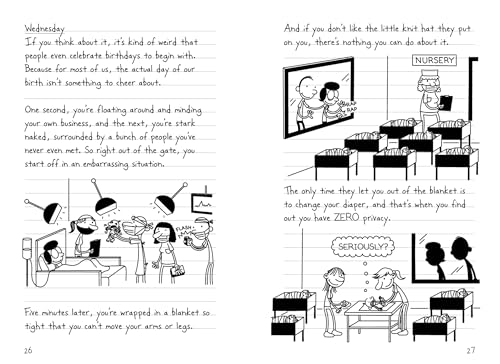
The comic-strip illustrations are still drawn in Kinney's deliberately simple, sketchy style. They do not just decorate the story — they are part of how the story is told. A single drawing can deliver a punchline more efficiently than three sentences. Teachers and librarians often note that this hybrid format helps children who are visual learners engage with narrative structure in a low-pressure way.
Compared to earlier entries in the series, Partypooper does not reinvent Jeff Kinney's approach. That is both its strength and its limitation. The format is polished and dependable. But readers who found the series growing repetitive in later volumes may find that Book 20 does not offer anything dramatically new.
---
Themes Parents and Teachers Should Know
Partypooper works the same territory the series has always mined: social anxiety, peer pressure, and the gap between what Greg expects and what he gets — handled with comedy rather than drama. The humor is silly and situation-based. Nothing in the series' track record would concern most parents of children aged 8 and up.
The birthday disaster premise naturally lends itself to themes of social embarrassment and the desire to impress peers. A child who finds parties stressful may find comfort in Greg's spectacular failures. The message — if there is one — is that social disasters are survivable and often funnier in hindsight.
Note: Specific plot details and character appearances have not been independently verified for this volume. Parents seeking detailed content information are encouraged to preview the book directly.
---
Where It Shines and Where It Stumbles
Partypooper delivers on what fans expect. The jokes land. The pacing is sharp. The illustrations earn their place on every page. For reluctant readers aged 8 to 12, it is one of the most accessible and engaging options available. Schools and libraries can confidently shelve it alongside earlier volumes.
That said, honest criticism is warranted. By Book 20, the formula shows wear. Greg's character arc — or lack of one — has been a feature of the series since the beginning, but many books in, some readers may want more development. The birthday premise, while well-executed based on the book's own marketing, does not feel as high-concept as some earlier volumes in the series. And for children who have already devoured all nineteen previous volumes, Partypooper offers more of the same rather than a meaningful evolution.
The main weakness is repetition — not within the book itself, but within the broader series. New readers will find it delightful. Long-term fans may finish it quickly and feel a familiar, comfortable satisfaction without genuine surprise.
---
The Bottom Line for Parents and Educators
Partypooper is a safe, funny, and highly readable choice for children aged 8 to 13. It does not need to be read in series order — Greg's misadventures are largely self-contained — but prior knowledge of the characters adds warmth. New readers can start here without confusion. Dedicated fans get a welcome addition to the shelf, even if it doesn't top the series' highlights.
Teachers looking for a classroom read-aloud or independent reading option will find it easy to use. The short chapters suit varied attention spans. The humor is classroom-friendly. And the themes spark genuine discussion about social life, expectations, and resilience.
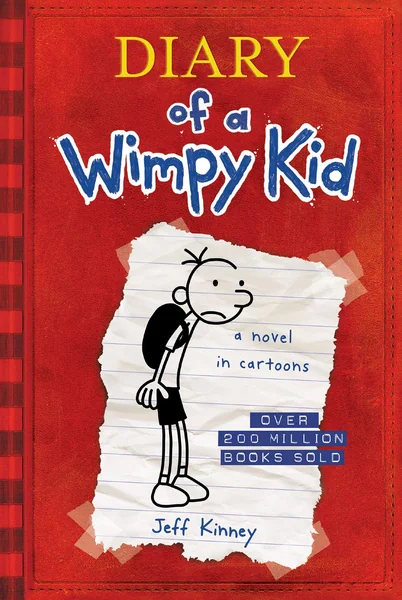
If your child loves Big Nate or has already torn through earlier Diary of a Wimpy Kid books by Jeff Kinney, Partypooper belongs on the reading list.
Where to Buy
For any child aged 8 to 13 who needs a book that will actually get read — new to Greg Heffley or already hooked — Partypooper earns its place on the shelf; check the Amazon link in the sidebar for the current price.
Product Gallery


Frequently Asked Questions
Is Partypooper worth reading for a child who is new to the Diary of a Wimpy Kid series?
According to the review, the book works perfectly well as a standalone entry because Greg's misadventures are largely self-contained. New readers will find it delightful, and the reviewer notes that any entry point into the series works for children who have not read previous volumes.
Who is the target age range for Partypooper?
The reviewer identifies the target audience as children aged 8 to 13, with the reading level sitting comfortably in the middle-grade range. The visual layout and short bursts of text make individual pages read much easier than the grade level might suggest.
Is Partypooper good value at its price?
At $6.50, the reviewer considers it a safe, funny, and highly readable choice for its target age group. While it earns a 3.5 out of 5, the reviewer recommends it confidently for reluctant readers and dedicated fans alike, suggesting the price point is reasonable for what it delivers.
What themes does Partypooper explore?
The reviewer identifies social anxiety, peer pressure, and the gap between expectations and reality as the book's central themes, all handled with comedy rather than drama. The birthday disaster premise naturally lends itself to social embarrassment and the desire to impress peers, which the reviewer suggests can be a genuine conversation starter for children who find parties stressful.
Is Partypooper appropriate for children, and are there any content concerns?
The reviewer notes that there is nothing in the series' track record that would concern most parents of children aged 8 and up, and the humor is consistently silly and situation-based. The reviewer does caution that specific plot details were not independently verified and recommends parents preview the book directly if they want detailed content information.
How does Jeff Kinney's writing style work in Partypooper?
Kinney writes in short bursts with brief sentences, pages broken up by illustrations, and a tight diary format that keeps chapters punchy. The reviewer emphasizes that this approach is deliberate, making the books ideal for reluctant readers who find dense prose off-putting.
What role do the illustrations play in Partypooper?
The reviewer stresses that the comic-strip illustrations are not decorative but are actually part of how the story is told, with a single drawing capable of delivering a punchline more efficiently than three sentences. Kinney's deliberately simple, sketchy style remains consistent, and teachers and librarians are noted to find the hybrid format helpful for visual learners engaging with narrative structure.
What kind of character is Greg Heffley in this book?
The reviewer describes Greg as one of fiction's most reliably unreliable narrators who is self-absorbed, scheming, and often his own worst enemy. The comedy comes from the gap between Greg's grand expectations and his messy reality, and the reviewer notes honestly that Greg does not learn deep lessons but simply survives situations.
Does Greg Heffley show any character growth in Partypooper?
The reviewer makes clear that Greg's lack of a meaningful character arc has been a feature of the series from the beginning, and Partypooper is no exception. By Book 20, the reviewer notes that some readers may want more development, but acknowledges this absence of growth is part of the series' long-running appeal and honesty.
How does Partypooper compare to earlier Diary of a Wimpy Kid books?
The reviewer says Partypooper does not reinvent Kinney's approach compared to earlier entries, describing the format as polished and dependable but not dramatically new. The birthday premise is described as well-executed but not as high-concept as some earlier volumes, and readers who found the series growing repetitive in later books may feel the same way here.
How does Partypooper compare to Big Nate or Timmy Failure?
The reviewer draws a direct comparison, stating that fans of Big Nate or Timmy Failure will feel right at home with Partypooper. The physical humor, embarrassing situations, and relentless pacing are cited as the qualities these series share.
What is the main weakness of Partypooper according to the reviewer?
The reviewer identifies repetition as the main weakness, clarifying that this is not a flaw within the book itself but within the broader series context. Long-term fans who have read all nineteen previous volumes may finish it with familiar, comfortable satisfaction but without genuine surprise or meaningful evolution.
Is Partypooper good for reluctant readers?
The reviewer strongly recommends it for reluctant readers aged 8 to 12, calling it one of the most accessible and engaging options available for that group. The short sentences, visual layout, and punchy diary format are specifically noted as features that make it approachable for children who find dense prose off-putting.
Can Partypooper be used in a classroom setting?
The reviewer says teachers looking for a classroom read-aloud or independent reading option will find it easy to use, citing its short chapters as well-suited to varied attention spans. The humor is described as classroom-friendly, and the themes of social life, expectations, and resilience are flagged as sparking genuine discussion.
Do you need to have read the previous nineteen books before reading Partypooper?
The reviewer makes clear that Partypooper does not need to be read in series order because Greg's misadventures are largely self-contained. Prior knowledge of the characters does add warmth to the experience, but any entry point into the series works for new readers.
What is the central premise of Partypooper?
The book is built around one of middle school's most high-stakes events: the birthday party, with the subtitle describing it as a side-splitting birthday disaster. The reviewer notes that parties carry enormous social weight in middle school, making the premise a fitting arena for a character like Greg, where the potential for things to go spectacularly wrong is always high.
What message does Partypooper send to young readers about social disasters?
The reviewer suggests that the book's implicit message is that social disasters are survivable and often funnier in hindsight. A child who finds parties stressful may find comfort in Greg's spectacular failures, and the reviewer positions the book as a potential conversation starter about social anxiety and expectations.
How is the pacing in Partypooper?
The reviewer describes the pacing as sharp and relentless, noting that it never lets up throughout the book. The diary format and short chapters are credited with keeping the story tight and punchy, which the reviewer sees as one of the book's consistent strengths.
Should a dedicated long-term fan of the series bother reading Partypooper?
The reviewer says Partypooper is a welcome addition to the shelf for dedicated fans, even if it does not top the series' highlights. The caveat is that long-term fans will likely finish it quickly and feel familiar, comfortable satisfaction rather than genuine surprise, since the book offers more of the same rather than meaningful evolution.
BEST DEAL
Related Reviews
Reviews of books we picked for readers who enjoyed Partypooper.


Reader Comments
No comments yet
Be the first to share your thoughts!