At a glance
LuvemBooks Verdict
Best for: Aspiring entrepreneurs and early-stage small business owners who feel alienated by the startup world's obsession with speed and quick exits, and who want a grounded, experience-led perspective from someone who built across radically different industries and geographies.
Worth it? Skip it? Read the full verdict →Ask LuvemBooks
Was this helpful?
- Is it worth reading?
- For aspiring entrepreneurs and small business owners in the early stages of building something — especially those drawn to purpose-driven models of commerce — Rainbow Gold offers a genuinely grounded, experience-led perspective that is hard to manufacture. Literary Titan notes that Hampson writes with humility and candor, and the book's counter-narrative to private-equity, growth-at-all-costs thinking will resonate with readers who find that culture alienating. The key caveat, as Kirkus Reviews states plainly, is that readers already well-versed in entrepreneurial literature will find the core ideas — follow your passion, hire for culture fit, think long-term — recognisable rather than revelatory, and there are no proprietary frameworks or tactical templates on offer.
- Similar books
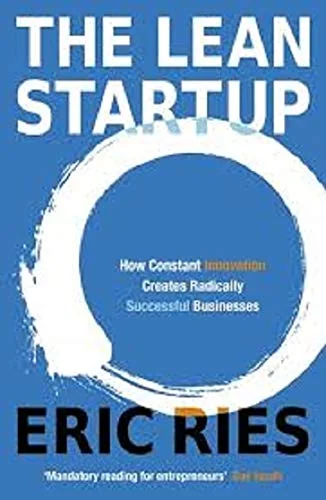
- Readers drawn to Rainbow Gold's passion-and-purpose philosophy will find strong common ground with Liz Elting's Dream Big and Win: Translating Passion into Purpose, which similarly ties entrepreneurial ambition to personal values. Jim Collins' Good to Great offers a more data-backed examination of what separates enduring companies from the rest — a useful complement for readers who want rigorous analysis alongside Hampson's narrative approach. For those interested in the innovation and disruption side of entrepreneurship, Clayton M. Christensen's The Innovator's Dilemma is a foundational text, while Eric Ries' The Lean Startup provides the structured, methodology-driven framework that Rainbow Gold deliberately does not. Thomas J. Stanley and William D. Danko's The Millionaire Next Door shares Hampson's scepticism of flash-over-substance business models, focusing instead on quiet, long-term wealth-building.
- Who should read this?
- Rainbow Gold is most naturally matched to aspiring entrepreneurs and small business owners in the early stages of building something — particularly those drawn to purpose-driven models of commerce rather than growth-at-all-costs strategies. It will especially resonate with readers who feel overwhelmed by the startup world's relentless focus on speed and exits, and who want a grounded, experience-led perspective from someone who built across different industries and geographies. Readers seeking a granular operational guide, a rigorous analytical framework, or business advice they have not encountered before are better served by other titles.
- What are the main themes?
- The book's central themes are passion-driven entrepreneurship, long-term sustainability over short-term profit, and the idea of business as a civic act. Hampson argues that genuine passion should anchor both a founder's vocation and their hiring decisions — his own pivot into pilot insurance, born from a deep love of flying, is offered as a model for aligning livelihood with enthusiasm. A related theme is the "butterfly effect" of ethical, community-minded business choices, and the book mounts a sustained counter-argument against the private-equity, quick-exit startup culture, urging entrepreneurs to "be the tortoise" and build for the future.
- How credible is the author's advice?
- Hampson's credibility is rooted in the breadth and authenticity of his entrepreneurial experience rather than formal business education — Kirkus Reviews notes he learned how to run a business by doing it. His career spans owning a restaurant in Cape Town, South Africa, and leading Schrager Hampson Aviation Insurance Group, a large firm in New Hampshire, and crucially, his aviation career is itself a lived illustration of his core thesis: a deep love of flying led him toward pilot insurance, aligning vocation and livelihood in exactly the way he advocates. That "skin in the game" gives his argument a coherence it might otherwise lack if offered by a purely theoretical author.
- Is this a good book club pick?
- Rainbow Gold can work well for a business-focused book club, particularly one whose members include aspiring entrepreneurs, small business owners, or people disillusioned with the startup world's growth-at-all-costs culture. The book's accessible, candid voice — noted by Literary Titan — lends itself to discussion of personal entrepreneurial values, and Hampson's "butterfly effect" framing and "be the tortoise" philosophy offer clear, debatable theses. Groups already steeped in business literature may find the ideas well-trodden, but the specificity of Hampson's career arc — from a Cape Town restaurant to aviation insurance in New Hampshire — provides concrete anecdotes to anchor conversation.
Summarize this book
Follow up
Synthesized from verified book data & published reviews · How we review
Press Enter to ask. Answers come from our editorial Q&A — start typing to see related questions.
Age & Reading Level
Recommended age
Adult
Reading level
Adult
who it suits
Skip if you're looking for a structured, step-by-step operational guide with frameworks, templates, or tactical playbooks.
Editorial Review
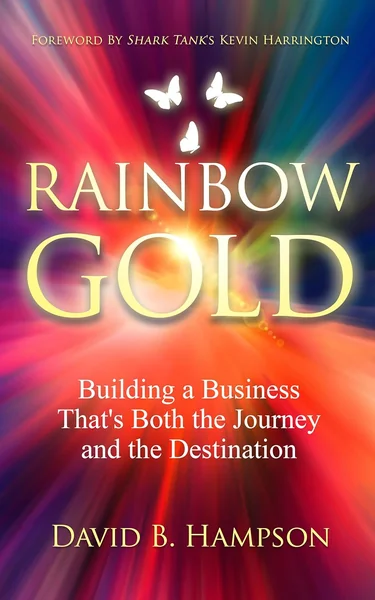
Rainbow Gold: Building a Business That's Both the Journey and the Destination is a business memoir and entrepreneurial guide by David B. Hampson, published by MindStir Media on October 17, 2025.…
Read the Full ReviewBooks like Rainbow Gold
Curated picks for readers who enjoyed Rainbow Gold, with our reasoning for each match.
If you liked Rainbow Gold