7 min read
4.5
· 66 Amazon ratingsShare This Review
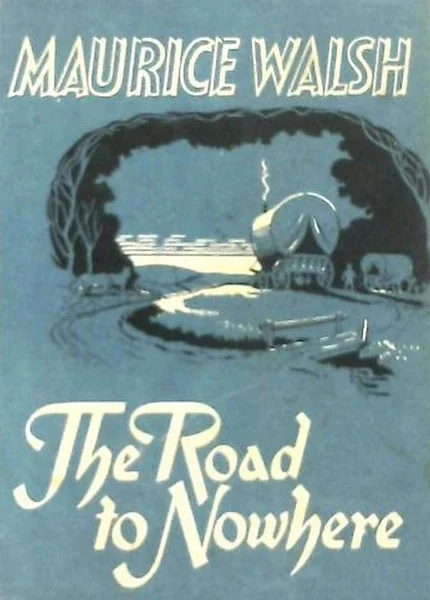
The Road to Nowhere by Maurice Walsh Review: A Classic Irish Romance Reissued Digitally
First published by Frederick A. Stokes & Co. In 1934 and reissued by Reading Essentials in a Kindle edition, Maurice Walsh's The Road to Nowhere is a Gaelic-flavored adventure romance that earned immediate praise from Kirkus Reviews for its "enchanting glamorous romance" and "high adventure, sheer charm" — making it a solid rediscovery for readers drawn to classic Irish fiction.
LuvemBooks Verdict
Best for
Readers who love classic Irish adventure romance — particularly those already fond of Maurice Walsh or drawn to outlaw-on-the-run plots steeped in Gaelic atmosphere, horse fairs, and open-road wandering.
Worth it if
You're in the mood for a tightly plotted, formula-faithful adventure romance — wrongly accused hero, tinker caravans, bare-knuckle justice, and a central mystery — delivered with what Kirkus Reviews called "the lilt and swing of the Irish and with gusto and joy in living."
Skip if
You're expecting contemporary pacing, psychological interiority, or genre subversion — this is a proudly conventional 1934 popular romance that rewards those already sympathetic to Walsh's tradition far more than newcomers arriving without that affection.
What readers & critics say
Kirkus Reviews, writing at original publication in 1934, declared it "the best thing of the kind that has come our way for more time than we care to count," praising its fusion of "enchanting glamorous romance, Gaelic to the core, high adventure, sheer charm." The New York Times' 1934 review, retrieved via nytimes.com, characterised it as "a typical Maurice Walsh romance, which will disappoint none of his admirers" — a verdict that speaks to its fidelity to formula rather than departure from it.
“Enchanting glamorous romance, Gaelic to the core, high adventure, sheer charm — the best thing of the kind that has come our way for more time than we care to count.”
— Kirkus Reviews“Rogan Stuart is a hero made to order for those who like them relentless in hate and love.”
— Kirkus Reviews“A typical Maurice Walsh romance, which will disappoint none of his admirers.”
— The New York Times (archive)Ask LuvemBooks
Was this helpful?
- Is it worth reading?
- For readers with an appetite for classic Irish adventure fiction, The Road to Nowhere earns a strong recommendation — Kirkus Reviews placed it at the pinnacle of its tradition at original publication, and the novel's continued reprint history supports the durability of that judgment. Its fusion of wrongful-accusation thriller mechanics, outlaw romance, and distinctly Gaelic atmosphere — horse fairs, tinker roads, bare-knuckle fights — remains distinctive. The caveat is calibration: the novel faithfully delivers 1934 popular-romance conventions, so readers who already love Walsh or that tradition will be richly rewarded, while those seeking contemporary pacing or psychological complexity may find the formula more pronounced than surprising.
- Similar books
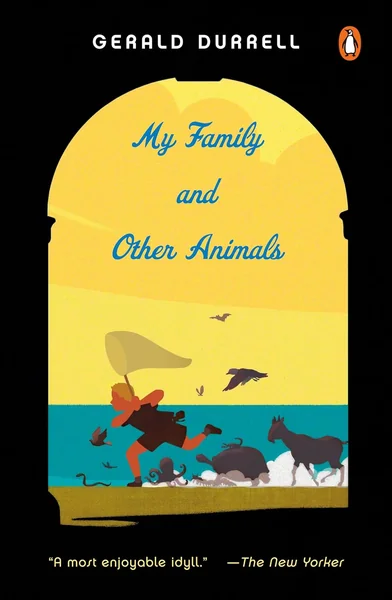
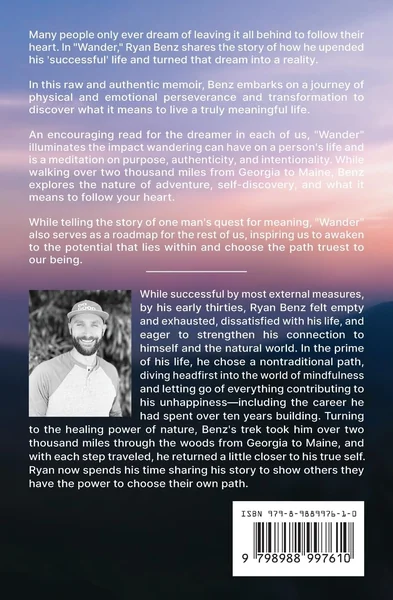
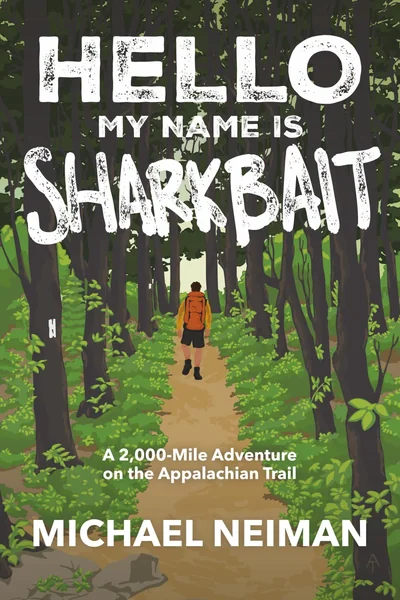
- Readers drawn to The Road to Nowhere's open-road adventure spirit and Gaelic warmth may find kindred pleasures in several directions. Walsh's own tradition sits alongside John Buchan's The Thirty-Nine Steps, which Kirkus explicitly invoked as a point of comparison through the broader adventure-romance lineage. For travel-flavoured memoir with a similarly freewheeling spirit, Ryan Benz's Wander: A Memoir of Letting Go and Michael Neiman's Hello My Name is Sharkbait: A 2,000-Mile Adventure on the Appalachian Trail offer modern counterparts to the open-road energy. Gerald Durrell's My Family and Other Animals shares the exuberant, warmly observed sense of place rooted in a specific cultural world. Walsh's other novels — including Blackcock's Feather and The Key Above the Door — are also natural next reads for anyone who wants more of the same Gaelic adventure tradition.
- Who should read this?
- The Road to Nowhere is best suited to readers who already have an affection for classic Irish adventure fiction or the early-twentieth-century popular-romance tradition. Those who came to Walsh through adaptations of his work — most famously the film The Quiet Man — will find a familiar warmth of voice and cultural setting. It also appeals to readers building a picture of the Irish literary tradition in its more exuberant, adventure-forward register, and to anyone who enjoys the wrongful-accusation thriller combined with a vivid sense of place. Readers expecting modern pacing, irony, or psychological interiority are unlikely to find what they are looking for.
- About Maurice Walsh
- Maurice Walsh was an Irish novelist, now best known for his short story "The Quiet Man," which was later adapted into the Oscar-winning film The Quiet Man, directed by John Ford and starring John Wayne and Maureen O'Hara.
- What are the main themes?
- The Road to Nowhere weaves together wrongful accusation, outlaw identity, and romance as its core thematic strands. Rogan Stuart's assumption of the alias Rogue McCoy raises questions about identity under pressure and the romance of the fugitive life, while the open-road setting among the tinkers frames a broader theme of freedom versus social constraint. The novel also celebrates a distinctly Gaelic way of life — horse fairs, fistfights, communal travel — as both backdrop and value system. Kirkus Reviews captured the thematic blend as "enchanting glamorous romance, Gaelic to the core, high adventure, sheer charm."
- How Irish is the setting and tone?
- The Gaelic character of the novel is its most celebrated quality. Kirkus Reviews described it as "Gaelic to the core," and the narrative is built around specifically Irish cultural episodes: a horse fair, a bare-knuckle fight in which the villain is bested before the heroine's eyes, open-road travel with a tinker band, and the outlaw momentum of life outside settled society. Walsh was already an established voice in Irish popular fiction when the novel appeared in 1934, and the cultural texture here is rooted in the same tradition as his other celebrated works. Readers coming for an immersive Irish atmosphere will find it central rather than incidental.
Summarize this book
Follow up
Synthesized from verified book data & published reviews · How we review
Press Enter to ask. Answers come from our editorial Q&A — start typing to see related questions.
Age & Reading Level
Recommended age
Adult
Reading level
Adult
1 content note · who it suits
Content to know about
Skip if You're expecting contemporary pacing, psychological complexity, or subversion of adventure-romance formula rather than a faithful, warmly crafted example of it.
Our Review
What the Novel Contains and How It Is Structured
Significance and Place in the Walsh Canon
Strengths: Character, Voice, and Genre Execution
Limitations and Who May Struggle with It
Who This Edition Is For
Sources & Further Reading
The key facts and claims in this review are grounded in the retrieved, verified sources listed below.
- Cited in this review
- 1
abebooks.co.uk
- 2
kirkusreviews.com
- Further reading
- 3
Maurice Walsh, Wikipedia
- 4
- 5
- 6
fadedpage.com
- 7
fantasticfiction.com
- 8
books.google.com
- 9
barnesandnoble.com
- 10
Books like The Road to Nowhere
Curated picks for readers who enjoyed The Road to Nowhere, with our reasoning for each match.
If you liked The Road to Nowhere