At a glance
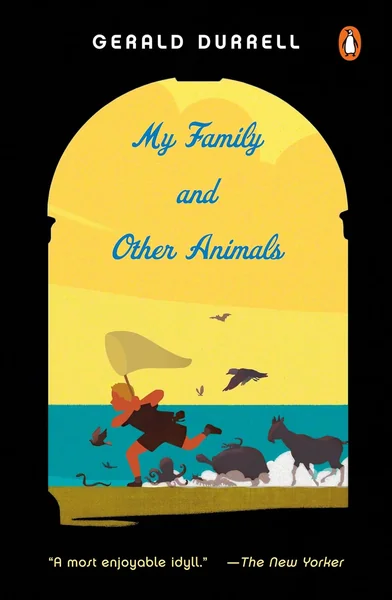
My Family and Other Animals
LuvemBooks Verdict
Best for: Readers who love nature writing woven through with affectionate character comedy — particularly anyone drawn to sun-drenched memoir, eccentric family dynamics, or the natural history of the Mediterranean — will find this an ideal, unhurried read.
Worth it? Skip it? Read the full verdict →Ask LuvemBooks
Was this helpful?
- Is it worth reading?
- For readers who enjoy character-driven, digressive prose, My Family and Other Animals is considered a landmark of British autobiographical writing that has lost none of its appeal in nearly seven decades. The productive tension between sharp family comedy and sincere natural history is its defining achievement — a reader drawn by the comedy will find themselves genuinely educated in Corfu's island ecology, while a reader drawn by the natural history will find themselves laughing throughout. The key caveat is structural: the episodic format rewards unhurried readers, and those expecting a tightly plotted narrative or accurate biographical record may find the acknowledged fictionalisation and loose chronology frustrating.
- Similar books
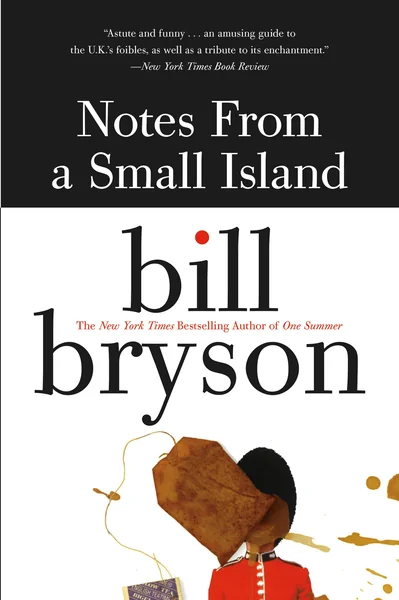
- Readers who love My Family and Other Animals tend to enjoy other books that blend place, personality, and digressive warmth. Peter Mayle's A Year in Provence shares the same expat-in-Mediterranean-sunshine sensibility and comedy of cultural dislocation. Bill Bryson's Notes from a Small Island offers comparable good-humoured, character-rich travel writing with an eye for the absurd. Henry Beston's The Outermost House provides the natural-history strand taken in a quieter, more contemplative direction, while Ellen Barone's I Could Live Here: A Travel Memoir of Home and Belonging speaks to the same pull toward discovering belonging in an adopted place.
- Who should read this?
- My Family and Other Animals is ideally suited to readers who enjoy nature writing threaded through with character comedy — those who treat the natural world and human eccentricity as inseparable rather than competing subjects. Fans of the Masterpiece PBS series The Durrells in Corfu will find the book richly rewarding. Readers drawn to warm, episodic memoirs in the expat tradition — or those looking for an entry point into Durrell's broader body of work — will find it a natural fit. Those who prefer tightly plotted narratives or require strict biographical rigour are less likely to connect with its acknowledged looseness.
- What age is it for?
- My Family and Other Animals is broadly suitable for readers aged 10 and up, though it is most comfortably enjoyed by confident readers around 12 and above. The vocabulary and digressive, essay-like prose suit readers who are comfortable with unhurried, discursive writing rather than action-driven plotting. It is widely assigned in schools and has been a staple of younger readers for decades, making it one of the more accessible classic British memoirs for older children and young teens.
- About Gerald Durrell
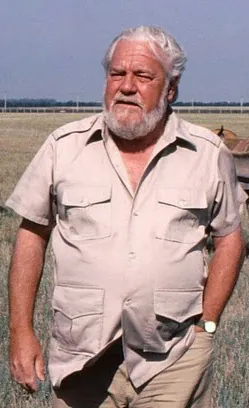
- Gerald Malcolm Durrell was a British naturalist, writer, zookeeper, conservationist, and television presenter. The success of My Family and Other Animals provided the financial foundation that allowed him to establish the Jersey Zoological Park, now known as the Durrell Wildlife Park, in the Channel Islands.
- Tell me about the adaptation
- My Family and Other Animals served as the inspiration for The Durrells in Corfu, a television series broadcast on Masterpiece PBS in the United States. The series introduced Durrell's Corfu years to a new generation of readers and viewers, and the book's cultural reach has continued to grow through this adaptation. The book also has a longer history of real-world impact — its popularity historically boosted tourism to Corfu itself.
- What are the main themes?
- The central tension of My Family and Other Animals is the interplay between comic family memoir and genuine natural history — Durrell balances his sharp, affectionate comedy at his family's expense against a sincere, encyclopedic enthusiasm for Corfu's wildlife, and neither strand overwhelms the other. Broader themes include the romance of displacement and belonging (an English family finding themselves at home on a Greek island), the formation of a naturalist's sensibility in childhood, and the relationship between memory and invention in autobiography — Durrell acknowledged fictionalising and shaping events for maximum warmth and comic effect.
Summarize this book
Follow up
Synthesized from verified book data & published reviews · How we review
Press Enter to ask. Answers come from our editorial Q&A — start typing to see related questions.
Age & Reading Level
Recommended age
Adult
Reading level
Adult
who it suits
Skip if you want a tightly plotted narrative or an accurate, documentary biographical account of the Durrell family's Corfu years.
Editorial Review
First published in 1956, My Family and Other Animals is Gerald Durrell's autobiographical account of the years he spent as a child on the Greek island of Corfu with his gloriously dysfunctional family — and it remains the gold standard of warmly comic nature writing, opening the first book of what became the beloved Corfu Trilogy.
Read the Full ReviewBooks like My Family and Other Animals
Curated picks for readers who enjoyed My Family and Other Animals, with our reasoning for each match.
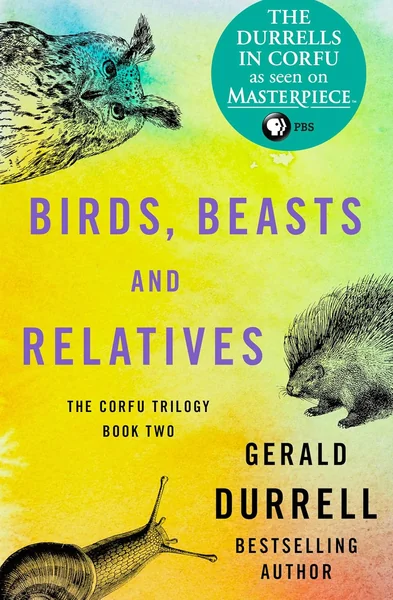
If you liked My Family and Other Animals