
7 min read
4.5
· 66 Amazon ratingsShare This Review
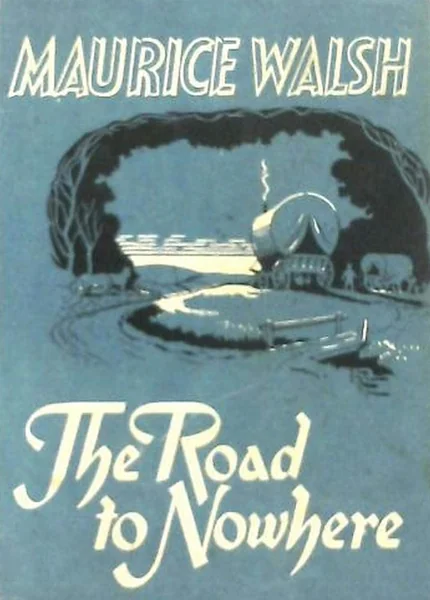
The Road to Nowhere by Maurice Walsh Review: A Classic Irish Romance Reissued Digitally
First published by Frederick A. Stokes & Co. In 1934 and reissued by Reading Essentials in a Kindle edition, Maurice Walsh's The Road to Nowhere is a Gaelic-flavored adventure romance that earned immediate praise from Kirkus Reviews for its "enchanting glamorous romance" and "high adventure, sheer charm" — making it a solid rediscovery for readers drawn to classic Irish fiction.
LuvemBooks Verdict
Best for
Readers who love classic Irish adventure romance — particularly those already fond of Maurice Walsh or drawn to outlaw-on-the-run plots steeped in Gaelic atmosphere, horse fairs, and open-road wandering.
Worth it if
You're in the mood for a tightly plotted, formula-faithful adventure romance — wrongly accused hero, tinker caravans, bare-knuckle justice, and a central mystery — delivered with what Kirkus Reviews called "the lilt and swing of the Irish and with gusto and joy in living."
Skip if
You're expecting contemporary pacing, psychological interiority, or genre subversion — this is a proudly conventional 1934 popular romance that rewards those already sympathetic to Walsh's tradition far more than newcomers arriving without that affection.
What readers & critics say
Kirkus Reviews, writing at original publication in 1934, declared it "the best thing of the kind that has come our way for more time than we care to count," praising its fusion of "enchanting glamorous romance, Gaelic to the core, high adventure, sheer charm." The New York Times' 1934 review, retrieved via nytimes.com, characterised it as "a typical Maurice Walsh romance, which will disappoint none of his admirers" — a verdict that speaks to its fidelity to formula rather than departure from it.
“Enchanting glamorous romance, Gaelic to the core, high adventure, sheer charm — the best thing of the kind that has come our way for more time than we care to count.”
— Kirkus Reviews“Rogan Stuart is a hero made to order for those who like them relentless in hate and love.”
— Kirkus Reviews“A typical Maurice Walsh romance, which will disappoint none of his admirers.”
— The New York Times (archive)In This Review
- What Works & What Doesn't
- What the Novel Contains and How It Is Structured
- Significance and Place in the Walsh Canon
- Strengths: Character, Voice, and Genre Execution
- Limitations and Who May Struggle with It
- Who This Edition Is For
What Works & What Doesn't
What Works
- Kirkus Reviews praised it at original publication as the finest Irish adventure romance 'that has come our way for more time than we care to count'
- Protagonist Rogan Stuart's dual identity as fugitive Rogue McCoy among the tinkers gives the plot a compelling outlaw momentum
- Tightly constructed plot combining murder mystery, wrongful suspicion, and romance keeps multiple genre interests in play simultaneously
- Walsh's distinctly Gaelic voice and setting — horse fairs, fistfights, open-road travel — offer vivid cultural texture rooted in the Irish tradition
- A rare digital reissue of a 1934 classic, making a long-unavailable title accessible to contemporary readers
What Doesn't
- Rooted firmly in 1934 popular-romance conventions; readers seeking contemporary pacing or psychological complexity will find a more formulaic structure
- Critical coverage' original review characterized it as a 'typical' Walsh romance, suggesting it rewards existing fans of the tradition more than newcomers to it
What the Novel Contains and How It Is Structured
Significance and Place in the Walsh Canon
Strengths: Character, Voice, and Genre Execution
Limitations and Who May Struggle with It
Who This Edition Is For
Frequently Asked Questions
Sources & Further Reading
The key facts and claims in this review are grounded in the retrieved, verified sources listed below.
- Cited in this review
- 1
abebooks.co.uk
- 2
kirkusreviews.com
- Further reading
- 3
Maurice Walsh, Wikipedia
- 4
- 5
- 6
fadedpage.com
- 7
fantasticfiction.com
- 8
books.google.com
- 9
barnesandnoble.com
- 10
Related Reviews
Reviews of books we picked for readers who enjoyed The Road to Nowhere.

Reader Comments
No comments yet
Be the first to share your thoughts!