
9 min read
4.5
· 8,744 Amazon ratingsShare This Review
My Family and Other Animals by Gerald Durrell Review: A Sun-Drenched Classic of Comic Memoir
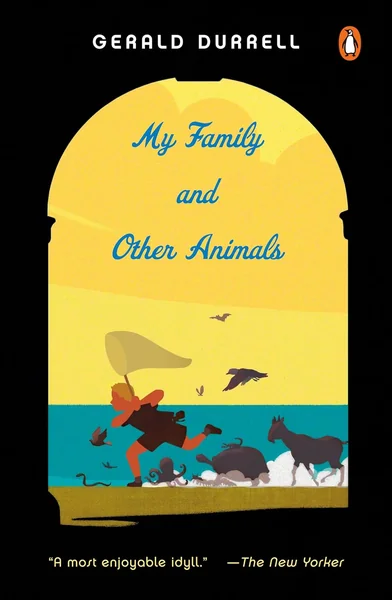
First published in 1956, My Family and Other Animals is Gerald Durrell's autobiographical account of the years he spent as a child on the Greek island of Corfu with his gloriously dysfunctional family — and it remains the gold standard of warmly comic nature writing, opening the first book of what became the beloved Corfu Trilogy.
LuvemBooks Verdict
Best for
Readers who love nature writing woven through with affectionate character comedy — particularly anyone drawn to sun-drenched memoir, eccentric family dynamics, or the natural history of the Mediterranean — will find this an ideal, unhurried read.
Worth it if
Worth reading if you want a book that can make you laugh at human foibles and genuinely teach you about island ecology at the same time, without either strand ever feeling like a distraction from the other.
Skip if
Skip it if you need a tightly plotted narrative or a rigorously accurate biographical record — Durrell openly fictionalises and omits key figures, and the episodic, digressive structure is a feature rather than a flaw, but one that will frustrate impatient readers.
What readers & critics say
Wikipedia's account of the book's reception confirms it was an instant success upon publication, and Kirkus Reviews praised Durrell's ability to make his animals "as entertaining as his humans," calling the Corfu memoir the "ultimate reward" for his devoted readership. The Guardian's reader review section described it as "so vibrant, warm and weird at the same time," a characterisation that has proven durable across nearly seven decades of readership.
“This book is so vibrant, warm and weird at the same time — like your passport to a wacky and wonderful world.”
— The Guardian“Durrell's department of natural history has found him a devoted audience — and here is the ultimate reward.”
— Kirkus ReviewsAge & Reading Level
Recommended age
Adult
Reading level
Adult
who it suits
Skip if you want a tightly plotted narrative or an accurate, documentary biographical account of the Durrell family's Corfu years.
In This Review
- What Works & What Doesn't
- What the Book Actually Is
- Its Origins and Place in the Canon
- The Book's Dual Appeal: Comedy and Natural History
- Honest Limitations: Fictionalisation and Selective Memory
- Who This Book Is For
What Works & What Doesn't
What Works
- Masterfully balances comic family memoir with genuine natural history, so neither strand feels like a distraction from the other
- A richly populated cast — from the polymathic Dr. Theodore Stephanides to the fiercely loyal Spiro 'Americano' — gives the book lasting human warmth
- The first volume in the Corfu Trilogy, making it an ideal and self-contained entry point into Durrell's broader body of work
- Its cultural footprint extends well beyond the page, having inspired the Masterpiece PBS series The Durrells in Corfu and, historically, boosted tourism to Corfu itself
What Doesn't
- Durrell openly fictionalises and exaggerates — specific figures like Lawrence Durrell's first wife Nancy are omitted entirely, and the chronology is inaccurate in places, limiting its value as strict biographical record
- The episodic, digressive structure rewards unhurried readers but may frustrate those expecting a tightly plotted narrative arc
What the Book Actually Is
Its Origins and Place in the Canon
The Book's Dual Appeal: Comedy and Natural History
Honest Limitations: Fictionalisation and Selective Memory
Who This Book Is For
Frequently Asked Questions
Sources & Further Reading
The key facts and claims in this review are grounded in the retrieved, verified sources listed below.
- Cited in this review
- 1
- 2
en.wikipedia.org
- 3
- Further reading
- 4
Gerald Durrell, Wikipedia
- 5
ia601507.us.archive.org
- 6
- 7
introvertedreader.com
- 8
Related Reviews
Reviews of books we picked for readers who enjoyed My Family and Other Animals.

Reader Comments
No comments yet
Be the first to share your thoughts!