
8 min read
4.8
· 1,012 Amazon ratingsShare This Review

Our review
Means of Ascent
Means of Ascent by Robert A. Caro Review: A Riveting Exposé of Raw Political Ambition
Means of Ascent is the second volume of Robert A. Caro's The Years of Lyndon Johnson, covering LBJ's "wilderness years" and culminating in his razor-thin, controversy-shadowed victory — by 87 votes — in the 1948 Texas Senate runoff election. Professor Henry F. Graff of Columbia University called it "brilliant," declaring that it shows "nothing less than how present-day politics was born."
LuvemBooks Verdict
Best for
Readers with a serious interest in American political biography, the mechanics of mid-century democratic politics, or the psychology of political ambition — particularly those who have already read The Path to Power and want to follow Caro's portrait of Johnson through his most nakedly opportunistic years.
Worth it if
Worth reading if you want a masterclass in investigative biographical history, especially Caro's documented reconstruction of how Johnson won a Senate seat by just 87 disputed votes in 1948 — one of the most consequential and contested episodes in twentieth-century American politics.
Skip if
Skip it if you are new to the series and expect a standalone overview of Johnson's presidency, or if you prefer broad legislative panoramas over the concentrated, almost novelistic tension of a single compressed political era.
What readers & critics say
Kirkus Reviews, noting it received the book too late for a full review, predicted it was "likely to be extraordinary" given that its predecessor set a landmark standard — and flagged Caro's revelations about the fraud-shadowed 1948 Texas Senate race as the volume's explosive centerpiece. Professor Henry F. Graff of Columbia University, quoted via literatibookstore.com, called the volume "brilliant," arguing that "no review does justice to the drama of the story Caro is telling, which is nothing less than how present-day politics was born."
“This volume is likely to be extraordinary — Caro's revelations about exactly how Johnson won, by 87 votes, a race tainted by rumour for 40 years.”
— Kirkus ReviewsAsk LuvemBooks
Was this helpful?
- Is it worth reading?
- For readers engaged with American political history or the biography of power, Means of Ascent is considered essential. Christopher Lehmann-Haupt described the effect memorably, writing that Caro "intensifies the flame to a brilliant blue point" compared to the first volume, and the Minneapolis Star Tribune called it "a great book," predicting the completed biography will be "the great book about American politics in the twentieth century." Professor Henry F. Graff of Columbia University called it "brilliant," arguing that "no review does justice to the drama of the story Caro is telling." The key caveat is its focus on a compressed, relatively quiet period in Johnson's career — readers expecting the sweeping legislative panoramas of later volumes will find a more concentrated, novelistic tension here.
- Similar books
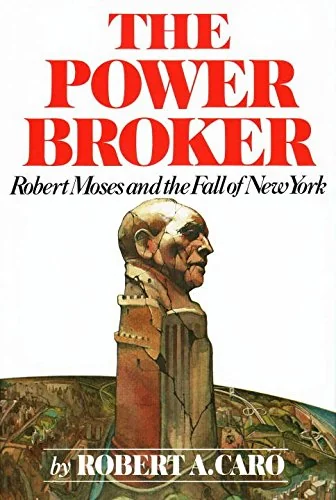
- Readers drawn to Means of Ascent will find natural companions in the rest of Caro's Johnson series — The Path to Power: The Years of Lyndon Johnson provides the essential earlier context, while Master of the Senate and The Passage of Power: The Years of Lyndon Johnson trace LBJ's ascent through the Senate and to the presidency. Caro's landmark The Power Broker: Robert Moses offers the same archival depth and moral complexity applied to a different colossus of American power. For comparable large-canvas American political biography, David McCullough's John Adams and Ron Chernow's Alexander Hamilton are frequently cited alongside Caro's work.
- Who should read this?
- Means of Ascent is essential reading for anyone engaged with American political history, the biography of power, or the workings of democratic institutions at their most contested. Readers who want to understand how mid-century Texas politics operated — and how elections can be won and lost at the margins — will find Caro's investigative reconstruction of the 1948 Senate race uniquely valuable. Those who have already read The Path to Power and want to follow Johnson's trajectory through his most nakedly ambitious years will find this volume especially rewarding. Readers expecting the broad legislative sweep of later volumes, or those looking for a standalone entry into the series, may want to adjust their expectations accordingly.
- About Robert A. Caro
- Robert Allan Caro is an American journalist and author known for his biographies of United States political figures Robert Moses and Lyndon Johnson.
- How does it compare to the other volumes?
- Christopher Lehmann-Haupt captured the shift well: where The Path to Power "ignited a blowtorch whose bright flame illuminated Johnson's early career," Means of Ascent "intensifies the flame to a brilliant blue point" — a tighter, more concentrated focus on Johnson at his most nakedly ambitious. Compared to later volumes like Master of the Senate and The Passage of Power, this volume covers a more compressed arc and lacks the sweeping legislative panoramas those books offer. For many readers, that concentrated, almost novelistic tension is precisely the appeal; for others expecting a broader historical canvas, it may feel more contained than the series at large.
- What are the main themes?
- Means of Ascent is fundamentally concerned with the nature of political ambition and the mechanics of power — how elections are won and lost at the margins, and what a man will do when his aspirations outrun his position. Caro's sustained examination of Johnson's personality during his "wilderness years" surfaces a figure described by the publisher as "part genius, part behemoth, at once hotly emotional and icily calculating." The 1948 Senate race against Coke Stevenson becomes a lens for interrogating mid-century American democracy at its most contested. As Philip Seib of the Dallas Morning News noted, the book is a portrait "not only of Lyndon Johnson, but also of the politics and values of mid-century America."
Summarize this book
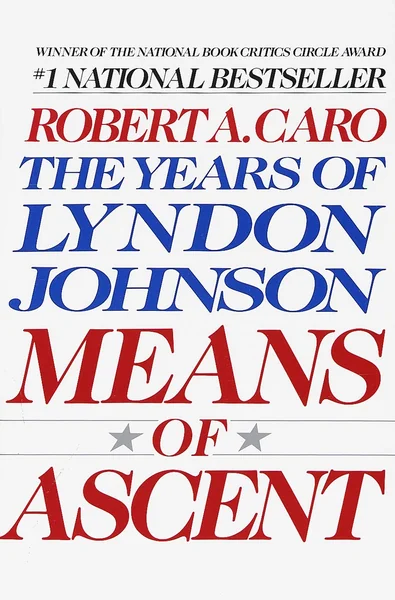
Means of Ascent by Robert A. Caro
4.8
/ 5
Means of Ascent is the second volume of Robert A. Caro's The Years of Lyndon Johnson, covering LBJ's "wilderness years" and culminating in his razor-thin, controversy-shadowed victory — by 87 votes — in the 1948 Texas Senate runoff election. Professor Henry F. Graff of Columbia University called it "brilliant," declaring that it shows "nothing less than how present-day politics was born."
View on LuvemBooks →
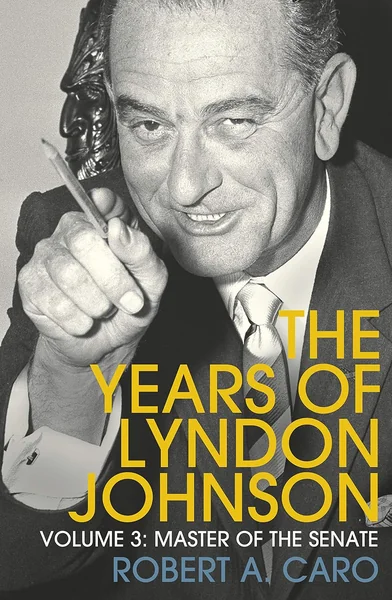
Master of the Senate: The Years of Lyndon Johnson by Robert A. Caro
4.8
/ 5
Robert A. Caro's Master of the Senate is the third volume in his ongoing multi-book biography The Years of Lyndon Johnson, winner of the 2003 Pulitzer Prize for Biography or Autobiography. It chronicles Lyndon B. Johnson's tenure in the United States Senate from 1949 to 1960 — his rise from freshman senator to Senate majority leader — and his pivotal role in passing the Civil Rights Act of 1957, the first such legislation since the Reconstruction era. Combining exhaustive institutional history with granular political biography, the book stands as one of the most ambitious works of American political nonfiction ever published.
View on LuvemBooks →
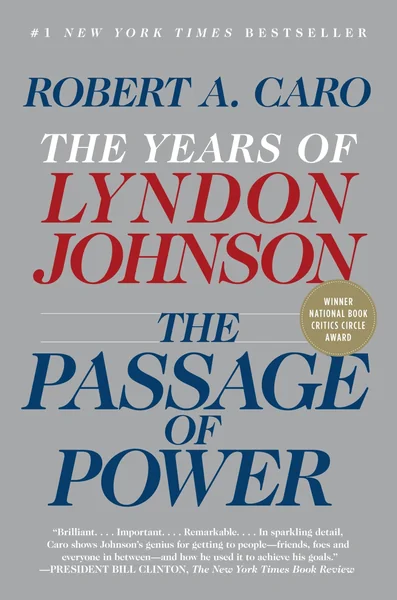
The Passage of Power by Robert A. Caro
4.7
/ 5
The Passage of Power is Book Four of Robert A. Caro's monumental The Years of Lyndon Johnson, covering the years 1958 to 1964 — from Johnson's frustrated vice presidency under JFK through his sudden ascension to the presidency and his first nine months in the Oval Office. Winner of the National Book Critics Circle Award, among other major honors, it stands as one of the most acclaimed works of political biography in the English language.
View on LuvemBooks →
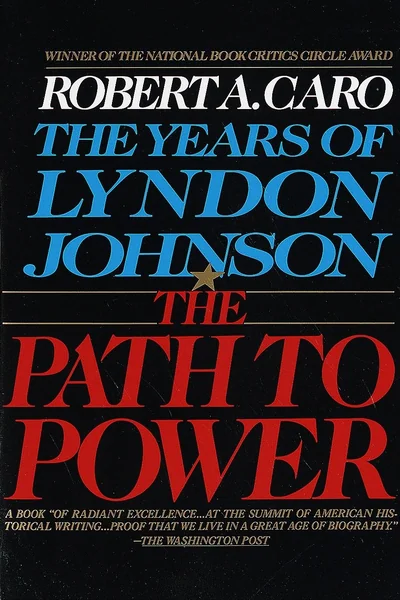
The Path to Power by Robert A. Caro
4.7
/ 5
The Path to Power is the first volume of Robert A. Caro's The Years of Lyndon Johnson, tracing LBJ from his impoverished Texas Hill Country boyhood through his congressional debut in New Deal Washington and his first, failed Senate run. Caro's exhaustive research and narrative command earned the book front-page praise from critics as proof "we live in a great age of biography."
View on LuvemBooks →
Follow up
Synthesized from verified book data & published reviews · How we review
What would you like to know about Means of Ascent?
Answers come from our editorial notes on this book. If we haven't covered something, we'll say so.
Readers often ask
Our Review
This review covers the book's content, premise and published critical reception, not a first-hand reading.
What the Book Actually Covers
The Portrait of Johnson at His Most Unguarded
Caro's Place in American Letters
Strengths: Scope, Revelation, and Narrative Drive
Who the Book Is For — and One Honest Caveat
Sources & Further Reading
The key facts and claims in this review are grounded in the retrieved, verified sources listed below.
- Cited in this review
- 1
- 2
penguinrandomhouse.com
- 3
robertcaro.org
- 4
literatibookstore.com
- Further reading
- 5
Robert A Caro, LuvemBooks
- 6
en.wikipedia.org
- 7
- 8
- 9
- 10
unabridgedbookstore.com
- 11
booksamillion.com
- 12
Age & Reading Level
Recommended age
Adult
2 content notes · who it suits
Content to know about
Skip if you want a sweeping legislative narrative or a standalone biography rather than a focused, investigative account of a single contested election.
Reader reviews
Be one of the first readers to answer.
Read it? Was it right for you?
Books like Means of Ascent
Curated picks for readers who enjoyed Means of Ascent, with our reasoning for each match.
Read Next
More by Robert A. Caro
If you liked Means of Ascent