BOOKS
Published

Read Time

8 min read

Reader rating

4.4

· 63,437 Amazon ratings
reader ratings, not a LuvemBooks score
Curated & edited by

LuvemBooks Editorial

How we create our reviews →
Share This Review

The Only One Left by Riley Sager Review: A Twist-Heavy Gothic Whodunit

Riley Sager's thriller sends caregiver Kit to a Maine mansion to tend Lenora Hope, accused decades earlier of a Lizzie Borden-style family massacre. An instant New York Times bestseller, it's a pacey Gothic page-turner — though some critics find its twists strain believability.

LuvemBooks Verdict

Best for

Fans of modern Gothic domestic suspense — and Sager's existing readership — who want a Lizzie Borden-flavored cold case, a hostile cliffside mansion, and a caregiver narrator unpicking a decades-old family massacre, with momentum and atmosphere prioritized over everything else.

Worth it if

Worth it if you value propulsion and Gothic atmosphere over plausibility — a full-length summer suspense novel whose documented reception praises its breakneck pace, creepy mood, and a standout heroine in Kit.

Skip if

Skip it if you read mysteries primarily for airtight plotting or psychological realism — the late twists, per the NYT assessment relayed by Wikipedia, stretch believability, and readers tired of Gothic-thriller conventions will find its Rebecca-and-Poe architecture very familiar.

Wikipedia's reception summary records Danielle Trussoni's New York Times assessment calling the novel "a dizzying Gothic whodunit" with "Sager's signature breakneck pace," while noting plot twists that "stretch believability." Kirkus Reviews credited its moody atmosphere and Rebecca/Poe-evoking setup but judged that it "lacks the psychological realism of its influences," while the publisher's Penguin Random House page gathers emphatic genre-press praise for its creepiness and momentum.

Evokes such genre classics as 'The Fall of the House of Usher' and Rebecca... however, this novel lacks the psychological realism of its influences.

Kirkus Reviews
Sources: Wikipedia, Kirkus Reviews, Penguin Random House, The Reader Life, What We Reading, How Did That Book End
4.4from 63,437 Amazon ratings— reader ratings, not a LuvemBooks score
Buy on Amazon

Age & Reading Level

Recommended age

Adult

Reading level

Adult

Content to know about

family mass murder (parents and a younger sister)
decades-old child-slaying accusation
Gothic-horror atmosphere in a decaying house

Best for: Adults — the plot turns on the murder of parents and a younger sister, told for a grown suspense readership

Skip if you read mysteries primarily to admire airtight solutions — the New York Times assessment flagged late twists that stretch believability

In This Review
  • What Works & What Doesn't
  • A Caregiver, an Invalid, and an Old Massacre
  • Gothic Lineage, Deliberately Worn
  • Reception: Fast, Creepy, and Commercial
  • Where It Asks for Indulgence
  • Who It's For

What Works & What Doesn't

What Works
  • Instant New York Times bestseller, per the publisher, with strong genre-press enthusiasm for its atmosphere and pace
  • Distinctive Gothic premise: a caregiver tending an elderly woman accused of a Lizzie Borden-like family massacre decades earlier
  • Deliberately draws on Rebecca, Poe, and the Borden case — rich, recognizable Gothic architecture
  • Critical coverage, per Wikipedia's summary, praised its propulsive, breakneck momentum
  • Kit is singled out in publisher-collected praise as a standout Sager heroine
What Doesn't
  • Late plot twists stretch believability, per the New York Times assessment relayed by Wikipedia
  • Its pleasures are propulsion and atmosphere rather than psychological depth or airtight plotting
  • Readers unfamiliar with or tired of Gothic-thriller conventions will find the influences very familiar
Verdict: a propulsive, atmospherically Gothic thriller that ranks among Riley Sager's most talked-about novels, even if its late twists ask more indulgence than some readers will grant.
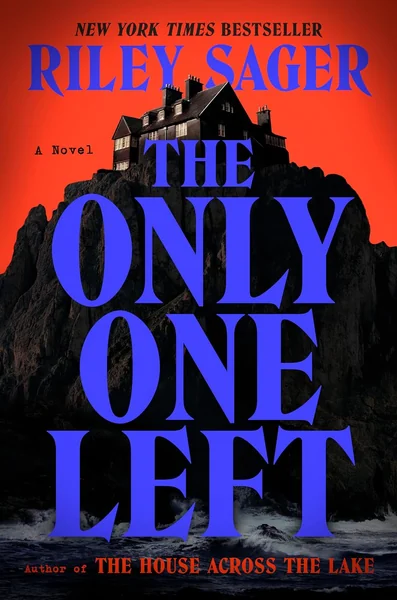
The Only One Left: A Novel by Riley Sager front cover

A Caregiver, an Invalid, and an Old Massacre

The Only One Left, published by Dutton in June 2023, is a murder-mystery/horror novel by Todd Ritter writing under his established pen name Riley Sager. The premise, per the publisher, is a Gothic chiller about a young caregiver assigned to work for a woman accused of a Lizzie Borden-like massacre decades earlier. The caregiver is Kit — singled out by fellow novelist Chandler Baker, in praise collected by the publisher, as a favorite heroine among Sager's protagonists — and her patient is Lenora Hope, the elderly invalid who, as a teenager, was accused of murdering her parents and younger sister in the 1929 slaughter that gave the case its infamy. Lenora was never convicted, and the novel's engine is the gap between what the world believes she did and what actually happened inside the Hope family's cliffside Maine mansion, where Kit now works.
The setup is classic closed-circle suspense: an outsider enters a decaying house, a silenced woman holds the answers, and the past refuses to stay buried. Sager structures the mystery around Kit's growing entanglement with Lenora's account of the murders, layering present-day unease in the house against the reconstructed events of the massacre.

Gothic Lineage, Deliberately Worn

Reviewers have noted the novel's strong literary influences, and as Wikipedia's summary of the criticism records, three names recur: the real Lizzie Borden case, Daphne du Maurier's Rebecca, and Edgar Allan Poe's The Fall of the House of Usher. That is precise company, and it accurately describes the book's design — an accused woman echoing Borden's legend, a new employee absorbing a house's secrets in the Rebecca mold, and a crumbling family seat whose decay mirrors its inhabitants' corruption in the Poe tradition.
This derivative quality is a feature rather than an accident. Sager has built a career on thrillers that wear their genre ancestry openly, and The Only One Left is arguably his most nakedly Gothic construction: the isolated mansion, the disgraced family name, the rhyme attached to Lenora's alleged crime. Readers coming fresh from Rebecca or from Borden true-crime will recognize the architecture immediately; the pleasure lies in watching how Sager rearranges the familiar rooms.

Reception: Fast, Creepy, and Commercial

The book was an instant New York Times bestseller, per the publisher, and it continued Sager's run as one of the most reliable names in mainstream suspense. Praise gathered by the publisher is emphatic on atmosphere and pace: Book Riot called it possibly Sager's creepiest novel yet, Rolling Stone has described Sager as a master of the twist and the turn, and critics has characterized his novels as creepily atmospheric and easy to read without being fluffy. Mystery and Suspense Magazine's reviewer reported gasping out loud and listening for sounds in the house — the kind of visceral reaction the book is engineered to produce.
The most substantive critical assessment on record is more measured. As Wikipedia's reception summary notes, Danielle Trussoni in The New York Times called the novel a dizzying Gothic whodunit and a propulsive mystery with Sager's signature breakneck pace, while also pointing to plot twists that stretch believability. That pairing — admiration for momentum, reservation about plausibility — is the most useful single guide to the reading experience the record offers.

Where It Asks for Indulgence

The credible criticism of The Only One Left centers on its ending mechanics. The novel stacks revelation upon revelation, and by the later chapters the twists compound to a degree that, per the New York Times assessment relayed by Wikipedia, tests believability. Readers who prize airtight plotting — who need every reversal to survive scrutiny in retrospect — may find the final act's machinery visible.
There is also a matter of appetite: at 400 pages in hardcover, this is a full-length commitment built on a single central mystery, and the book's pleasures are concentrated in propulsion and atmosphere rather than in literary subtlety. Readers seeking psychological realism over engineered surprise are not the audience Sager is writing for, and the novel makes no pretense otherwise.

Who It's For

The Only One Left is aimed squarely at Sager's existing readership and at fans of modern Gothic domestic suspense — readers who want a Borden-flavored cold case, a hostile house, and a narrator-positioned protagonist piecing together a decades-old crime. Bookreporter.com, in praise collected by the publisher, predicted that Sager's fans would be left reeling with each passing chapter, and that captures the book's contract with its audience: momentum and misdirection first, everything else second. For thriller readers who enjoyed the author's earlier work, or who want a summer suspense novel with genuine Gothic texture, the documented reception suggests this delivers. For those who read mysteries primarily to admire the logic of the solution, the NYT-flagged plausibility concerns are worth weighing before committing.

Sources & Further Reading

The key facts and claims in this review are grounded in the retrieved, verified sources listed below.

  1. Cited in this review
  2. 1
  3. 2
  4. 3
  5. Further reading
  6. 4
    Riley Sager — author profileHigh-authority source

    Riley Sager, Wikipedia

  7. 5
  8. 6
  9. 7
  10. 8
  11. 9
  12. 10
  13. 11