BOOKS
Published

Read Time

3 min read

Curated & edited by

LuvemBooks Editorial

How we create our reviews →
Share This Review

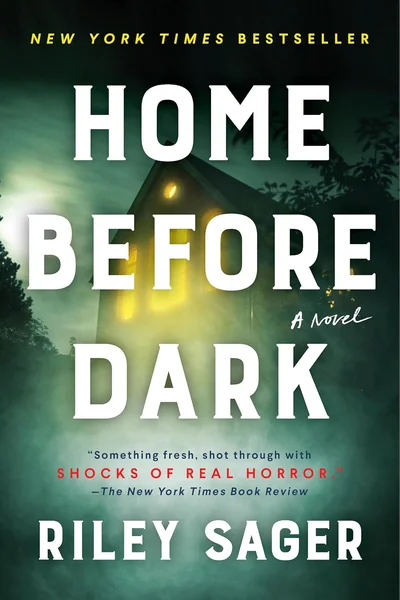
Home Before Dark by Riley Sager Review: A Chilling Haunted-House Thriller That Delivers

Riley Sager's Home Before Dark is a psychological horror novel first published on June 30, 2020, through Dutton, that earned instant New York Times bestseller status by pitting a skeptical daughter against the haunted Victorian estate her father made famous — and weaving two competing narratives together into one propulsive, genuinely unsettling thriller.

LuvemBooks Verdict

Best for

Readers who enjoy psychological horror with a structural hook — specifically, fans of haunted-house fiction who want a skeptic protagonist unravelling a family secret layered against a competing supernatural memoir, in the tradition of The Amityville Horror.

Worth it if

The split narrative conceit appeals — alternating between Maggie's present-day investigation and her father's sensational memoir creates a sustained, propulsive tension between two contradictory versions of events that carries the novel to its final page.

Skip if

Readers sensitive to anachronistic world-building may struggle — Kirkus Reviews flags a persistent friction between period-flavoured details (a journalist's typewriter, library research trips) and present-day intrusions like iPhones, a jolt that repeatedly disrupts the suspension of disbelief the supernatural premise requires.

What readers & critics say

Kirkus Reviews called it a return to form for Sager — significantly more satisfying than his two post-debut novels — praising masterful pacing and truly chilling horror, while flagging anachronistic scene-setting as the novel's chief structural weakness. Wikipedia's reception summary notes that reviewers were particularly impressed by the book's parallel split-narrative structure, with outlets including USA Today and BookPage commenting favourably on the book-within-a-book approach.

A return to form — his latest is significantly more satisfying than the two novels that followed Final Girls, with masterful pacing that keeps readers guessing.

Kirkus Reviews
Sources: Kirkus Reviews, Wikipedia
4.3from 28,927 Amazon ratings— reader ratings, not a LuvemBooks score

Look inside the book

Preview the actual pages, via Google Books
In This Review
  • What Works & What Doesn't
  • What the Novel Is and What It Contains
  • Structure and Craft
  • Reception and Place in the Genre
  • Genuine Strengths
  • A Specific, Recurring Limitation

What Works & What Doesn't

What Works
  • Ingeniously constructed split narrative — Maggie's present-day first-person account alternates with excerpts from her father Ewan's memoir, creating sustained tension between two competing versions of events
  • Richly layered house history, including the Carver murder-suicide and the Garson family secrets, gives the horror genuine grounding rather than generic atmosphere
  • Praised by Kirkus Reviews for masterful pacing that keeps readers guessing to the final page, and by the New York Times Book Review as 'something fresh, shot through with shocks of real horror'
  • Earns its New York Times bestseller status within the haunted-house subgenre by drawing on the tradition of The Amityville Horror while adding a skeptic protagonist whose personal stakes sharpen every revelation
What Doesn't
  • A recurring anachronism problem — period-set scenes in which a professional journalist uses a typewriter or a character bypasses the internet clash with present-day details like iPhones, a friction point Kirkus Reviews flags as a persistent jolt to suspended disbelief
  • Critics noted weaknesses in some of the dialogue and supporting characters, suggesting that the novel's human texture outside the two Holts is uneven
Riley Sager's Home Before Dark is a confident, well-constructed psychological horror novel that earns its reputation as an instant New York Times bestseller.

What the Novel Is and What It Contains

Back cover with synopsis and decorative quotation mark graphic.
At the center of Home Before Dark is Maggie Holt, who as a five-year-old lived for three weeks inside Baneberry Hall — a rambling Victorian estate in the Vermont woods — before her family fled in the middle of the night. Her father, Ewan, turned that experience into a memoir called House of Horrors, a worldwide phenomenon that detailed supernatural happenings, malevolent spirits, and a small child's fear of a being she called "Mister Shadow" and an imaginary playmate named "Miss Pennyface," so named because she had pennies on her eyes. As an adult, Maggie doesn't believe a word of it. When she inherits Baneberry Hall after Ewan's death and returns to renovate and sell it, she sets out to expose what she is certain was her father's elaborate lie — only to find that Baneberry Hall has its own version of the truth waiting for her. The house carries a layered dark history: the 1875 lumber baron William Garson built it, and a prior owner named Curtis Carver murdered his daughter Katie before taking his own life. Both histories begin to press in on Maggie as she investigates.

Structure and Craft

The novel's most distinctive design decision is its split narrative: Maggie's story unfolds in first-person present-tense chapters, while Ewan's account is delivered through excerpts from House of Horrors rendered in a different typographic register. Sager has described this structure as a deliberate challenge — changing something in one thread required cascading changes in the other — and the result is a sustained tension between two contradictory versions of events. As Wikipedia's reception summary notes, reviewers were particularly impressed by this parallel structure, and outlets including USA Today and BookPage both commented favorably on the book-within-a-book approach. Kirkus Reviews described the effect as something like a cross between The Haunting of Hill House and The Amityville Horror, and the latter is no accident: Sager has acknowledged that Jay Anson's true-horror classic directly inspired the novel.

Reception and Place in the Genre

Home Before Dark debuted as an instant New York Times bestseller and drew strong notices from major outlets. The critical coverage Book Review called it "something fresh, shot through with shocks of real horror," while Rolling Stone praised Sager for not holding back and noted that the novel demands to be read to its final page. USA Today observed that the book's best moments are the quiet ones that explore the history of the house rather than its louder horror-trope machinery. Critics called it a propulsive thriller with truly horrifying scenes. Within Sager's own catalog, Kirkus Reviews placed it as a return to form — significantly more satisfying than the two novels that followed his acclaimed debut Final Girls* — crediting Sager with doing a masterful job of keeping readers guessing until the very end.

Genuine Strengths

What makes Baneberry Hall function as more than a standard haunted-house backdrop is the accumulated specificity of its history. The murder-suicide of Curtis and Katie Carver, the buried love story of Indigo Garson uncovered when the kitchen ceiling collapses, and young Maggie's childhood terror are not interchangeable genre furniture — they are distinct threads that Sager works to resolve. Kirkus Reviews noted that Maggie's desperate need to understand her own past, combined with genuine doubt about whether Ewan's memoir is true, makes both Holts compelling despite their genre-familiar stubbornness. The horror elements — ghosts, poltergeist activity, the creeping sense that the house is answering questions no one asked — are described by Kirkus as "truly chilling."

A Specific, Recurring Limitation

The one consistent critical reservation is a structural anachronism that Kirkus Reviews identifies clearly: Sager grounds the novel in the present day but writes scenes that feel set in an earlier era. In flashback sequences from around 1995, Ewan — a professional journalist — uses a typewriter, and present-day Maggie drives to the town library rather than going online for research. The dissonance sharpens whenever a character pulls out an iPhone or mentions eBay; readers are already asked to suspend disbelief for the supernatural, and Kirkus flags these modern intrusions as a jolt that makes that suspension harder. Tina Jordan of the critical coverage* also noted reservations about some of the book's dialogue and supporting characters. These are genuine friction points, though Kirkus ultimately characterizes them as minor within an entertaining whole.

Sources & Further Reading

The key facts and claims in this review are grounded in the retrieved, verified sources listed below.

  1. Cited in this review
  2. 1
  3. 2
  4. 3
  5. Further reading
  6. 4
    Riley Sager — author profileHigh-authority source

    Riley Sager, Wikipedia

  7. 5
  8. 6
  9. 7
  10. 8
  11. 9
  12. 10
  13. 11