A Different Approach to Mental Chatter
Does The Magic of Mindful Self-Awareness work for overthinking? Matt Tenney's approach stands apart from the crowded field of mindfulness guides by focusing specifically on self-awareness as the foundation for mental clarity. Where books like The Power of Now emphasize present-moment awareness and Mindfulness for Beginners offers basic meditation techniques, Tenney builds his framework around understanding the mechanics of our own thinking patterns.
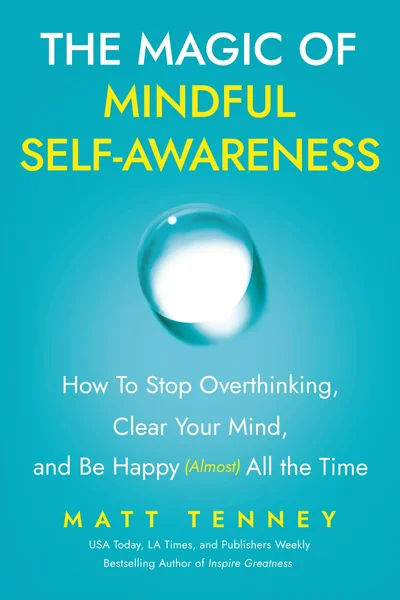
The book's cover design features a serene blue orb that effectively conveys the sense of mental clarity Tenney promises readers. This visual metaphor reinforces his central thesis: that mindful self-awareness creates a space of calm within the storm of overthinking. The subtitle's promise to help readers be happy "almost" all the time reflects a refreshingly honest acknowledgment that no technique eliminates all mental struggle.
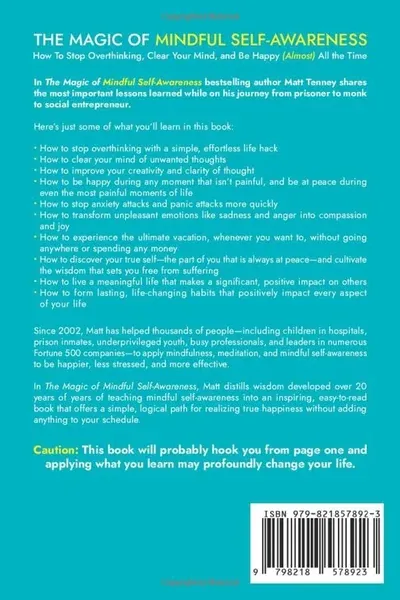
Tenney structures his approach around three core principles: recognizing thought patterns without judgment, creating space between stimulus and response, and cultivating what he terms "aware presence." Unlike meditation-heavy approaches found in traditional mindfulness literature, his method emphasizes practical awareness exercises that can be integrated into daily activities without requiring formal sitting practice.
Tenney's Practical Framework
The author presents his techniques through a systematic progression that builds from basic awareness to more sophisticated mental training. His writing style balances accessibility with depth, avoiding both oversimplification and academic jargon. Tenney draws from both Eastern contemplative traditions and Western psychological research, though he prioritizes practical application over theoretical exploration.
The exercises themselves range from simple breath awareness techniques to more complex practices for observing the relationship between thoughts and emotions. For readers who struggle with traditional meditation, Tenney offers alternatives like mindful walking and awareness during routine activities. His emphasis on integration rather than isolation sets this book apart from guides that require significant time commitments.
Tenney's background in both business and contemplative practice influences his approach, though he avoids the overly corporate tone that plagues some mindfulness books. He acknowledges the challenges of maintaining awareness practices amid modern life's demands while providing realistic strategies for building consistency.
The Science Behind the Method
Where Tenney's approach gains credibility is in his integration of neuroscience research with contemplative wisdom. He explains how repetitive thinking patterns create neural pathways and how awareness practices can literally rewire the brain. The research-backed strategies he presents feel grounded rather than wishful, particularly his discussion of the default mode network and its role in rumination.
The book addresses common obstacles like initial resistance to mindfulness practice and the misconception that awareness means eliminating thoughts entirely. Tenney clarifies that the goal isn't to stop thinking but to change our relationship with thoughts. This distinction proves crucial for readers who have failed with other mindfulness approaches that seemed to demand impossible mental control.
His treatment of the happiness component deserves attention. Rather than promising constant bliss, Tenney defines happiness as a baseline contentment that persists even during difficult experiences. This realistic approach to emotional well-being prevents the disappointment that often accompanies more grandiose self-help promises.
Where the Method Shines and Struggles
The main strength of Tenney's approach lies in its accessibility. Readers don't need prior meditation experience or extensive time blocks to begin practicing his techniques. The progressive structure allows people to build skills gradually, which increases the likelihood of long-term adoption. His emphasis on awareness during ordinary activities makes the practice sustainable for busy lifestyles.
However, the book's limitations become apparent for readers seeking deeper philosophical exploration. Tenney focuses heavily on technique while spending less time on the underlying principles of mindfulness philosophy. Where it falls short is in addressing more complex psychological issues that may require professional intervention alongside mindfulness practice.
The "almost" qualifier in the subtitle, while honest, may frustrate readers seeking more dramatic transformation. Tenney's measured approach, though realistic, might disappoint those drawn to self-help books promising complete life overhauls. Some readers may find his emphasis on gradual change too conservative given the book's ambitious title.
Our Take on Effectiveness
Is The Magic of Mindful Self-Awareness worth reading? For individuals specifically struggling with overthinking patterns, Tenney's targeted approach offers genuine value. The book succeeds as a practical guide rather than a philosophical treatise, making it ideal for beginners who want concrete techniques without extensive background study.
The integration of modern neuroscience with traditional awareness practices creates credibility without overwhelming readers with technical details. Tenney's honest acknowledgment of the practice's limitations prevents the inflated expectations that doom many self-help endeavors. For readers who have found meditation-based approaches challenging, his activity-integrated methods provide viable alternatives.
However, this book works best as part of a broader approach to mental well-being rather than a standalone solution. Readers dealing with clinical anxiety or depression should view it as a complement to, not replacement for, professional treatment. The techniques require consistent application to show results, which may challenge people seeking quick fixes.
The book delivers on its core promise: providing accessible tools for developing greater awareness of thinking patterns and creating space for more intentional responses. While it won't eliminate all overthinking, it offers a realistic path toward reduced mental reactivity and increased emotional stability.