
In This Article
- What the Research Establishes
- Who Is Involved and What the Book Offers
- Context and Significance in the Field
- What to Watch
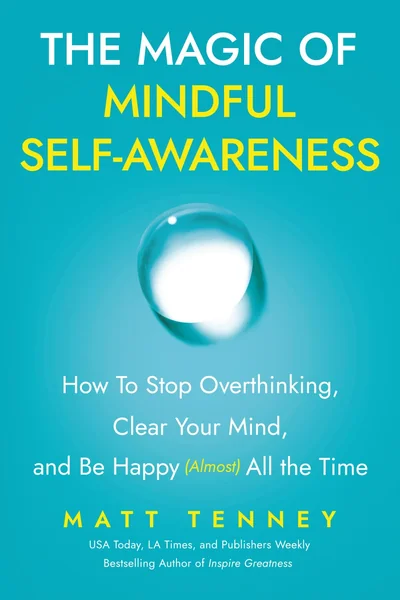
A wave of psychological research published in March 2026 has brought renewed scrutiny to chronic overthinking as a serious mental-health concern, according to PsyPost, which reported on multiple studies documenting the condition's severe impacts. The coverage has coincided with the release of The Magic of Mindful Self-Awareness: How To Stop Overthinking, Clear Your Mind by Matt Tenney, published in hardcover on 17 March 2026, according to Porchlight Book Company.
What the Research Establishes
PsyPost identified the March 2026 body of work as signalling that overthinking has reached epidemic proportions, with documented links to serious mental and physical health consequences. That framing echoes a broader clinical picture described by psychologist Dr Jessamy Hibberd, who — in a curated reading guide at Five Books — explains that overthinking in any form is dangerous, inhibiting problem-solving, trapping mood, and generating measurable harm to both mental and physical health. Her guide spans classic research texts through to contemporary titles aimed at people caught in rumination cycles.
Who Is Involved and What the Book Offers
Matt Tenney's new title is described by Audible as drawing on lessons from his journey from prisoner to monk to social entrepreneur — a background that shapes his practical, non-abstract approach to mindful self-awareness. The book is published by Matt Holt Books at a hardcover price of $28.00, per Porchlight Book Company. For an assessment of the book itself, see our full review.
Tenney is not the only author whose work sits in this space. Vocal Media's book club highlights several titles addressing obsessive thought patterns, including Tara Brach's Radical Acceptance, which the outlet describes as offering a framework for recognising and releasing self-critical thoughts and emotional pain. The site characterises books of this kind as tools that "nurture clarity, cultivate peace, and train the brain to detach from obsessive thought patterns."
Separately, The New York Times has reported on the enduring relevance of Thich Nhat Hanh's teachings, noting that his work offers "simple steps to internal harmony amid uncertainty and discord" rooted in mindful appreciation of the present moment — context that situates the current wave of interest within a longer tradition of mindfulness publishing, according to NYT.
Context and Significance in the Field
The convergence of new research and new publishing in March 2026 has placed overthinking — long treated as a secondary symptom — more squarely at the centre of mental-health discourse. Five Books positions the problem as one that professional opinion has historically underestimated, with Dr Hibberd's guide spanning both academic research and accessible self-help precisely because, she argues, the literature needs to reach a wider audience. That breadth of genre — from peer-reviewed findings to practical guides — reflects how publishers and clinicians are now approaching the subject in parallel rather than in separate lanes.
What to Watch
Tenney's author platform, matttenney.com, indicates that additional work on employee engagement and retention is in development, suggesting his publishing activity extends beyond the current title. Whether the March 2026 research cluster will generate further clinical or policy responses to overthinking as a defined public-health issue remains a question the studies themselves, as covered by PsyPost, have so far left open.
Frequently Asked Questions
Is The Magic of Mindful Self-Awareness: How To Stop Overthinking, Clear Your Mind worth buying in 2026?
Yes, especially given the current overthinking epidemic. At 3.8/5 stars, it offers practical mindfulness techniques that work well for moderate overthinking. However, it's best used as a complementary tool rather than a complete solution for serious mental health issues.
What is the main message of The Magic of Mindful Self-Awareness?
The book's core message is that mindful self-awareness can interrupt overthinking patterns before they spiral out of control. Tenney emphasizes practical, immediately applicable techniques rather than abstract meditation concepts.
Who should read The Magic of Mindful Self-Awareness?
This book is ideal for individuals experiencing mild to moderate overthinking without clinical diagnosis. It's particularly valuable for those seeking preventive mental health tools and structured mindfulness techniques they can implement in daily routines.
Should I read The Magic of Mindful Self-Awareness or try therapy for overthinking?
For mild overthinking, Tenney's book can be an excellent starting point or complement to therapy. However, if you're dealing with clinical anxiety, depression, or severe overthinking patterns, professional therapy should be your primary approach with this book as a supportive resource.


Reader Discussion
No comments yet
Be the first to share your thoughts!