

8 min read
4.7
· 121,002 Amazon ratingsShare This Review
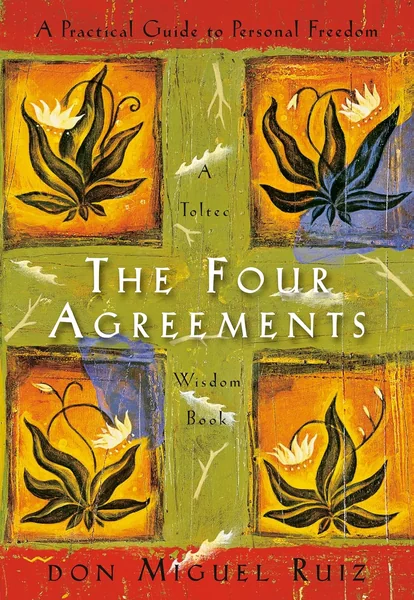
The Four Agreements by Don Miguel Ruiz Review: A Toltec Self-Help Perennial Bestseller
Don Miguel Ruiz's The Four Agreements: A Practical Guide to Personal Freedom is a self-help book grounded in Toltec teachings that distills a four-part code of conduct — be impeccable with your word, don't take anything personally, don't make assumptions, and always do your best — into a compact guide designed to help readers dismantle self-limiting beliefs and pursue what Ruiz frames as freedom, happiness, and love. Published in 1997 by Amber-Allen Publishing, it spent over a decade on The New York Times bestseller list and has sold approximately 15 million copies in the United States alone, reaching readers in 53 languages. This review is based on published sources and the book's documented record; it does not reflect hands-on use or application of the framework.
LuvemBooks Verdict
Best for
Readers new to spiritually grounded self-help who want a concise, plain-language framework for re-examining their internal belief systems and habitual patterns of thought — especially those drawn to wisdom-tradition literature or who have encountered the four agreements in popular culture and want to engage with the source text.
Worth it if
The compact, philosophically grounded structure appeals to you — you're looking for orienting principles and a coherent spiritual framework rather than evidence-based, step-by-step practical guidance.
Skip if
You're a skeptical or secular reader who needs academically verified claims and granular psychological scaffolding — the Toltec framing is the author's own interpretive tradition and the four agreements function more as a philosophy of mind than an actionable workbook.
What readers & critics say
Wikipedia documents the book's extraordinary commercial longevity — over a decade on The New York Times bestseller list and a major readership boost following Oprah Winfrey's 2001 and 2013 endorsements. Reviewer sites including bookreviewsonline.org (4.5/5) and booksofbrilliance.com describe it as "simple on the surface, but powerful when practiced daily," while xeniumhr.com notes Ruiz's informal style is "simple to comprehend," though his ideas are "scattered throughout the sections."
Sources: Wikipedia, bookreviewsonline.org, booksofbrilliance.com, xeniumhr.comAge & Reading Level
Recommended age
Adult
Reading level
Adult
Skip if you're looking for evidence-based, step-by-step practical guidance rather than a spiritually framed philosophical framework.
In This Review
- What Works & What Doesn't
- What the Book Is and What It Argues
- Cultural Footprint and Significance
- Strengths: Structure, Accessibility, and Spiritual Framing
- Limitations and Who May Find It Wanting
- Who This Book Is For
What Works & What Doesn't
What Works
- Spent over a decade on The New York Times bestseller list and has sold approximately 15 million copies in the United States, reflecting exceptional and sustained reader resonance
- Each agreement is given its own chapter with linguistic and historical Toltec context, providing philosophical grounding beyond simple motivational writing
- Endorsed by major cultural figures including Oprah Winfrey, Deepak Chopra, and Wayne Dyer, with Winfrey calling it 'simple yet so powerful'
- Available in 53 languages and multiple formats — including audiobook, illustrated edition, and card deck — making it broadly accessible
- Compact structure makes it an accessible entry point for readers new to spiritually grounded self-help
What Doesn't
- The Toltec spiritual framing is the author's own interpretive tradition, not an academically or anthropologically verified account — a limitation Wikipedia's sourcing notes flag directly
- The four principles, while memorable, are high-level in nature; readers seeking evidence-based or step-by-step practical guidance may find the framework less actionable than they need
What the Book Is and What It Argues
Cultural Footprint and Significance
Strengths: Structure, Accessibility, and Spiritual Framing
Limitations and Who May Find It Wanting
Who This Book Is For
Frequently Asked Questions
Sources & Further Reading
The key facts and claims in this review are grounded in the retrieved, verified sources listed below.
- Cited in this review
- 1
miguelruiz.com
- 2
- 3
- Further reading
- 4
Don Miguel Ruiz, Wikipedia
- 5
en.wikipedia.org
- 6
- 7
s3.amazonaws.com
- 8
experiencelife.lifetime.life
- 9
- 10
- 11
- 12
Related Reviews
Reviews of books we picked for readers who enjoyed The Four Agreements.

Reader Comments
No comments yet
Be the first to share your thoughts!