BOOKS
Published

Read Time

3 min read

Reader rating

4.4

· 1,592 Amazon ratings
reader ratings, not a LuvemBooks score
Curated & edited by

LuvemBooks Editorial

How we create our reviews →
Share This Review

The Art of Letting Go by Nick Trenton Review: A Practical Guide to Quieting Overthinking

The Art of Letting Go: Stop Overthinking, Stop Negative Spirals, and Find Emotional Freedom (The Path to Calm) is a self-help guide by Nick Trenton, independently published in May 2023, that offers psychologically grounded strategies for breaking free from anxiety, rumination, and emotional spirals. This review covers the book's content, structure, and positioning based on published sources, not hands-on application.

LuvemBooks Verdict

Best for

Readers who feel overwhelmed by chronic overthinking and anxious rumination and want a structured, technique-named self-help guide rooted in behavioral psychology rather than vague wellness inspiration.

Worth it if

You want a practical, accessible roadmap of discrete psychological tools — brain dumping, self-distancing, externalization, and reframing perfectionism into "excellent-ism" — that translate behavioral psychology concepts into everyday language without requiring a clinical background.

Skip if

You're looking for academic rigor, formal citations, or clinical depth, or you're wary of independently published self-help titles that operate outside traditional editorial infrastructure.

Vocal Media describes the book as presenting "an actionable roadmap to emotional well-being" through practical strategies, psychological insights, and personal anecdotes. The Critical Thought Lab highlights Trenton's central thesis that much of our overthinking stems from trying to control what we simply cannot — framing the need for control as the core driver of anxiety and mental spirals.

Sources: Vocal Media, The Critical Thought Lab
4.4from 1,592 Amazon ratings— reader ratings, not a LuvemBooks score
In This Review
  • What Works & What Doesn't
  • What the Book Is and What It Sets Out to Do
  • Core Content and Structure
  • Author Perspective and Voice
  • Intended Audience and Scope
  • Considerations for Prospective Readers

What Works & What Doesn't

What Works
  • Draws on Trenton's MA in Behavioral Psychology to ground techniques in established psychological principles rather than generic wellness advice
  • Covers a wide range of specific, named strategies — including brain dumping, self-distancing, externalization, and reframing perfectionism into 'excellent-ism'
  • Written in accessible language designed to translate psychological concepts for general readers, not just those with clinical backgrounds
  • Functions as a standalone volume within The Path to Calm series, making it approachable without prior context from other books in the collection
What Doesn't
  • Readers seeking clinical rigor or academic citation may find the accessible, technique-first format less substantive than they require
  • As an independently published title, it operates without traditional editorial infrastructure, which some readers factor into their evaluation of self-help guides
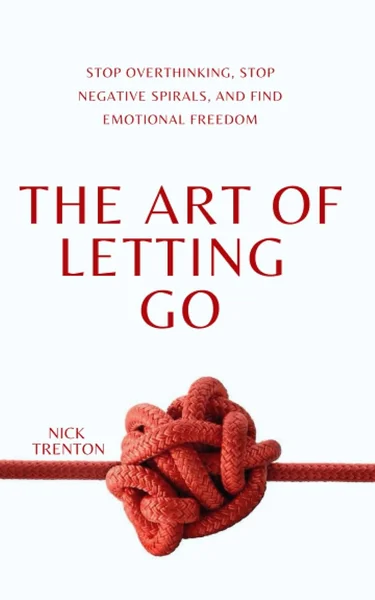
A focused, technique-driven self-help title, The Art of Letting Go is squarely aimed at readers who feel trapped by their own mental noise and are ready for structured, actionable guidance.
The Art of Letting Go: Stop Overthinking, Stop Negative Spirals, and Find Emotional Freedom (The Path to Calm) by Nick Trenton front cover

What the Book Is and What It Sets Out to Do

The Art of Letting Go is the second entry in Nick Trenton's independently published series, The Path to Calm. Its stated mission is direct: to help readers escape the cycle of overthinking, negative spirals, and accumulated emotional baggage that prevents genuine peace of mind. The book frames the mind as something that should function as a "safe zone, not the noisiest place in the world" — a governing metaphor that shapes its approach throughout. Trenton draws on his academic background, holding a BS in Economics and an MA in Behavioral Psychology, to ground the book's techniques in psychological principles rather than pure intuition or anecdote.
safe zone, not the noisiest place in the world

Core Content and Structure

The book is organized around a set of specific, named techniques and concepts. Readers will find guidance on practicing nonjudgment and observation over emotions, untangling what Trenton identifies as the toxic beliefs of urgency and danger embedded in anxious thinking, and using "brain dumping" as a calming tool. The guide also introduces exercises in self-distancing and externalization — described as powerful psychological techniques for creating mental space between a person and their distressing thoughts. A notable conceptual pivot is Trenton's reframing of perfectionism: rather than simply urging readers to abandon high standards, the book proposes trading a "drive for perfection" for what it calls a "drive for excellent-ism," a distinction designed to preserve ambition while defusing the anxiety that perfectionism generates. Vocal Media's summary of the book describes it as presenting "an actionable roadmap to emotional well-being" through a combination of practical strategies, psychological insights, and personal anecdotes.

Author Perspective and Voice

Trenton's biographical framing is deliberately unpretentious. His author notes describe a childhood on a rural Illinois farm — he has described himself as "quite literally a farm boy" — before his eventual academic training in behavioral psychology. This grounding shapes the book's tone: the psychological framework is not presented as clinical or inaccessible but is translated into practical language intended for general readers. The personal anecdotes woven through the text, noted in source commentary, work to bridge the gap between theory and lived experience, giving the techniques a human context rather than a purely academic one.

Intended Audience and Scope

The book is designed to serve a wide range of readers dealing with anxiety and rumination, but its content maps most naturally onto two overlapping audiences. The first is anyone seeking a structured roadmap to inner peace and relief from chronic anxiety. The second is readers specifically drawn to mindfulness and self-compassion as frameworks — the book provides practical exercises within those traditions rather than treating them as abstract philosophy. As part of a 26-book series, The Path to Calm, the title is also designed to function as a standalone entry point; readers do not need prior familiarity with other volumes in the series to engage with its material.

Considerations for Prospective Readers

Because this is a functional self-help guide, its ultimate value depends on application — something that can only be assessed by individual readers working through its exercises. What the record confirms is that the book is built around named, discrete techniques with psychological roots, which gives it a more structured character than general-audience wellness titles that rely primarily on narrative. Readers who prefer deeply clinical depth or academic citation may find the accessible, technique-first format less rigorous than they seek. Conversely, readers who have bounced off denser psychology texts may find Trenton's translation of behavioral psychology concepts into practical, named exercises to be the book's primary strength. The independently published format means the book operates outside traditional editorial infrastructure, a factor some readers weigh when evaluating self-help titles in this space.

Sources & Further Reading

The key facts and claims in this review are grounded in the retrieved, verified sources listed below.

  1. Cited in this review
  2. 1
  3. 2
  4. 3
  5. Further reading
  6. 4
  7. 5
  8. 6
Related Reviews

Reviews of books we picked for readers who enjoyed The Art of Letting Go.