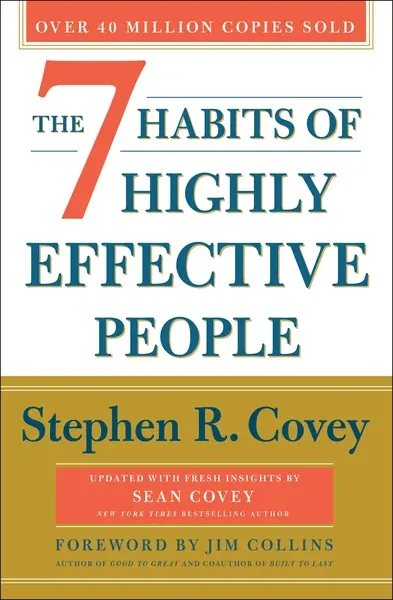
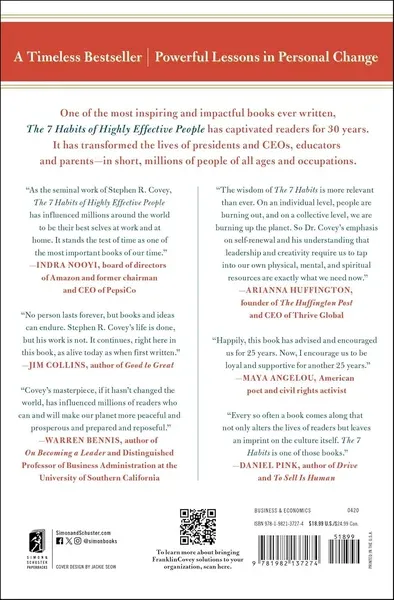
In a world oversaturated with productivity hacks and quick-fix solutions, Stephen Covey's The 7 Habits of Highly Effective People stands as a monument to principle-centered living. The question many readers face today is whether this foundational self-help text remains relevant decades after its initial publication. For those wondering is The 7 Habits of Highly Effective People worth reading, the answer lies not in its age, but in its enduring focus on character development over personality manipulation.
Unlike contemporary books such as Atomic Habits by James Clear, which focuses on behavioral systems, or The Power of Now by Eckhart Tolle, which emphasizes mindfulness, Stephen Covey's approach centers on what he calls the "Character Ethic" – the belief that true effectiveness stems from fundamental principles rather than surface-level techniques.
Covey's Framework: Private Victory Before Public Victory
The genius of Stephen Covey's methodology lies in its logical progression from personal mastery to interpersonal effectiveness. The first three habits—Be Proactive, Begin with the End in Mind, and Put First Things First—constitute what Covey terms the "Private Victory." These habits focus on developing self-mastery and independence before attempting to influence others.
Habits four through six—Think Win-Win, Seek First to Understand Then to Be Understood, and Synergize—form the "Public Victory," addressing how effectiveness translates to relationships and leadership. The seventh habit, Sharpen the Saw, encompasses continuous renewal across physical, mental, emotional, and spiritual dimensions.
This structure reveals why the book has maintained its relevance where other self-help titles have faded. Rather than offering tactical advice that becomes obsolete, Covey presents a philosophical framework that adapts to changing contexts while maintaining its core integrity.
The Character Ethic vs Personality Ethic Distinction
Stephen Covey's central thesis revolves around distinguishing between two approaches to human effectiveness. The Personality Ethic, which he argues dominated much of 20th-century self-help literature, focuses on techniques, skills, and positive attitudes as quick fixes for personal and interpersonal problems. The Character Ethic, by contrast, emphasizes integrity, courage, justice, and other fundamental principles as the foundation for lasting effectiveness.
This distinction feels particularly relevant in our current era of social media optimization and personal branding. While modern productivity culture often resembles Covey's critique of the Personality Ethic—emphasizing image management over substance—his Character Ethic provides a counterbalance that addresses deeper questions of purpose and values.
The book's emphasis on paradigm shifts also speaks to contemporary challenges. Covey argues that our effectiveness depends not just on our behaviors but on the underlying maps or paradigms through which we view the world. In an age of rapid technological and social change, this focus on examining and adjusting our fundamental assumptions proves increasingly valuable.
Practical Applications and Limitations
Where The 7 Habits succeeds is in providing a comprehensive system rather than isolated tips. The habits build upon each other, creating what Stephen Covey calls an "inside-out" approach to effectiveness. The proactivity concept, for instance, moves beyond positive thinking to emphasize response-ability—our ability to choose our response to any given situation.
However, the book's corporate origins show through in examples that can feel dated or culturally specific. Covey's background in organizational development means many illustrations draw from business contexts that may not resonate with all readers. Additionally, the book's length and philosophical depth can overwhelm readers seeking immediate, actionable advice.
The 30th Anniversary Edition attempts to address some relevance concerns with updated examples and contemporary applications, but the core content remains unchanged—which is both a strength and limitation depending on reader expectations.
How It Compares to Modern Self-Help
When measured against contemporary personal development literature, The 7 Habits occupies a unique position. Books like Getting Things Done by David Allen focus primarily on systems and processes, while Mindset by Carol Dweck emphasizes psychological frameworks. Stephen Covey's work attempts to integrate multiple dimensions—psychological, behavioral, ethical, and spiritual—into a unified approach.
This comprehensiveness can feel overwhelming compared to more focused modern titles, but it also provides depth that many contemporary books lack. While Atomic Habits excels at behavioral change mechanics, it doesn't address the deeper questions of values and purpose that Covey tackles. Conversely, while books focused on meaning like Man's Search for Meaning provide philosophical depth, they may lack Covey's practical framework for daily application.
The Verdict: Timeless Principles in a Timeless Package
The enduring popularity of The 7 Habits of Highly Effective People reflects not just effective marketing but the universal appeal of its core message: that true effectiveness comes from aligning our actions with fundamental principles rather than chasing superficial techniques.
For modern readers, the book's value lies less in revolutionary insights—many of its concepts have been absorbed into mainstream thinking—and more in its systematic approach to character development. The habits provide a framework for navigating contemporary challenges while maintaining focus on deeper purposes and values.
The book works best for readers willing to engage with its philosophical underpinnings rather than those seeking quick productivity hacks. It demands reflection and sustained application rather than passive consumption, which may explain both its lasting impact and its occasionally sluggish pacing.
Is it worth reading today? For individuals seeking a comprehensive framework for personal and professional effectiveness grounded in enduring principles rather than trendy techniques, absolutely. For those preferring targeted, actionable advice on specific challenges, more focused contemporary titles may serve better.
Where to Buy
You can find The 7 Habits of Highly Effective People: 30th Anniversary Edition at Amazon, Barnes & Noble, your local bookstore, or directly from FranklinCovey.