BOOKS
Published
Read Time
6 min read
Our Rating
3.5
An engaging introduction to forest ecology that makes complex concepts accessible, though scientific accuracy varies and anthropomorphic interpretations should be approached with caution.
Reviewed by
LuvemBooks
Share This Review
The Hidden Life of Trees by Peter Wohlleben - Book Review
Our Rating
3.5
An engaging introduction to forest ecology that makes complex concepts accessible, though scientific accuracy varies and anthropomorphic interpretations should be approached with caution.
In This Review
- What Works & What Doesn't
- Revolutionary Claims About Tree Communication
- Accessible Science Meets Controversial Interpretation
- Scientific Foundation and Limitations
- Environmental Impact and Conservation Message
- Worth Reading Despite Scientific Debates
What Works & What Doesn't
What Works
- Makes complex forest ecology concepts accessible to general readers
- Inspiring conservation message that encourages forest protection
- Based on legitimate forestry experience and some solid research
- Engaging narrative style that transforms dry science into compelling stories
- Successfully challenges readers to reconsider their relationship with nature
What Doesn't
- Anthropomorphic language may mislead readers about actual scientific evidence
- Some claims about tree consciousness and emotions lack scientific support
- Often extrapolates beyond what current research can definitively prove
- Scientific community has raised concerns about accuracy of several key assertions
Revolutionary Claims About Tree Communication
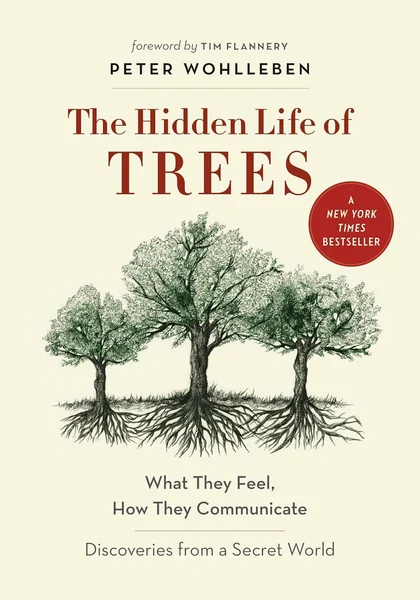
A genuinely eye-opening piece of popular science that earns its wide readership — as long as you know where the evidence ends and the storytelling begins. The central thesis revolves around forest network mycorrhizal connections - the underground fungal networks that connect tree roots. Wohlleben describes these networks as a "wood wide web" where trees exchange nutrients, warning signals, and support struggling neighbors. Mother trees allegedly nurture their offspring, sending them sugar and protective chemicals through these fungal highways.
The author presents evidence that trees can distinguish between their own seedlings and strangers, providing preferential care to their genetic offspring. He describes how forest elders support younger trees by sharing resources, creating a cooperative ecosystem rather than the competitive struggle traditionally assumed by science.
These claims extend to tree consciousness and emotional capacity. Wohlleben suggests trees experience pain, have memories, and make decisions about resource allocation. While fascinating, these assertions push well beyond established scientific consensus.
Accessible Science Meets Controversial Interpretation
Wohlleben excels at making complex ecological concepts understandable for general readers. His prose transforms dry scientific data into engaging narratives about forest life. The book successfully bridges the gap between technical forestry knowledge and popular science writing — a gap few writers in this field have managed to close without losing either the science or the reader.
However, the main weakness lies in the anthropomorphic language used to describe tree behavior. Terms like "friendship," "communication," and "care" applied to trees make for compelling reading but may mislead readers about the actual scientific evidence. Many forest ecologists argue that Wohlleben conflates correlation with causation and attributes intentionality to what are likely chemical and physical processes.
The writing style remains conversational and accessible throughout, making complex topics digestible for readers without scientific backgrounds. Wohlleben's passion for forests comes through clearly, inspiring readers to view their local woodlands with new appreciation.
Scientific Foundation and Limitations
The book draws from legitimate research on mycorrhizal networks, particularly the work of Suzanne Simard, who studies forest connectivity. However, Wohlleben often extrapolates beyond what current research can support. Where it falls short is in distinguishing between established scientific fact and speculative interpretation.
Some claims about tree communication have empirical support - trees do exchange chemical signals and nutrients through fungal networks. Other assertions about tree emotions and consciousness venture into territory that current scientific methods cannot adequately test or verify.
Readers seeking research-backed strategies for understanding forest ecology will find valuable information here, but should treat the more sensational claims — particularly those about tree emotions and consciousness — with healthy skepticism. The book works better as an introduction to forest ecology concepts than as definitive scientific authority.
Environmental Impact and Conservation Message
Beyond the scientific debates, the book serves as powerful advocacy for forest conservation. Wohlleben's descriptions of forest complexity and interconnectedness support arguments for ecosystem-based forest management rather than industrial timber harvesting.
The conservation message resonates strongly throughout the text. By presenting forests as sophisticated communities rather than collections of individual trees, Wohlleben builds a compelling case for protecting old-growth ecosystems and rethinking industrial forest management.
This environmental perspective gives the book lasting value even where scientific accuracy is questionable. The argument for respecting forest ecosystems stands on its own, independent of whether the more contentious claims about tree consciousness hold up.
Worth Reading Despite Scientific Debates
The bottom line: The Hidden Life of Trees succeeds as popular science despite its scientific limitations. The book effectively communicates genuine wonder about forest ecosystems while making ecological concepts accessible to general readers.
Perfect for beginners interested in forest ecology, environmental science, or nature writing — readers should supplement it with more rigorous sources, such as Simard's own research, but the engaging writing and thought-provoking ideas make it a strong starting point.
If you're drawn to forest ecology or conservation and want a readable entry point that sparks genuine curiosity, this is the book to pick up — the Amazon link in the sidebar has the current price.
Product Gallery


Related Reviews
Reviews of books we picked for readers who enjoyed The Hidden Life of Trees.