
9 min read
4.5
· 1,141 Amazon ratingsShare This Review
All the President's Men by Bob Woodward and Carl Bernstein Review: The Watergate Investigation That Redefined Journalism
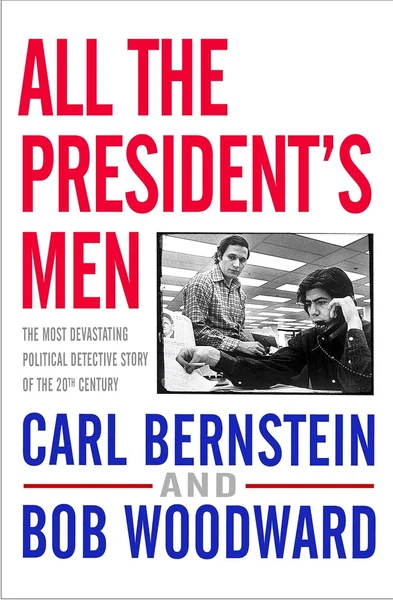
First published in 1974, All the President's Men is the definitive non-fiction account of how two Washington Post reporters, Bob Woodward and Carl Bernstein, unraveled the Watergate scandal — a story that reached from a June 1972 break-in at the Watergate Office Building all the way to the upper echelons of the Nixon White House. Gene Roberts, former executive editor of The Philadelphia Inquirer and former managing editor of critical coverage, has called their reporting "maybe the single greatest reporting effort of all time," and the book that captures it remains one of the most important works of American journalism ever committed to print.
LuvemBooks Verdict
Best for
Readers fascinated by investigative journalism, press freedom, or political history who want an inside-out account of how Woodward and Bernstein built the Watergate case source by source — told with the propulsive momentum of a procedural thriller.
Worth it if
You want to understand how accountability journalism actually works from the inside, with the mechanics of source cultivation, clandestine meetings, and institutional pressure laid bare in scene-by-scene detail.
Skip if
You're looking for a full account of Nixon's political collapse or a deeply contextualised analytical study of his administration — the narrative ends in mid-1973, well before the resignation, and the focus stays tightly on the reporters' investigative process rather than the broader political machinery.
What readers & critics say
The New Yorker, reviewing the book on its original publication, called it "a breathless account" of the two young critical coverage metropolitan-desk reporters who did more than any of their colleagues to expose the Watergate scandal's "outrageous and often felonious doings." NPR, marking the book's 50th anniversary, described it as capturing the early days of the "era-defining White House scandal" in a way that no subsequent memoir or analysis has matched.
“A breathless account of the two young Washington Post reporters who did more than any of their colleagues to bring to light the outrageous and often felonious doings commonly referred to as the Watergate affair.”
— The New Yorker“None captures the early days of that era-defining White House scandal quite like All the President's Men.”
— NPRAsk LuvemBooks
Was this helpful?
- Is it worth reading?
- For readers interested in investigative journalism, press freedom, or American political history, All the President's Men is widely regarded as essential. Gene Roberts, former executive editor of The Philadelphia Inquirer, has called the underlying reporting 'maybe the single greatest reporting effort of all time,' and The New Yorker praised the book as a 'breathless account' — written with the propulsive momentum of a procedural despite being grounded entirely in documented fact. Its third-person narrative structure gives it a documentary objectivity unusual for a work in which the authors are also the central subjects, and the behind-the-scenes access to Woodward and Bernstein's source-building process makes it far more gripping than a mere chronology of public events. The key caveat is that the story ends in mid-1973, before Nixon's resignation — those wanting the full arc need to continue with the sequel, The Final Days.
- Similar books
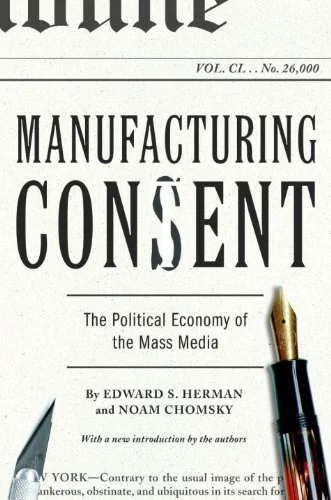
- Readers who respond to All the President's Men's examination of media, power, and accountability journalism will find strong company in several related works. Manufacturing Consent by Edward S. Herman and Noam Chomsky offers a rigorous analytical framework for understanding how mass media institutions shape public discourse — a natural intellectual companion to Woodward and Bernstein's on-the-ground procedural. The Looming Tower by Lawrence Wright and The Snowden Files by Luke Harding share the same propulsive, deeply reported non-fiction approach to stories where the stakes were genuinely national. For those drawn to the political and historical dimensions, Fear: Trump in the White House by Bob Woodward and His Truth Is Marching On: John Lewis and the Power of Hope by Jon Meacham extend the conversation about American democratic institutions and the individuals who shaped them.
- Who should read this?
- All the President's Men is essential reading for anyone drawn to political history, press freedom, or the mechanics of investigative journalism. Its scene-driven, procedural approach makes it accessible well beyond specialist audiences — The New Yorker's characterisation of it as a 'breathless account' reflects its appeal as gripping non-fiction narrative. Readers who prefer heavily contextualised political history with extensive analytical framing around Nixon and the broader administration may find its tight focus on Woodward and Bernstein's reporting process a different kind of read than expected, and those wanting the complete story of the presidency's collapse will need to pair it with The Final Days. For journalism students, political historians, and general readers who want to understand how accountability reporting functions as a democratic check on power, it is about as close to a required text as non-fiction gets.
- Tell me about the adaptation
- The 1976 film adaptation of All the President's Men, directed by Alan J. Pakula, starred Robert Redford as Bob Woodward and Dustin Hoffman as Carl Bernstein, and brought the Watergate story to a mass global audience. It won four Academy Awards, including Best Adapted Screenplay, and is itself considered a landmark of American political cinema. Woodward has noted that it was Redford's early interest in purchasing the film rights — before the book was written — that pushed the two reporters to commit to writing it at all, and that Redford's involvement was instrumental in shaping the narrative's focus on the reporters' investigative process rather than the Watergate events themselves. The book, however, goes considerably further than the film: it names previously unidentified sources and reconstructs the Deep Throat meetings in detail that the screen adaptation could only suggest.
- What are the main themes?
- At its core, All the President's Men is about the press as a democratic check on political power — how two reporters at a metropolitan desk, working source by source under enormous institutional and political pressure, were able to expose what The New Yorker described as the 'outrageous and often felonious doings' of the Nixon administration. A second major theme is the ethics and mechanics of confidential sourcing: the book's detailed reconstruction of Woodward's secret meetings with Deep Throat, and its naming of sources like Hugh Sloan who had refused identification in real-time dispatches, constitutes one of the most transparent accounts of the reporter-source relationship ever published. The title itself — drawn from the Humpty Dumpty nursery rhyme — frames a third theme: the limits of institutional power when confronted with documented truth.
- Do I need background knowledge to enjoy it?
- No prior deep knowledge of Watergate or Nixon-era politics is required to follow and enjoy All the President's Men. The book's procedural, scene-driven structure means it functions as a self-contained investigative narrative — readers learn what Woodward and Bernstein learned, as they learned it. That said, readers who do bring some familiarity with the political landscape of the early 1970s will appreciate additional layers of context, particularly around figures like H. R. Haldeman, John Ehrlichman, and Alexander Butterfield, whose roles in the scandal the book charts in close detail.
Summarize this book
Follow up
Synthesized from verified book data & published reviews · How we review
Press Enter to ask. Answers come from our editorial Q&A — start typing to see related questions.
Age & Reading Level
Recommended age
Adult
Reading level
Adult
Content to know about
Skip if you want deep biographical or analytical treatment of Nixon and the broader White House machinery rather than a tight procedural focus on the reporters' investigative process.
Our Review
What the Book Actually Is and What It Chronicles
Significance and Place in the Canon
Craft and Narrative Construction
Genuine Strengths: Texture, Access, and Revelation
Who This Book Is For — and One Honest Limitation
Sources & Further Reading
The key facts and claims in this review are grounded in the retrieved, verified sources listed below.
- 1
en.wikipedia.org
- 2
newyorker.com
- 3
bobwoodward.com
- 4
- 5
- 6
helpingwritersbecomeauthors.com
- 7
- 8
parents.simonandschuster.com
Books like All the President's Men
Curated picks for readers who enjoyed All the President's Men, with our reasoning for each match.

If you liked All the President's Men