

7 min read
4.6
· 171 Amazon ratingsShare This Review
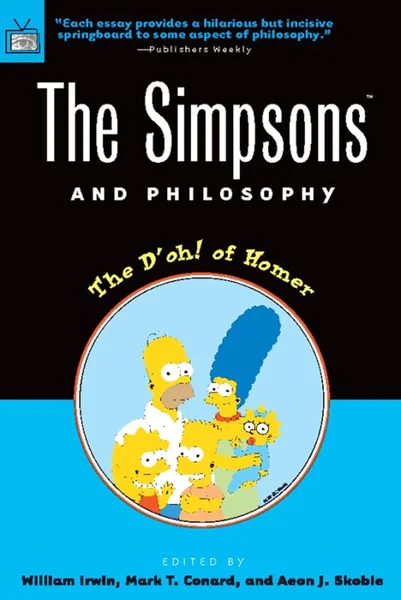
The Simpsons and Philosophy: The D'oh! of Homer by William Irwin, Mark T. Conard & Aeon J. Skoble Review: A Bestselling Pop-Culture Philosophy Primer
This non-fiction essay collection from Open Court uses The Simpsons as a lens for serious philosophical inquiry, drawing on eighteen academic contributors to explore ethics, religion, pleasure, and Western thought — and has sold over 203,000 copies to become the bestselling volume in Open Court's Popular Culture and Philosophy series.
LuvemBooks Verdict
Best for
Simpsons fans curious about Western philosophy — and philosophy students or instructors looking for an engaging, pop-culture-grounded entry point into thinkers from Aristotle to Nietzsche.
Worth it if
You want abstract philosophical ideas made concrete through characters and storylines you already know, or you're looking for a text that holds up in both a casual reading session and a university seminar room.
Skip if
You're seeking a single, sustained philosophical argument or analysis of the show's post-2001 seasons — the anthology format is deliberately episodic, and the cultural readings stop well before the series' later decades.
What readers & critics say
According to Wikipedia's entry on the book, it has been "extremely successful, both in sales and critically," selling over 203,000 copies to become the bestselling title in Open Court's Popular Culture and Philosophy series, and is used as a main text in university philosophy courses. Metapsychology.net notes that the collection does not aim at the specialist but instead uses The Simpsons as a means of illustrating traditional philosophical ideas, consistent with its stated purpose as an accessible, lighthearted introduction.
Sources: Wikipedia, Metapsychology.netAge & Reading Level
Recommended age
Adult
Reading level
Adult
who it suits
Skip if you want a single sustained philosophical argument rather than an episodic anthology of independent essays.
In This Review
- What Works & What Doesn't
- What the Book Actually Is
- The Scope and Structure of the Arguments
- Reception and Cultural Standing
- What the Collection Does Well
- Limitations and Who May Find It Frustrating
What Works & What Doesn't
What Works
- Bestselling volume in Open Court's Popular Culture and Philosophy series, with over 203,000 copies sold — a documented measure of its enduring reach
- Praised by Booklist for making erudite philosophical concepts accessible through the lens of The Simpsons
- Adopted as a core text in university philosophy courses, including at Siena Heights University, demonstrating genuine academic utility
- Covers a genuinely diverse range of philosophical territory — from Aristotelian ethics and Nietzschean readings to religion, pleasure, and political sexuality — across eighteen essays
- Serves dual audiences: accessible to devoted Simpsons fans and substantive enough for formal academic use
What Doesn't
- As an anthology with eighteen independent contributors, the collection is episodic by design and lacks the sustained single argument a monograph would provide
- The analysis is grounded in the show's pre-2001 run, meaning the philosophical readings do not extend to the series' later decades
What the Book Actually Is
The Scope and Structure of the Arguments
Reception and Cultural Standing
What the Collection Does Well
Limitations and Who May Find It Frustrating
Frequently Asked Questions
Sources & Further Reading
The key facts and claims in this review are grounded in the retrieved, verified sources listed below.
- Cited in this review
- 1
en.wikipedia.org
- 2
- Further reading
- 3
- 4
metapsychology.net
Related Reviews
Reviews of books we picked for readers who enjoyed The Simpsons and Philosophy.


Reader Comments
No comments yet
Be the first to share your thoughts!