
BOOKS

Published
Read Time
8 min read
Our Rating
4
Reviewed by
LuvemBooks
Share This Review
The Daily Stoic by Ryan Holiday & Stephen Hanselman - Review
Our Rating
4
An accessible introduction to Stoic philosophy that successfully translates ancient wisdom for modern readers, though the daily format sometimes oversimplifies complex ideas.
In This Review
- What Works & What Doesn't
- A Year-Long Journey Through Ancient Wisdom
- Holiday's Modernizing Approach
- The Three Pillars Made Accessible
- Practical Philosophy for Modern Stress
- Where It Falls Short
- Perfect for Philosophy Beginners
- Where to Buy
What Works & What Doesn't
What Works
- Makes ancient Stoic philosophy accessible without oversimplification
- Daily format creates sustainable engagement with philosophical ideas
- Excellent balance of historical context and practical application
- Strong progression that builds concepts throughout the year
- Practical exercises that translate philosophy into action
What Doesn't
- Compressed format sometimes oversimplifies complex philosophical concepts
- Some daily entries feel repetitive around core themes
- May be too elementary for readers seeking rigorous philosophical engagement
- Contemporary commentary occasionally prioritizes accessibility over depth
Is The Daily Stoic worth reading for beginners to philosophy? A reliable year-long gateway into Stoic practice — accessible without being shallow. Ryan Holiday and Stephen Hanselman have crafted something unique in the self-help space: a daily devotional that makes ancient Stoic wisdom accessible without dumbing it down. Unlike dense academic treatments of Marcus Aurelius or Seneca, this book breaks complex philosophical concepts into digestible daily portions.
The premise is straightforward yet ambitious. Each day offers a brief meditation drawn from the three pillars of Stoicism: Marcus Aurelius, Seneca, and Epictetus. Holiday and Hanselman don't just quote these ancient thinkers—they translate their insights into modern contexts. Where Meditations can feel abstract, The Daily Stoic connects ancient principles to contemporary challenges like workplace stress, relationship conflicts, and personal setbacks.
A Year-Long Journey Through Ancient Wisdom
The book's structure reflects careful thought about how people actually consume philosophy. Rather than demanding readers tackle Stoicism as a complete system, it parcels wisdom into 366 bite-sized entries. Each day begins with a quote from one of the Stoic masters, followed by Holiday and Hanselman's contemporary commentary that bridges the 2,000-year gap between ancient Rome and modern life.
January focuses on discipline of perception—how we interpret events around us. By March, readers encounter lessons on courage and persistence. The progression feels natural rather than forced, allowing concepts to build gradually. This isn't philosophy as academic exercise but as practical daily practice.
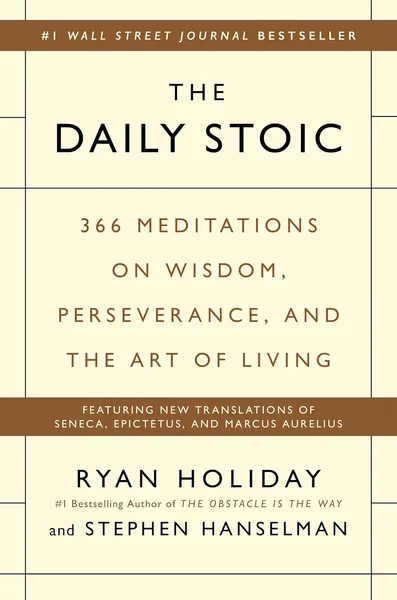
The visual presentation supports this accessibility. The cover's understated beige and brown design signals serious content without intimidation. Each daily entry spans just one page, making it easy to maintain the habit even during busy periods.
Holiday's Modernizing Approach
Holiday brings his background as a marketing strategist and popular philosophy writer to this collaboration. His previous works like The Obstacle Is the Way established him as someone who can make Stoicism relevant to contemporary audiences without sacrificing its essential insights. Here, working with Hanselman, he strikes a similar balance.
The writing style is conversational yet substantive. Where academic philosophy often buries practical insights under layers of scholarly apparatus, Holiday and Hanselman extract the actionable core. When Marcus Aurelius writes about accepting what we cannot control, they connect it to modern examples: traffic jams, difficult colleagues, unexpected setbacks.
This approach has both strengths and limitations. The accessible language opens Stoicism to readers who might never tackle primary sources. However, purists might argue that something gets lost in translation—the philosophical rigor that comes from wrestling directly with challenging ancient texts.
The Three Pillars Made Accessible
Marcus Aurelius, Seneca, and Epictetus each bring distinct perspectives to Stoic thought, and the authors do justice to these differences. Marcus Aurelius, the philosopher-emperor, offers insights on leadership and duty. Seneca, wealthy advisor to Nero, provides wisdom about managing fortune and relationships. Epictetus, born into slavery, teaches about true freedom and inner strength.
Rather than presenting these thinkers as a monolithic school, Holiday and Hanselman highlight how their different life circumstances shaped their philosophical insights. This contextual approach helps readers understand not just what the Stoics taught, but why their teachings emerged from specific historical moments.
The daily format allows readers to encounter each philosopher regularly throughout the year, developing familiarity with their distinct voices and concerns. By December, readers have absorbed not just Stoic principles but some sense of these remarkable historical figures as individuals.
Practical Philosophy for Modern Stress
The Daily Stoic excels at connecting ancient wisdom to contemporary challenges. Entries address workplace politics, social media anxiety, financial stress, and relationship difficulties—problems the ancient Stoics never faced directly but for which their principles remain surprisingly relevant.
The book's practical exercises range from simple reflection prompts to concrete behavioral changes. Some entries suggest specific practices: writing in a journal, practicing negative visualization, or taking time for self-examination. Others offer mental frameworks for approaching difficult situations with greater equanimity.
This practical orientation distinguishes The Daily Stoic from purely academic treatments of Stoicism. Readers aren't just learning about philosophy — they're being guided toward philosophical practice, one page at a time.
Where It Falls Short
The main weakness lies in the book's necessarily compressed format. Complex philosophical concepts that deserve extended treatment get reduced to single-page meditations. While this makes Stoicism more accessible, it sometimes oversimplifies rich philosophical traditions.
Some entries feel repetitive, particularly around core themes like accepting what we cannot control or focusing on our responses rather than external events. The daily format, while accessible, doesn't allow for the kind of sustained argumentation that might deepen understanding.
Additionally, readers seeking rigorous philosophical engagement might find the contemporary commentary too simplified. Holiday and Hanselman prioritize practical application over philosophical sophistication, which serves general readers well but might disappoint those wanting more intellectual challenge.
Perfect for Philosophy Beginners
Is The Daily Stoic worth reading? For newcomers to philosophy or those intimidated by primary Stoic texts, absolutely. The book provides an excellent entry point into Stoic thought without requiring extensive philosophical background. The daily format creates sustainable engagement with ideas that might otherwise remain abstract.
Readers familiar with Atomic Habits or other behavior-change books will appreciate the practical orientation. However, those seeking deep philosophical engagement might want to use this as a stepping stone toward primary sources rather than a destination.
The bottom line: The Daily Stoic succeeds at its primary goal of making ancient wisdom accessible to modern readers. It trades some philosophical depth for a format that people will actually stick with — and for most readers, that's the right trade. If you're curious about Stoicism but not ready to wrestle with Meditations or Seneca's letters directly, this is the place to start.
Where to Buy
If a year of daily Stoic practice sounds like exactly what you need, this is the book to start with — check the Amazon link in the sidebar for the current price.
Product Gallery
Frequently Asked Questions
Is The Daily Stoic: 366 Meditations on Wisdom, Perseverance, and the Art of Living worth reading for beginners to philosophy in 2026?
Based on my 4.0/5 rating, absolutely yes for philosophy newcomers. Ryan Holiday and Stephen Hanselman have created a unique daily devotional that makes ancient Stoic wisdom accessible without dumbing it down, making complex philosophical concepts digestible for beginners.
Who should read The Daily Stoic: 366 Meditations on Wisdom, Perseverance, and the Art of Living?
This book is perfect for beginners to philosophy, busy professionals seeking daily wisdom, and anyone interested in practical self-improvement. It's especially valuable for readers who want to explore Stoic principles without getting bogged down in dense academic treatments of Marcus Aurelius or Seneca.
How does The Daily Stoic compare to other philosophy books by Ryan Holiday?
The Daily Stoic stands out as Holiday's most accessible work, structured as a year-long journey rather than a traditional narrative. Unlike his other books that focus on specific Stoic concepts, this collaboration with Stephen Hanselman offers 366 bite-sized meditations that make ancient wisdom practical for modern living.
What is the main takeaway from The Daily Stoic: 366 Meditations on Wisdom, Perseverance, and the Art of Living?
The main takeaway is that Stoic philosophy can be seamlessly integrated into daily life through short, reflective practices. Each meditation teaches practical wisdom about perseverance and purposeful living, showing how ancient principles remain relevant for modern challenges and personal growth.
What specific Stoic concepts does The Daily Stoic: 366 Meditations on Wisdom, Perseverance, and the Art of Living cover?
The book covers core Stoic principles including wisdom, perseverance, and the art of living as outlined in the title. It draws from the teachings of Marcus Aurelius, Seneca, and other Stoic philosophers, presenting their concepts in digestible daily meditations that focus on practical application rather than theoretical study.
At $12.87, is The Daily Stoic: 366 Meditations on Wisdom, Perseverance, and the Art of Living worth buying?
Yes, at $12.87, it offers excellent value for a year's worth of philosophical guidance. With 366 meditations, you're essentially paying about 3 cents per daily lesson, making it an affordable investment in personal development and philosophical education.
Is The Daily Stoic: 366 Meditations suitable for people who aren't interested in philosophy?
Absolutely, this book works well for non-philosophy readers because Holiday and Hanselman focus on practical life applications rather than abstract theory. The daily format makes it easy to digest, and the wisdom translates directly to everyday challenges like stress management, decision-making, and personal resilience.
BEST DEAL
Related Reviews
Reviews of books we picked for readers who enjoyed The Daily Stoic.

Reader Comments
No comments yet
Be the first to share your thoughts!