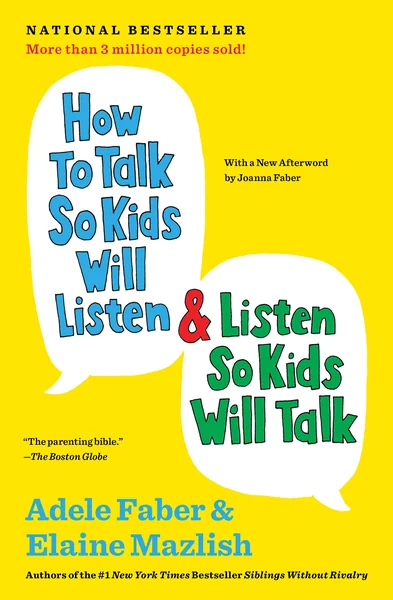
The Core Philosophy Behind Effective Communication
Faber and Mazlish build their approach on a counterintuitive premise: children cooperate more readily when they feel heard and understood, not when they feel controlled or dismissed. The book systematically dismantles common parenting assumptions—that children need constant correction, that expressing negative emotions is inherently problematic, or that compliance equals respect.
Their methodology emphasizes acknowledging children's feelings before addressing behavior, a technique that initially strikes many parents as permissive. However, the authors demonstrate through numerous examples how validation often defuses resistance more effectively than immediate problem-solving or punishment. This approach requires parents to separate their child's emotional experience from their behavioral expectations, a distinction that proves challenging but transformative.
The book's strength lies in recognizing that effective communication requires specific skills rather than good intentions. Many parents intuitively understand that yelling doesn't work long-term, but lack concrete alternatives when faced with defiance, whining, or sibling conflicts. The authors provide those alternatives through structured techniques that feel unnatural initially but become more intuitive with practice.
Practical Techniques That Challenge Traditional Responses
The book organizes its approach around specific communication strategies, each addressing common parent-child conflicts. Rather than abstract principles, readers encounter step-by-step methods for handling homework battles, morning routines, and bedtime resistance. The authors present these techniques through realistic scenarios that avoid the perfect-family syndrome plaguing many parenting resources.
One particularly valuable section focuses on helping children deal with their feelings without immediately rushing to fix or minimize their emotional experiences. Many parents discover they reflexively dismiss their child's frustrations with phrases like "don't worry about it" or "you're overreacting," responses that inadvertently communicate that the child's inner experience doesn't matter. The alternative approaches suggested here validate emotions while still maintaining behavioral expectations.
The problem-solving strategies prove especially practical for families dealing with recurring conflicts. Instead of parents imposing solutions, the methods encourage collaborative approaches where children participate in finding workable compromises. This shift from authoritarian decree to guided problem-solving requires patience but often generates more sustainable behavioral changes because children feel ownership over the solutions.
Real-World Application and Common Obstacles
The book's workshop-tested origins become apparent in its realistic portrayal of implementation challenges. Faber and Mazlish acknowledge that these techniques often feel artificial initially, particularly for parents accustomed to directive communication styles. They address the common concern that validating children's feelings might encourage manipulation or endless negotiations.
However, the authors' examples sometimes feel somewhat dated in their cultural references and family structures, reflecting the book's origins in a different parenting era. Contemporary families dealing with technology conflicts, busy dual-career households, or blended family dynamics might need to adapt the core principles to their specific circumstances. The fundamental techniques remain sound, but modern parents often face scheduling pressures and external influences that weren't as prominent when this approach was first developed.
The book also requires significant parental self-regulation, as many of the suggested responses run counter to instinctive reactions during stressful moments. Parents dealing with their own childhood experiences of authoritarian upbringing may find the approach initially uncomfortable, requiring them to develop new emotional habits alongside their children.
Limitations and Missing Contemporary Elements
While the communication principles remain valuable, certain aspects of the book show their age. The examples predominantly feature traditional family structures and don't extensively address single parenting, divorced families navigating different household rules, or the unique challenges of parenting neurodivergent children who may require modified communication approaches.
The book also predates widespread awareness of trauma-informed parenting practices and doesn't fully integrate current understanding of child development research. Some contemporary parenting experts would argue for even more emphasis on emotional regulation strategies and less focus on compliance-oriented outcomes, even when achieved through respectful means.
Additionally, the techniques require considerable parental emotional bandwidth, which can be challenging for parents dealing with their own stress, depression, or overwhelming life circumstances. The book assumes parents have the emotional resources to consistently implement these approaches, an assumption that doesn't always match modern parenting realities.
Enduring Value for Parent-Child Relationships
Despite these limitations, the book's core insight remains powerful: children respond better to communication that acknowledges their perspective while maintaining clear expectations. The specific techniques provide concrete alternatives to yelling, threatening, or bribing—approaches that most parents recognize as ineffective but continue using due to lack of better options.
The book's workshop format, with exercises and role-playing scenarios, helps parents practice new responses before encountering them in high-stress situations. This preparation proves invaluable when dealing with challenging behaviors, as parents can draw on practiced alternatives rather than defaulting to reactive responses.
For families committed to building stronger communication patterns, the investment required to implement these approaches typically generates significant improvements in household dynamics. Parents often report feeling more confident in their responses and experiencing fewer daily battles over routine activities.
The techniques prove particularly valuable for parents who want to maintain authority while building genuine connection with their children. Unlike permissive approaches that avoid conflict altogether, or authoritarian methods that prioritize compliance over relationship, this book offers strategies that honor both parental leadership and children's developmental needs for autonomy and respect.
You can find How to Talk So Kids Will Listen & Listen So Kids Will Talk at Amazon, your local bookstore, or through major online retailers.