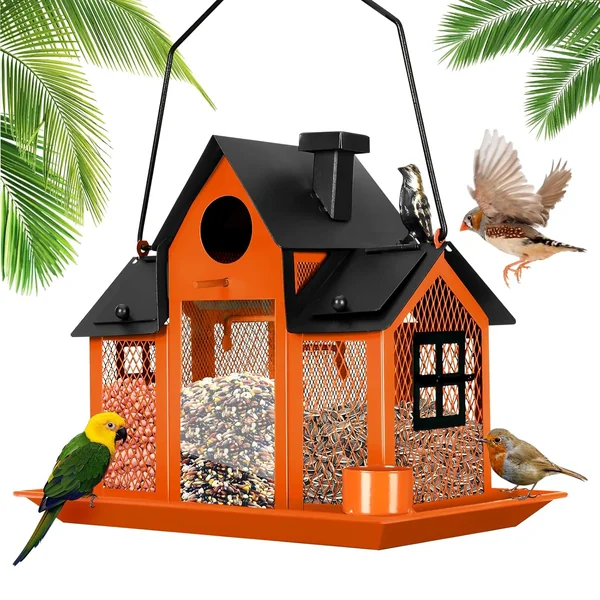
Looking for a bird feeder that works day and night? The Solar Bird Feeders House combines traditional feeding with solar-powered illumination, creating an attractive feeding station that draws birds while adding ambient lighting to your outdoor space.
This metal construction feeder stands out with its dual-purpose design - functioning as both a feeding station during the day and a gentle light source after dark. The orange powder-coated finish provides weather resistance while the bright color helps attract cardinals, goldfinches, and other colorful backyard visitors.
Large Capacity Design and Solar Features
The feeder offers generous seed capacity, reducing the frequency of refills compared to smaller tube feeders. The wide feeding platform accommodates multiple birds simultaneously, making it ideal for busy feeding areas or households that enjoy watching active bird communities.
The integrated solar panel charges during daylight hours, powering LED lights that create a warm glow around the feeding area. This feature extends viewing opportunities into evening hours while providing subtle landscape lighting. The solar system requires no electrical connections, making installation simple with just a hanging hook or pole mount.
The metal construction uses powder-coated steel that resists rust and weather damage. Drainage holes prevent water accumulation, though regular cleaning remains important for bird health and feeder longevity.
Best for Active Bird Watching Enthusiasts
This feeder excels for homeowners who want both bird attraction and decorative lighting. The solar illumination makes it particularly appealing for those who enjoy evening patio time or want to extend their bird watching into twilight hours.
The large capacity suits households that feed birds regularly and don't mind the commitment to consistent refilling and cleaning. Cardinals, in particular, seem drawn to the platform-style feeding area and the bright orange color.
Urban and suburban environments benefit most from this design, where the lighting feature adds safety and ambiance to patios, decks, or garden areas. The sturdy construction handles moderate weather conditions typical in most residential settings.
Limitations and Maintenance Considerations
Skip this feeder if you prefer low-maintenance bird feeding. The solar components require occasional cleaning to maintain optimal charging, and the LED lights will eventually need replacement after extended use.
The metal construction, while durable, conducts temperature more readily than plastic alternatives. In extreme climates, this can make the feeder uncomfortably hot or cold for birds during peak summer or winter conditions.
Squirrel protection isn't built into the design. Properties with persistent squirrel problems will need additional deterrents or baffles, as the platform design provides easy access for climbing mammals.
The orange color, while attractive to many bird species, may not blend with all landscape designs. Homeowners preferring subtle, natural-toned yard accessories might find it too prominent.
The combination of feeding and lighting functionality provides good value for households that would otherwise purchase separate bird feeders and landscape lighting. The initial investment pays off through reduced electricity costs and the convenience of wire-free installation.
Build quality justifies the price point for most users, though the solar components add complexity compared to traditional feeders. The metal construction should provide several seasons of reliable service with proper maintenance.
*Solar panel efficiency varies with geographic location and seasonal sunlight exposure - expect reduced lighting hours during winter months in northern climates.
Compared to basic tube feeders, this option costs more upfront but delivers additional functionality. Against premium bird feeding stations with multiple feeding ports, it offers competitive value with the bonus lighting feature.
For bird enthusiasts who appreciate evening ambiance and don't mind regular maintenance, this feeder delivers solid performance. However, those seeking simple, set-it-and-forget-it feeding solutions might prefer traditional designs without electronic components.