
BOOKS
Published
Read Time
6 min read
Our Rating
4
Hemingway's powerful anti-war novel combines masterful prose with unflinching examination of love and loss during WWI, though some elements feel dated to modern readers.
Reviewed by
LuvemBooks
Share This Review
A Farewell to Arms by Ernest Hemingway Review: WWI Classic
Our Rating
4
Hemingway's powerful anti-war novel combines masterful prose with unflinching examination of love and loss during WWI, though some elements feel dated to modern readers.
In This Review
- What Works & What Doesn't
- Love and War in Hemingway's Spare Prose
- Catherine Barkley and the American Lieutenant
- Themes of Disillusionment and Mortality
- Where the Novel Shows Its Age
- Essential Reading Despite Its Flaws
What Works & What Doesn't
What Works
- Hemingway's spare, powerful prose style at its finest
- Authentic portrayal of World War I's psychological impact
- Timeless themes of love, loss, and disillusionment
- Influential work that shaped modern American literature
- Strong anti-war message that remains relevant
What Doesn't
- Gender dynamics feel dated by contemporary standards
- Limited perspective focuses mainly on foreign observers
- Ending's fatalism may feel excessive to some readers
- Catherine's character development could be stronger
Love and War in Hemingway's Spare Prose
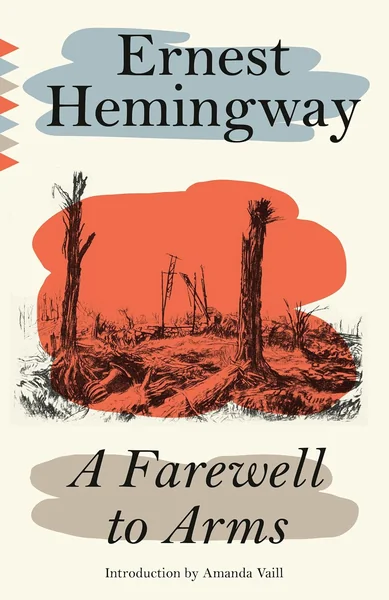
Hemingway's signature style reaches full maturity in this novel. His famous iceberg theory—showing only the surface while the deeper meaning lurks beneath—creates prose that feels deceptively simple yet carries enormous emotional weight. Short, declarative sentences build tension through what remains unsaid rather than what's explicitly stated.
The author's experience as an ambulance driver during World War I lends authenticity to every detail, from medical procedures to military bureaucracy. Hemingway's understated approach makes the horror more powerful than graphic descriptions could achieve. When tragedy strikes, the matter-of-fact tone amplifies rather than diminishes the emotional impact.
This restraint extends to dialogue, where characters rarely express their deepest feelings directly. Love declarations emerge through action rather than words, creating a realism that feels modern even nearly a century after publication.
Catherine Barkley and the American Lieutenant
The relationship between the unnamed American protagonist and Catherine Barkley drives the novel's emotional core. Catherine, a British nurse grieving her fiancé's death, enters the affair seeking escape from loss. The romance begins as mutual self-deception but evolves into genuine devotion as both characters confront mortality.
Catherine's character has sparked decades of literary debate. Some critics view her as underdeveloped, existing primarily to serve the male protagonist's journey. Others argue her apparent compliance masks deeper strength and agency. Her willingness to risk everything for love reflects the desperation of wartime, where normal social constraints collapse under existential threat.
The supporting cast includes fellow ambulance drivers and medical staff who represent different responses to war's brutality. These characters, while less developed than the central pair, provide perspective on how individuals cope with circumstances beyond their control.
Themes of Disillusionment and Mortality
A Farewell to Arms explores the death of innocence through multiple lenses. The protagonist begins with romantic notions about military service but gradually recognizes war's fundamental meaninglessness. This disillusionment mirrors the broader cultural shift following World War I, when traditional values seemed inadequate to explain the conflict's devastation.
The novel's treatment of love offers no easy comfort. Romance provides temporary refuge but cannot ultimately protect against fate's cruelty. Hemingway suggests that human connections, however deep, remain fragile in an indifferent universe. This pessimistic worldview reflects the author's broader philosophy about existence's tragic nature.
Religious faith receives skeptical treatment throughout the narrative. Characters question divine justice while confronting senseless suffering. The chaplain represents sincere belief but offers little practical comfort to those facing death. This spiritual uncertainty resonates with readers navigating their own crises of faith.
Where the Novel Shows Its Age
While A Farewell to Arms remains powerful, certain elements feel dated to contemporary readers. The gender dynamics reflect 1920s attitudes that modern audiences may find troubling. Catherine's devotion, while touching, can appear uncomfortably submissive by today's standards.
The novel's narrow focus on American and British characters largely ignores Italian perspectives on their own war. This limitation, common in literature of its era, reduces the conflict's complexity to foreign observers' experiences. More recent war literature has expanded beyond such constraints to include diverse voices.
Some readers find the ending's fatalism excessive. While Hemingway intended to show life's cruel randomness, the final tragedy can feel manipulative rather than inevitable. The author's famous belief that all stories end in death receives perhaps too literal an interpretation here.
Essential Reading Despite Its Flaws
A Farewell to Arms deserves its reputation as a classic, though readers should approach it with appropriate context. High school students can handle the mature themes with proper guidance, as the novel's anti-war message remains relevant. The book works best for readers interested in literary craftsmanship and historical perspective rather than uplifting narratives.
Teachers will find rich material for discussing both World War I's impact and modernist literary techniques. The novel pairs well with historical documents and other period literature to provide comprehensive understanding of the era's cultural transformation. Parents should note the book contains mature themes including death, sexuality, and existential despair.
For adult readers, A Farewell to Arms offers insight into how trauma shapes both individuals and societies. The novel's influence on subsequent American literature cannot be overstated, making it essential reading for understanding 20th-century fiction's development.