BOOKS
Published
Read Time
8 min read
Our Rating
3
Night Watch by true george is an atmospheric, deliberately ambiguous work with real thematic ambition and a distinctive voice, but uneven pacing and an underdeveloped central perspective limit its impact.
Best suited to patient readers comfortable with literary experimentation.
Reviewed by
LuvemBooks
Share This Review
Night Watch by true george Review: What Is This Book About?
Our Rating
3
Night Watch by true george is an atmospheric, deliberately ambiguous work with real thematic ambition and a distinctive voice, but uneven pacing and an underdeveloped central perspective limit its impact. Best suited to patient readers comfortable with literary experimentation.
In This Review
- What Works & What Doesn't
- The Atmosphere true george Creates
- Themes That Resist Easy Summary
- The Central Perspective and Its Limits
- Visual Identity and Presentation
- Where It Falls Short
- Who Should Read Night Watch
- Where to Buy
What Works & What Doesn't
What Works
- Distinctive atmospheric prose with a hypnotic rhythm that suits its subject matter
- Thematic ambition — the book takes on genuinely interesting conceptual territory around perception and consciousness
- Cover design and presentation align honestly with the book's actual tone and content
- Short form rewards focused, patient readers without demanding excessive time investment
What Doesn't
- Pacing is inconsistent, with sections that feel circular or static
- The central perspective lacks sufficient grounding to generate strong emotional investment
- Thematic ambiguity tips into incompleteness in places, leaving key ideas underdeveloped
- Very limited resolution — readers seeking payoff will feel unsatisfied
The Atmosphere true george Creates
A book that earns partial but not full credit for its ambitions — striking in atmosphere, uneven in execution. True george writes with an economy of language that feels deliberate. Sentences tend to be short and declarative, but they accumulate into something denser than their individual weight might suggest. The prose doesn't reach for poetry, but it has a rhythm — almost hypnotic in its repetition — that pulls the reader into the book's particular frequency.
What true george seems most interested in is the space between consciousness and unconsciousness, between what is seen and what is sensed. The "night watch" of the title functions as both a literal and a conceptual frame. It gestures toward vigilance, toward the act of holding watch over something that is not quite present in the daylight. Whether that something is a person, an idea, or something more unsettling is left deliberately open.
This is the kind of writing that works best when readers surrender to its logic rather than resist it. That is not a flaw, exactly, but it is a limitation in terms of audience. Readers who prefer explicit narrative anchors will struggle here.
Themes That Resist Easy Summary
The thematic territory true george explores is genuinely interesting, even if the execution is uneven. The book appears to engage with ideas around perception, surveillance, and the unreliability of ordinary experience. There is a recurring sense that the watcher at the book's center is observing more than participating — present but never quite acting.
This positioning has literary precedents. Fans of works that treat consciousness itself as a kind of dramatic subject — books in the tradition of authors like Paul Auster or certain strains of speculative literary fiction — may recognize the mode. True george is working in a space where what happens inside the mind matters more than external event.
That thematic ambition is admirable. It is also, at times, the book's greatest obstacle. When the interior focus is not anchored by sufficiently vivid or varied detail, sections can feel repetitive. The atmosphere risks becoming monotonous when it has no friction to push against.
The Central Perspective and Its Limits
Because the book offers limited information about its central figure — their history, their relationships, their stakes — the reader is asked to invest in a presence rather than a person. This is a significant ask. Some literary works earn that investment through prose so precise it compensates for narrative thinness. Night Watch earns it only partially.
There are moments where the central perspective opens into something genuinely strange and affecting. The sense of dislocation is rendered with care. But there are other passages where the ambiguity feels less like artistic restraint and more like a gap the book hasn't fully worked through. The line between deliberate mystery and incompleteness is not always clear, and true george doesn't always land on the right side of it.
This is, it should be said, a risk many ambitious writers take. The fact that the book swings for something unusual is worth acknowledging. Not every swing connects.
Visual Identity and Presentation
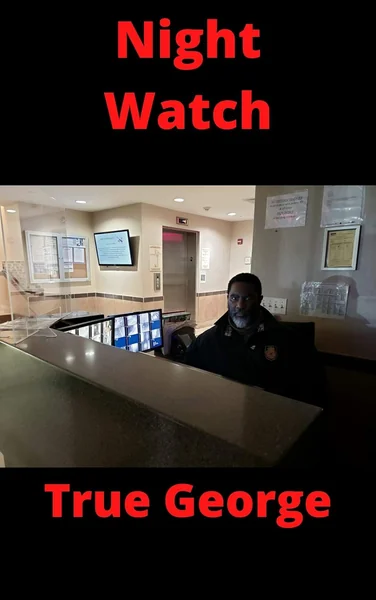
The book's cover design deserves a brief word, because it does meaningful work. The spare visual approach — foregrounding darkness and negative space — primes the reader correctly. It doesn't oversell the material or make promises the text can't keep. In an era when covers frequently mislead readers about a book's actual tone and content, that integrity matters.
It also functions as a kind of self-selection tool. The reader who picks up Night Watch based on this cover is likely the reader the book is actually written for. That alignment between packaging and content is something many publishers get wrong, and true george (or whoever made this decision) got it right.
Where It Falls Short
Honest assessment requires naming the book's weaknesses directly. The pacing is inconsistent. There are stretches where the book finds its groove and pulls the reader forward without effort. There are others where momentum stalls and the prose, stripped of narrative drive, begins to feel circular.
The book also offers very little in the way of resolution — thematic or otherwise. For readers who invest in the atmosphere, this may feel appropriate, even satisfying. For everyone else, it will register as an absence. True george prioritizes mood over meaning, and that choice costs readers who need a stronger sense of payoff.
Additionally, the short form — if this is indeed a brief work, as it appears — doesn't always allow enough space for the ideas to fully develop. The conceptual territory feels larger than the book that contains it.
Who Should Read Night Watch
Night Watch is a niche read, and there is nothing wrong with that. It suits readers with patience for atmospheric, interior-focused fiction that prioritizes experience over explanation — specifically, the kind drawn to dreamlike dislocation and the strangeness of perception as subject matter.
It is not the right entry point for readers new to experimental or ambiguous fiction. It is also unlikely to satisfy readers who want plot-driven work, clearly realized characters, or thematic resolution.
The bottom line: true george has produced something genuinely distinctive, if imperfect. The ambition exceeds the execution in places, but the core instinct — to write about watching, sensing, and the strangeness of consciousness — is worth taking seriously.
---
---
PROS:
- Distinctive atmospheric prose with a hypnotic rhythm that suits its subject matter
- Thematic ambition — the book takes on genuinely interesting conceptual territory around perception and consciousness
- Cover design and presentation align honestly with the book's actual tone and content
- Short form rewards focused, patient readers without demanding excessive time investment
CONS:
- Pacing is inconsistent, with sections that feel circular or static
- The central perspective lacks sufficient grounding to generate strong emotional investment
- Thematic ambiguity tips into incompleteness in places, leaving key ideas underdeveloped
- Very limited resolution — readers seeking payoff will feel unsatisfied
---
If you're a patient reader drawn to dreamlike, consciousness-driven fiction and can live without resolution, Night Watch earns a place on your shelf — check the Amazon link in the sidebar for the current price.
Where to Buy
If you're a patient reader drawn to dreamlike, consciousness-driven fiction and can live without resolution, Night Watch earns a place on your shelf — check the Amazon link in the sidebar for the current price.
Related Reviews
Reviews of books we picked for readers who enjoyed Night Watch.