Ishiguro crafts a subtle, emotionally complex tale through an AI narrator that explores consciousness and devotion with literary sophistication, though its philosophical depth may challenge younger readers despite age-appropriate content.
Ishiguro crafts a subtle, emotionally complex tale through an AI narrator that explores consciousness and devotion with literary sophistication, though its philosophical depth may challenge younger readers despite age-appropriate content.
Trending Now
Cultural Resurgence
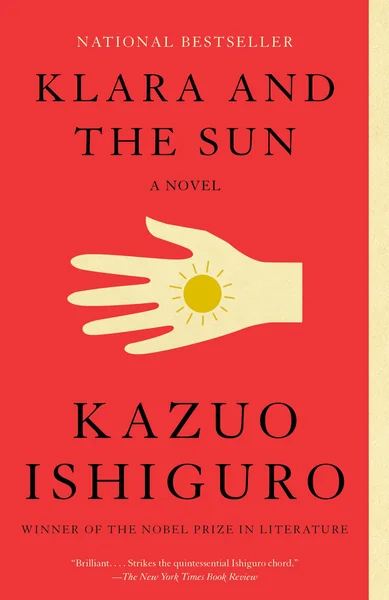
Klara and the Sun: A GMA Book Club Pick: A novel (Vintage International) by Kazuo Ishiguro is Trending
AI Conversation Everywhere Is Sending Readers Back to Ishiguro's Klara and the Sun
With AI tools now woven into daily life and debates about machine consciousness hitting the mainstream, readers are rediscovering this Ishiguro novel — one that asked those exact questions back in 2021 through a quietly heartbreaking AI narrator.
It's hard to scroll through a news feed in 2026 without bumping into a story about AI — what it feels, what it wants, whether it deserves rights, and what it means for the rest of us. That cultural obsession is pushing readers back toward *Klara and the Sun*, Kazuo Ishiguro's 2021 novel told entirely from the perspective of an Artificial Friend named Klara who observes, loves, and tries to understand the humans around her. It was ahead of its time when it came out. Right now, it feels almost like required reading.
Ishiguro won the Nobel Prize in Literature back in 2017, and his reputation keeps this book in circulation, but what's driving the renewed interest is less about awards and more about timing. The questions Klara wrestles with — Does she truly feel things? Is she just mimicking devotion? What does it mean to have a self? — are the same ones people are genuinely arguing about in real life today. That makes the novel land differently now than it did a few years ago.
If you haven't read it yet, this is a good moment to pick it up. It's not a thriller or a dystopia — it's quiet and emotionally precise, told with Ishiguro's characteristic restraint. Expect to think about it long after you finish.
Read more
Updated May 20, 2026
In This Review
Through Klara's Observant Eyes
Josie's Fragile World
Love, Loss, and Artificial Devotion
Where Subtlety Meets Accessibility Issues
A Literary AI Story Worth Considering
Where to Buy
A quietly devastating novel whose philosophical reach exceeds what its gentle surface suggests. Kazuo Ishiguro's Klara and the Sun presents a deceptively gentle surface that masks profound questions about consciousness, love, and what makes us human. While the novel features a teenage protagonist and an artificial friend, parents wondering is Klara and the Sun appropriate for young readers should understand this isn't a simple coming-of-age story. Ishiguro crafts a meditation on mortality and devotion through the eyes of an Artificial Friend, creating something more philosophically complex than Wonder but more accessible than his Booker Prize-winning Never Let Me Go.
Through Klara's Observant Eyes
The novel's greatest strength lies in Kazuo Ishiguro's masterful choice of narrator. Klara, an AF (Artificial Friend) designed to be a companion to children, observes the world with mechanical precision yet develops something resembling emotional attachment to Josie, the sick fourteen-year-old she's purchased to serve. Ishiguro's prose maintains Klara's artificial perspective while allowing genuine tenderness to emerge—a technical feat that lesser writers would fumble.
The author's restrained style, honed across decades of literary fiction, serves this science fiction story perfectly. Klara's voice carries the formal politeness of programmed responses while revealing an evolving consciousness that questions its own programming. Sentences unfold with careful deliberation, mirroring how an artificial mind might process complex human emotions it wasn't designed to fully comprehend.
Josie's Fragile World
The human characters surrounding Klara face their own struggles with authenticity and connection. Josie battles a mysterious illness that keeps her isolated from other children, while Josie's mother grapples with decisions that blur the lines between protection and manipulation. The supporting cast populates a near-future world where genetic enhancement divides society into the "lifted" and "unlifted."
Kazuo Ishiguro resists the temptation to fully explain his dystopian elements, focusing instead on their emotional consequences. The artificial friends serve families dealing with guilt, loss, and the lengths parents will go to preserve their children's happiness. These relationships drive the narrative more than any technological speculation.
Love, Loss, and Artificial Devotion
This novel speaks differently to different ages. On one level, it's about friendship between Josie and Klara. Dig deeper, and Ishiguro examines whether artificial beings can experience genuine love, whether consciousness requires biology, and how we define the soul. The story confronts mortality in ways that might prove heavy for sensitive younger readers, though it avoids graphic content.
Klara's growing awareness of her own limitations—both technical and existential—creates poignancy without sentimentality. The AF's relationship with the Sun, whom she views as a benevolent force, introduces spiritual elements that complicate simple readings of the text. These layers make the book rewarding for adult readers while potentially challenging for the middle-grade audience its marketing might suggest.
Where Subtlety Meets Accessibility Issues
Ishiguro's signature restraint serves the story well but may frustrate readers seeking clearer answers. The novel's central mysteries—Josie's exact condition, the full purpose of the AFs, the broader social implications of genetic lifting—remain deliberately obscured. This ambiguity works artistically but might leave younger readers confused rather than contemplative.
The pacing follows Klara's observational rhythm, building emotional weight gradually rather than through dramatic peaks. Some readers may find this meditative approach slow, particularly in the middle sections where Klara's daily routines dominate. The payoff comes through accumulated emotional investment rather than plot twists.
A Literary AI Story Worth Considering
Klara and the Sun succeeds as both literary fiction and thoughtful science fiction, though it prioritizes emotional truth over technological speculation. Readers approaching it as hard SF will find disappointment, but those seeking a nuanced exploration of what it means to love without certainty of being loved back will discover real rewards. The novel works best for mature young adults and adult readers who appreciate Kazuo Ishiguro's subtle approach to profound themes.
For families considering this book, the content remains appropriate—no explicit language, violence, or sexual content—but the emotional complexity and philosophical questions make it better suited to high school students than middle schoolers. The themes of illness, mortality, and sacrifice require emotional maturity to fully appreciate.
Where to Buy
If you're a patient reader drawn to questions of consciousness and care — or an adult who loved Never Let Me Go — Klara and the Sun earns a place on your shelf; the Amazon link in the sidebar has the current price.
Related Reviews
Reviews of books we picked for readers who enjoyed Klara and the Sun.