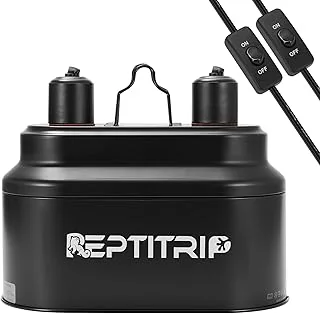
Should you trust this dual reptile light fixture for your bearded dragon? This dual-socket fixture promises convenient lighting control with individual switches and support for up to 160W bulbs in each socket. After examining the specifications and safety considerations, here's what reptile owners need to know.
Key Features and Specifications
The fixture houses two ceramic sockets capable of handling bulbs up to 160W each, giving you 320W total capacity. The individual switches let you control heat and UVB lighting independently – essential for proper reptile care. The black metal housing appears sturdy enough for most terrarium setups.
Each socket accommodates standard E27 bulbs, making it compatible with most reptile heating and UVB bulbs on the market. The fixture includes mounting hardware, though you'll need to supply your own bulbs. The 18-inch cord length works for most setups, but measure your terrarium beforehand to avoid extension cord complications.
Perfect for Multi-Species Setups
This fixture excels for reptile owners managing complex lighting needs. Bearded dragon keepers benefit from running a UVB bulb on one socket while controlling basking heat with the other switch. The independent controls mean you can maintain proper photoperiods without affecting heat gradients.
The 160W capacity per socket handles most standard reptile bulbs, including 100W ceramic heat emitters and 150W mercury vapor bulbs. For larger enclosures requiring high-wattage bulbs, this fixture provides adequate power without overloading circuits.
Installation and Safety Considerations
Mount the fixture securely using the included brackets –
loose fixtures pose serious burn risks if they fall into the terrarium. Position heat sources 12-18 inches from basking spots to prevent overheating.
According to reptile veterinarians↗, proper fixture positioning prevents thermal burns common with poorly mounted lighting.
The ceramic sockets handle high temperatures better than plastic alternatives, reducing fire risk with high-wattage heat bulbs. However, always verify your total wattage doesn't exceed your terrarium's electrical capacity or your home's circuit limits.
Where This Fixture Falls Short
Skip this if you need precise temperature control. Without built-in thermostats, you'll rely on separate controllers or timers for temperature regulation. Advanced keepers managing species with strict temperature requirements may prefer fixtures with integrated controls.
The basic switch design lacks dimming capabilities, limiting your ability to fine-tune lighting intensity. The mounting system works for screen-top terrariums but may require additional hardware for glass enclosures or custom setups.
Build quality concerns emerge with the switches – some users report failures after 6-12 months of regular use. The switch construction may not withstand daily cycling over extended periods.*
*Switch longevity varies based on usage frequency and electrical load.
Value Assessment
At its typical price point, this fixture offers reasonable value for basic dual-bulb setups. You're paying for convenience rather than premium features. Comparable single-bulb fixtures often cost 60-70% of this price, making the dual setup worthwhile if you need both heat and UVB.
However, investing in higher-end fixtures with thermostatic controls or dimming features provides better long-term value for serious reptile keepers. Budget-conscious owners get adequate functionality, while those prioritizing reliability might consider pricier alternatives.
For new reptile owners setting up their first terrarium, this fixture handles basic lighting needs without overwhelming complexity. The separate switches teach proper lighting management without requiring expensive automated systems.