A towering work of imaginative world-building and moral depth, The Fellowship of the Ring demands patience but rewards it with an unmatched sense of place, purpose, and wonder.
Challenging for younger or reluctant readers, but genuinely essential for anyone serious about fantasy literature.
The Fellowship of the Ring by J.R.R. Tolkien – Review
Our Rating
4.7
A towering work of imaginative world-building and moral depth, The Fellowship of the Ring demands patience but rewards it with an unmatched sense of place, purpose, and wonder. Challenging for younger or reluctant readers, but genuinely essential for anyone serious about fantasy literature.
Trending Now
Cultural Resurgence
The Fellowship of the Ring: Being the First Part of The Lord of the Rings by J.R.R. Tolkien is Trending
Lord of the Rings Is Having a Moment Again as Fantasy Dominates Reading Lists
Epic fantasy is everywhere right now, and readers are going back to where it all started. With a new generation discovering the genre through games, shows, and online communities, Tolkien's Fellowship of the Ring keeps pulling people in as the undisputed foundation of the whole tradition.
Fantasy as a genre has been on a serious run lately — big series, big streaming shows, big conversations online — and that wave keeps sending readers back to Tolkien. The Fellowship of the Ring is showing up on recommended reading lists, in book club discussions, and across reader communities as the book you have to read if you're going to call yourself a fantasy fan. It's not tied to one single news moment so much as a broader cultural mood where people want the real thing, the original source.
There's also a generational handoff happening. Readers who grew up with the Peter Jackson films are now in their twenties and thirties, picking up the actual books for the first time and discovering how different — and richer — the experience is. Meanwhile, younger readers are arriving through video games like the ongoing wave of open-world RPGs and tabletop communities where Tolkien's influence is everywhere. All of that curiosity funnels back to this book.
If you've been meaning to finally read it, now is actually a good time — there's a real community of first-timers and re-readers around it, so finding people to talk to about it isn't hard. Just know going in that it asks for your patience, especially early on. Those who stick with it tend to say it's one of the most rewarding reading experiences they've had.
Read more
Updated May 20, 2026
In This Review
What Works & What Doesn't
A World Built From the Ground Up
Frodo, Bilbo, and the Weight of the Ring
Hope as a Radical Act
Tolkien's Prose: Beautiful, Dense, and Occasionally Demanding
Content Considerations for Parents and Educators
A Classic That Earns Its Reputation — With Caveats
Where to Buy
What Works & What Doesn't
What Works
Unparalleled world-building that creates genuine depth and immersion
Morally serious themes — hope, sacrifice, power — explored without preaching
Memorable, emotionally complex characters with real flaws and growth
Foundational text for the entire fantasy genre — essential cultural literacy
Content is darker in tone but not gratuitous; appropriate for thoughtful young readers
What Doesn't
Deliberately slow pacing in the opening section challenges modern readers
Dense, formal prose style may alienate readers used to contemporary YA
Embedded songs and poems interrupt narrative momentum for some readers
Its genre influence is so widespread that some elements feel familiar rather than fresh
A World Built From the Ground Up
The rare classic that earns its reputation through specifics, not status. Middle-earth doesn't feel invented. It feels discovered. Tolkien spent decades constructing languages, histories, and mythologies before a single page of this story was published. That depth shows on every page. The Shire — the pastoral Hobbit homeland where the story begins — feels warm, specific, and lived-in. By contrast, when the narrative moves into darker territories like the ancient Dwarven halls of Moria or the Elven refuge of Rivendell, each location carries its own distinct weight and history.
This level of detail is both the book's greatest strength and its most significant challenge for younger readers. Tolkien doesn't rush. He lingers on songs, genealogies, and landscapes. Some readers find this richly rewarding. Others find it slow. Parents and teachers should know that the opening section in particular unfolds at a deliberate pace before the central quest truly takes hold.
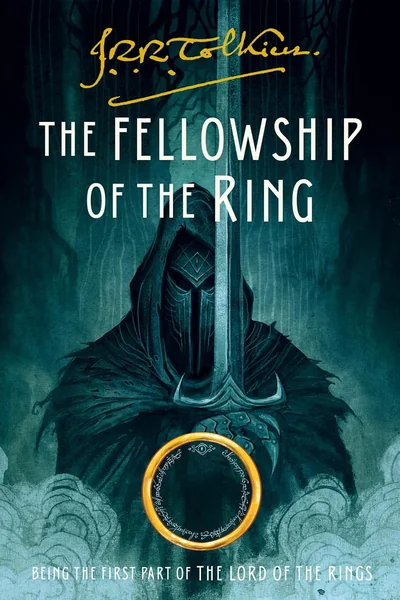
The cover design of most editions reflects this sense of mythological depth — landscapes and ancient lettering that signal immediately: this is not a light fantasy novel. It's a world unto itself.
Frodo, Bilbo, and the Weight of the Ring
The story centers on Frodo Baggins, a young Hobbit who inherits a seemingly ordinary ring from his beloved uncle Bilbo Baggins. Bilbo, who readers of The Hobbit will already know, has carried the Ring for decades — and its influence on him is one of the book's most quietly unsettling elements. What begins as a story about a quirky family heirloom becomes something far darker when Gandalf, the wizard who has guided both Hobbits, reveals the Ring's true nature.
Frodo is not a conventional hero. He doesn't seek adventure, possesses no special combat skills, and frequently doubts himself. That's precisely what makes him compelling. His ordinariness makes the stakes feel real. The burden he carries — literal and symbolic — grows heavier with every chapter.
The Fellowship itself assembles gradually, bringing together Men, an Elf, a Dwarf, and fellow Hobbits alongside Frodo. Characters like the loyal Samwise Gamgee and the complex, conflicted Boromir give the group genuine emotional texture. This isn't a team of flawless heroes. They argue, doubt, and ultimately fracture — and that human messiness is part of what gives the story lasting power.
Hope as a Radical Act
The verified subjects of this book include "hope" — and that's not accidental. At its core, The Fellowship of the Ring is about choosing to do what's right when the odds are overwhelming. Tolkien wrote this in the shadow of two World Wars and drew on his own experiences of loss and survival. That context matters.
The themes are accessible enough for teens to grasp, but layered enough to sustain adult analysis. Friendship, sacrifice, the corrupting nature of power, the relationship between the ordinary and the heroic — these ideas surface through plot and character, not lecture. Tolkien never preaches. He trusts the story to do the work.
The inclusion of Dwarves, Elves, and Men alongside Hobbits also gives the narrative a scope beyond any single culture or people. Middle-earth is a world of many histories in tension — which makes it surprisingly relevant for readers thinking about community, difference, and collective responsibility.
Tolkien's Prose: Beautiful, Dense, and Occasionally Demanding
Tolkien's writing style is unlike most modern fantasy. His sentences are formal, occasionally archaic, and deeply influenced by Norse and Anglo-Saxon literary traditions. There are embedded songs and poems throughout the narrative — some brief, some extended — that some readers treasure and others skim past. Both responses are valid.
The prose is never lazy, but it does require effort. Readers accustomed to the fast-paced, dialogue-heavy style of contemporary YA fiction may find the early sections challenging. The payoff comes in the atmospheric tension of scenes set in the wilderness, in the weight of Rivendell's council sequences, and in the harrowing descent into Moria, which delivers genuine dread without graphic gore.
This is also worth noting for parents: the violence in this book is real but not gratuitous. Characters face mortal danger. Some do not survive. The darkness is purposeful — it makes the hope more meaningful.
Content Considerations for Parents and Educators
For parents researching Fellowship of the Ring content warnings, here's a practical breakdown:
- Violence: Present and occasionally intense, but not graphic. Battle scenes are serious in tone rather than sensationalized.
- Dark themes: Death, loss, corruption, and the seductive nature of power are central. These are handled with moral seriousness, not exploitation.
- Language: None that would raise concern.
- Romance: Minimal in this volume.
- Age range: Most educators and librarians recommend this for ages 12 and up. Strong readers aged 10-11 may manage it with support. The reading level and density of prose make it better suited to teens than younger children.
For classroom use, this book pairs well with discussions of mythology, world-building, and the hero's journey. It's a natural bridge between children's fantasy and more complex literary fiction.
A Classic That Earns Its Reputation — With Caveats
The Fellowship of the Ring is genuinely one of the foundational texts of modern fantasy. Its influence on the genre is so pervasive that reading it now means encountering the source of countless tropes that have since become familiar. That can, paradoxically, make it feel less surprising to modern readers who have absorbed its descendants through film, games, and subsequent fiction.
The pacing in the first third is a genuine obstacle. Tolkien takes his time — some would say too much time — establishing the Shire and Hobbit culture before the plot accelerates. Readers who push through are typically rewarded. Readers who abandon it before the quest properly begins may simply have encountered the wrong book at the wrong moment.
This is not a flaw in the book so much as a matter of fit. The Fellowship of the Ring is ideal for patient, imaginative readers who want to be truly inside a world rather than simply moving through a plot. For those readers, it remains an extraordinary achievement.
---
---
PROS:
- Unparalleled world-building that creates genuine depth and immersion
- Morally serious themes — hope, sacrifice, power — explored without preaching
- Memorable, emotionally complex characters with real flaws and growth
- Foundational text for the entire fantasy genre — essential cultural literacy
- Content is darker in tone but not gratuitous; appropriate for thoughtful young readers
CONS:
- Deliberately slow pacing in the opening section challenges modern readers
- Dense, formal prose style may alienate readers used to contemporary YA
- Embedded songs and poems interrupt narrative momentum for some readers
- Its genre influence is so widespread that some elements feel familiar rather than fresh
---
WHERE TO BUY: If patient, imaginative readers — teens or adults — are what you're shopping for, The Fellowship of the Ring earns its place on the shelf. Check the Amazon link in the sidebar for the current price.
Where to Buy
Patient, imaginative readers who want to be truly inside a world — not just moving through a plot — will find this extraordinary. The sidebar's Amazon link has the live price.
Related Reviews
Reviews of books we picked for readers who enjoyed The Fellowship of the Ring.