BOOKS
Published

Read Time

3 min read

Reader rating

4.6

· 9,500 Amazon ratings
reader ratings, not a LuvemBooks score
Curated & edited by

LuvemBooks Editorial

How we create our reviews →
Share This Review

The Ballad of Falling Dragons by Sarah A. Parker Review: A Bolder, Darker Romantasy Sequel

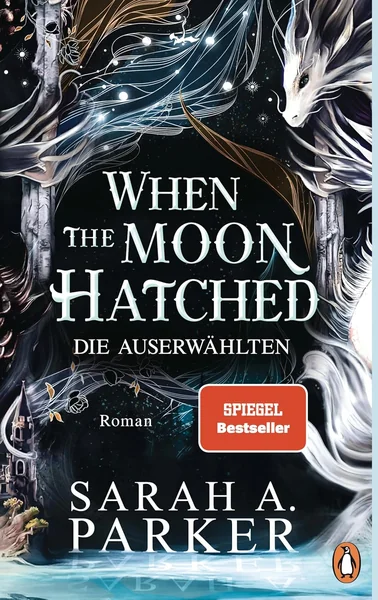
The Ballad of Falling Dragons is the second book in Sarah A. Parker's Moonfall series and the sequel to the New York Times bestselling When the Moon Hatched. Published by Avon in May 2026, it continues the story of assassin Raeve — revealed at the close of the first book to be the reincarnated Elluin Neván — and Kaan Vaegor, as they navigate a brewing civil war, a ruthless Scavenger King, and a love that has persisted across lifetimes. One source describes it as "bigger, louder, sadder, and more confident than its predecessor" — though also a touch messier in places. This review covers the book's content, structure, and published reception; it does not reflect hands-on reading or use.

LuvemBooks Verdict

Best for

Readers already invested in the Moonfall duology who want a darker, more expansive conclusion to Kaan and Raeve's story and are prepared for serious emotional and narrative stakes.

Worth it if

You finished When the Moon Hatched (ideally recently), love dark romantasy built on grief and longevity rather than easy resolution, and are willing to invest patience in a slow-burning opening quarter that pays off in genuine emotional devastation.

Skip if

You haven't read book one, prefer lighter romantic fantasy, or find reorientation-heavy sequel pacing a dealbreaker — this is explicitly a duology closer, not a standalone entry point.

Bookclb.com praises the novel for refusing to coast on the first book's goodwill, noting it "expands the map, deepens the lore, and forces its leads into corners where love and revenge can no longer share the same skin." Ursummary.com highlights that Parker "crafts a narrative that refuses to look away from the cost of trauma," while kyorinrinswritingdump.wordpress.com offers a more measured 3.5/5, noting the book didn't sustain the excitement of its predecessor for at least one reader who had eagerly anticipated it.

Sources: bookclb.com, ursummary.com, kyorinrinswritingdump.wordpress.com, bookishelf.com, theglossbookclub.com, thatlovepodcast.com
4.6from 9,500 Amazon ratings— reader ratings, not a LuvemBooks score
In This Review
  • What Works & What Doesn't
  • What the Book Is and What It Contains
  • The World and Its Ambitions
  • Strengths: Emotional Depth and Narrative Courage
  • Limitations: Pacing and the Demands of Continuity
  • Who This Is For

What Works & What Doesn't

What Works
  • Expands the Moonfall world's geography, lore, and political stakes in meaningful ways
  • Praised by one source for refusing to soften the emotional cost of trauma, taking its leads to genuinely difficult narrative places
  • Kaan and Raeve remain a compelling central relationship, described as the 'gravitational center' of the novel
  • A six-narrator audiobook cast brings the multi-POV structure to life across an unabridged 26-hour production
  • Sequel to the New York Times bestselling When the Moon Hatched, with strong genre chart performance at launch
What Doesn't
  • The opening quarter is slow, requiring patience as a large cast is reintroduced and political threads are reestablished
  • Described by one source as 'a touch messier in places' than its predecessor, suggesting uneven execution alongside its ambitions
  • Demands familiarity with book one — readers who haven't recently read When the Moon Hatched are advised to refresh before starting
  • Functions as a concluding duology entry rather than a standalone, limiting its accessibility to new readers
The Ballad of Falling Dragons is a worthy but demanding sequel that expands its world at real cost to its pacing.
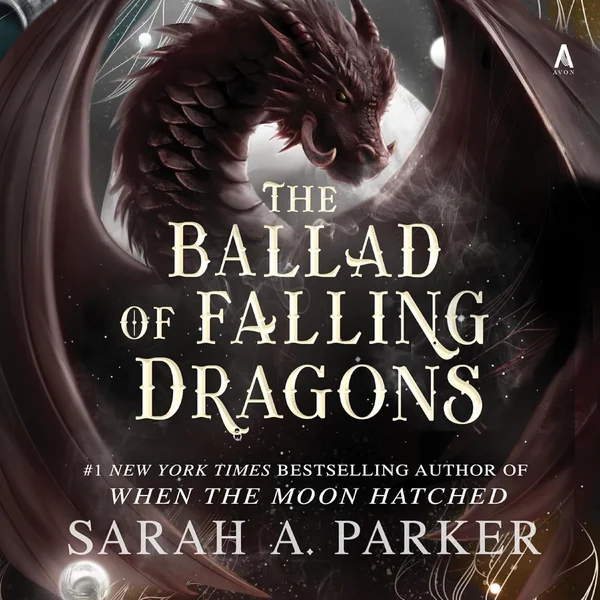
The Ballad of Falling Dragons: A Novel by Sarah A. Parker front cover

What the Book Is and What It Contains

The Ballad of Falling Dragons picks up directly from the shattering revelation that closes When the Moon Hatched: Raeve, a hardened assassin, is the reincarnation of Elluin Neván, a figure bound to Kaan Vaegor across what one source describes as "a hundred phases." The novel is the second and concluding entry in Parker's Moonfall duology — a world where dragons calcify into moons, and the political order is upheld by violence, lineage, and a layered magic system. The central conflict this time is a brewing civil war, and standing against the protagonists is a Scavenger King whom one summary source characterizes as someone who "sees people as toys to be broken." Into this already volatile landscape, the novel introduces family secrets that threaten Kaan and Raeve's fragile alliance, forcing both characters into positions where, as one source puts it, "love and revenge can no longer share the same skin."
writes its way into the spine of this novel in ways longtime readers will find quietly devastating

The World and Its Ambitions

Parker's Moonfall setting is among the more distinctive in contemporary romantasy. The cosmology — in which the remains of dragons become the moons that govern the sky — is original enough to give the series its identity, and The Ballad of Falling Dragons expands both the geographic and political scope of that world. According to one source, the novel "expands the map, deepens the lore," pushing beyond the boundaries established in the first book. The multi-POV structure, which the audiobook edition voices through a cast of six narrators including Sarah Mollo-Christensen, Fajer Al-Kaisi, Heather Firth, Caitlin Kelly, Corvin King, and Alexander Cendese, is designed to reflect the breadth of that world. Parker, who is described across sources as an international bestselling author known for "visceral, emotionally charged romantasy," uses this installment to make good on the larger promises of her debut.

Strengths: Emotional Depth and Narrative Courage

Where the novel draws consistent praise is in its willingness to follow its characters into genuinely painful territory. One source notes that Parker "crafts a narrative that refuses to look away from the cost of trauma," a quality that distinguishes The Ballad of Falling Dragons from sequels content to replay what worked the first time. The same source describes a "young, caged voice" that "writes its way into the spine of this novel in ways longtime readers will find quietly devastating" — pointing to a subplot or character thread that carries significant emotional weight for readers already invested in the series. Rather than coasting on the first book's goodwill, the novel is described as "braver than a standard sequel," taking its leads to more extreme and irresolvable places than When the Moon Hatched did.

Limitations: Pacing and the Demands of Continuity

The novel's ambition is also the source of its most consistent criticism. One source is direct: the opening quarter "asks for patience as Parker reintroduces a vast cast and resettles her political board." For a sequel of this scope — running to 26 hours in its unabridged audiobook form — that reorientation phase is a meaningful investment of a reader's time. The same source suggests that readers who finished book one some time ago may want to revisit it before beginning The Ballad of Falling Dragons, an implicit acknowledgment that the novel does not stand well on its own. The pacing unevenness is also described plainly: it is "a touch messier in places" than its predecessor, a notable qualifier given that the predecessor itself was a debut novel. These are real structural costs, not minor quibbles.

Who This Is For

The Ballad of Falling Dragons is designed for readers already committed to the Moonfall world. Its bestseller rankings — #3 in Dragons & Mythical Creatures Fantasy and #10 in Fantasy Romance at the time of publication — reflect a dedicated fanbase arriving from When the Moon Hatched rather than a book that functions as a natural entry point for new readers. Fans of dark romantasy with serious stakes, a well-developed magic system, and central relationships built on grief and longevity rather than easy resolution will find this installment rewarding. Those drawn primarily to lighter romantic fantasy, or readers who have not read the first book, are likely to find the emotional and narrative payoff incomplete. Parker's series, in both its strengths and its demands, is built for readers willing to stay for the full arc.

Sources & Further Reading

The key facts and claims in this review are grounded in the retrieved, verified sources listed below.

  1. Cited in this review
  2. 1
  3. 2
  4. Further reading
  5. 3

    Sarah A. Parker, Wikipedia

  6. 4
  7. 5
  8. 6
  9. 7
  10. 8
  11. 9
  12. 10
  13. 11