

7 min read
4.6
· 51,254 Amazon ratingsShare This Review
The Testaments by Margaret Atwood Review: A Propulsive, Prize-Winning Return to Gilead
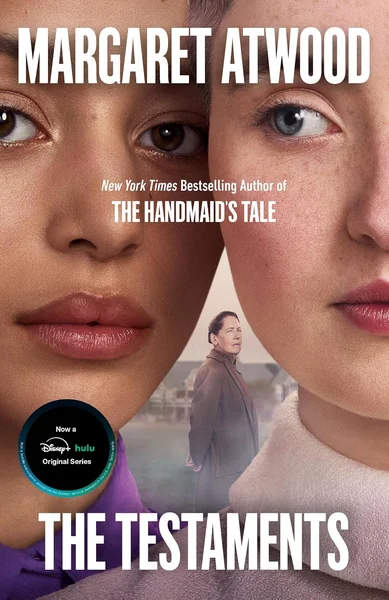
Margaret Atwood's The Testaments, the Booker Prize-winning sequel to The Handmaid's Tale, returns to the theocratic republic of Gilead fifteen years on, delivering a thriller-paced narrative through three distinct female voices — Aunt Lydia, Agnes Jemima, and Daisy — whose converging stories expose the regime's internal rot. Now a Hulu Original series, this media tie-in edition from Vintage keeps one of contemporary fiction's most celebrated sequels firmly in the spotlight.
LuvemBooks Verdict
Best for
Readers of politically charged literary fiction who want to return to Gilead with the pacing of a thriller — whether they're coming fresh, following the Hulu series, or finally ready to see what happened after The Handmaid's Tale.
Worth it if
You want a propulsive, plot-driven sequel that delivers narrative momentum, a surprisingly rich interiority for Aunt Lydia, and genuine hope alongside the dread — especially if you're watching the Hulu adaptation.
Skip if
You prize the elliptical, unsettling ambiguity of the 1985 original above all else — The Testaments trades that moral fog for clarity and catharsis, and that trade-off is real and deliberate.
What readers & critics say
Wikipedia's summary of the critical record notes that Sarah Crown in Literary Review praised The Testaments as "politically and emotionally satisfying," while observing it lacks, compared to The Handmaid's Tale, "the richness and the sense of jeopardy" — a consequence of Atwood's exchange of ambiguity for clarity. The Washington Independent Review of Books credited Atwood with "saber-sharp prose and clever wit" in developing the novel's carefully foreshadowed plot surprises, while Kirkus Reviews noted that what Atwood left unsaid in the first novel "generated more horror and outrage," implicitly framing the sequel's greater legibility as a meaningful tonal shift.
“What Atwood left unsaid in the first novel generated more horror and outrage.”
— Kirkus ReviewsIn This Review
- What Works & What Doesn't
- What the Novel Actually Is and Does
- Significance: Sequel, Prize, and Cultural Moment
- Strengths: Pace, Structure, and Surprise
- The Central Critique: Clarity Over Ambiguity
- Who This Book Is For
What Works & What Doesn't
What Works
- Winner of the Booker Prize and a #1 New York Times bestseller, marking rare simultaneous critical and commercial distinction
- Three-narrator structure — Aunt Lydia, Agnes Jemima, and Daisy — exposes Gilead's decay from multiple angles, including from within its own power structure
- Praised by The Daily critical coverage for 'propulsive, almost breathless narrative, stacked with twists and turns worthy of a Gothic novel'
- Designed to work as a standalone novel or as a sequel, broadening its accessible readership
- Directly coordinated with the Hulu television adaptation, making it a seamless companion to the ongoing series
What Doesn't
- Literary Review notes it trades the ambiguity and sense of jeopardy that defined The Handmaid's Tale for a clearer, more plot-driven resolution — a deliberate but consequential shift in register
- The thriller-paced momentum, while widely praised, tips into the melodramatic at points, as Michiko Kakutani observed in critical coverage
What the Novel Actually Is and Does
Significance: Sequel, Prize, and Cultural Moment
Strengths: Pace, Structure, and Surprise
The Central Critique: Clarity Over Ambiguity
Who This Book Is For
Frequently Asked Questions
Sources & Further Reading
The key facts and claims in this review are grounded in the retrieved, verified sources listed below.
- Cited in this review
- 1
thebookerprizes.com
- 2
- Further reading
- 3
en.wikipedia.org
- 4
kirkusreviews.com
- 5
- 6
- 7
- 8
- 9
penguinrandomhouse.ca
Reader Comments
No comments yet
Be the first to share your thoughts!