8 min read
4.7
· 4,111 Amazon ratingsFeatured In
Share This Review

Our review
1984
1984 by George Orwell Review: A Totalitarian Vision That Reshaped Culture
George Orwell's Nineteen Eighty-Four — published in 1949 and widely considered one of the most consequential novels of the 20th century — is a dystopian speculative fiction work whose central concepts have entered the cultural mainstream in a way achieved by very few books, making it essential reading for anyone interested in the literature of political power and surveillance.
LuvemBooks Verdict
Best for
Readers drawn to the intersection of speculative fiction and political philosophy — whether approaching 20th-century dystopian literature for the first time or returning to reassess Orwell's warnings against surveillance and totalitarianism in light of current events.
Worth it if
The sustained bleakness is understood upfront as a deliberate political argument rather than a narrative flaw — readers who accept Orwell's design intent will find the book functioning as the foundational benchmark of the entire dystopian genre.
Skip if
Readers seeking narrative warmth, consolation, or resolution should approach with caution — the novel's architecture is built around despair, and those already saturated by decades of secondhand Big Brother references may find the original text's impact blunted before they've read a page.
What readers & critics say
Britannica credits the novel with entering "mainstream culture in a way achieved by very few books," with concepts such as Big Brother and the Thought Police remaining "instantly recognized and understood, often as bywords for modern social and political abuses." Iowa State Daily describes it as "horrifyingly relevant," while reader and blogger voices consistently praise Orwell's world-building even as some note the novel's overt political agenda comes at the expense of conventional storytelling.
Sources: Britannica, Iowa State Daily, Page Chewing, Bookaholic DreamerAsk LuvemBooks
Was this helpful?
- Is it worth reading?
- For readers interested in political fiction, speculative literature, journalism, or political philosophy, Nineteen Eighty-Four remains essential — Britannica credits it with making 'a deep impression on readers' upon publication, and its concepts continue to function as bywords for modern social and political abuses well into the 21st century. Orwell's direct experience with colonial policing in the Indian Imperial Police and combat in the Spanish Civil War gives the novel's warnings a grounding in observed reality that elevates it above abstract dystopian fantasy. The key caveat LuvemBooks would flag is that decades of cultural saturation mean many of its most striking concepts — Big Brother, Newspeak, the Thought Police — may arrive pre-familiar to first-time readers, which can alter the experience of discovery the original text was designed to produce.
- Similar books
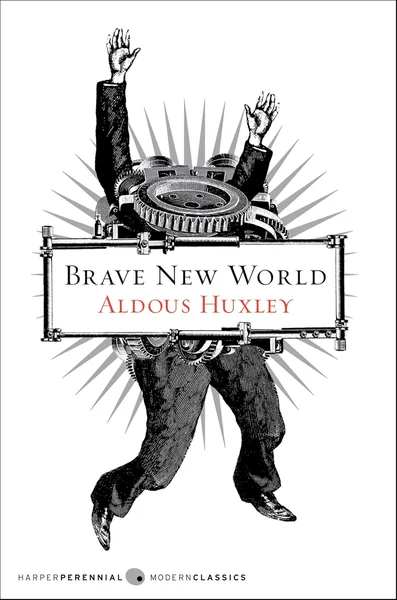
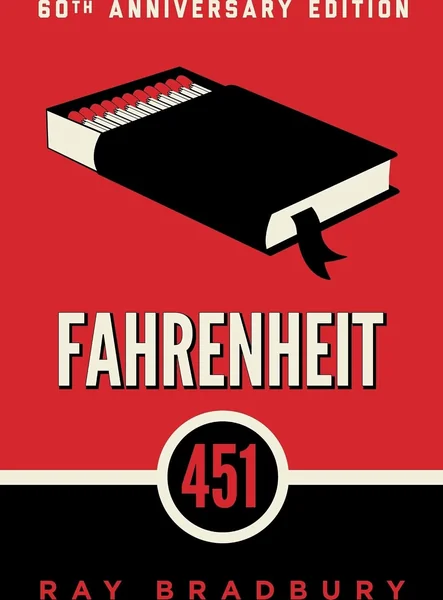
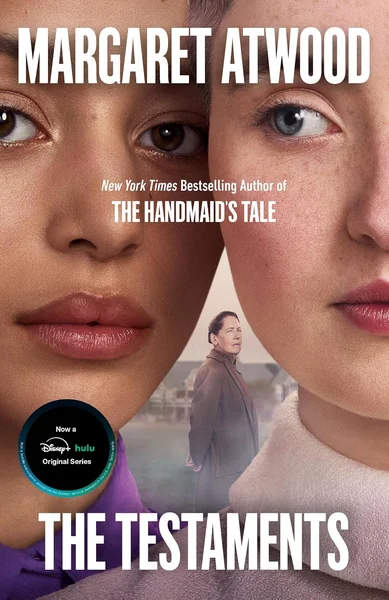
- Readers drawn to Nineteen Eighty-Four's intersection of speculative fiction and political philosophy will find natural companions in Aldous Huxley's Brave New World, which presents a contrasting but equally chilling vision of social control through pleasure rather than fear. Yevgeny Zamyatin's We is widely recognised as a direct predecessor to Orwell's novel and deserves credit as an early foundational dystopian text. Margaret Atwood's The Handmaid's Tale and Ray Bradbury's Fahrenheit 451 extend the tradition of using speculative fiction as a vehicle for political warning, while Orwell's own Animal Farm offers a shorter allegorical companion piece to the themes of totalitarianism and ideological betrayal.
- Who should read this?
- Nineteen Eighty-Four is genuinely cross-disciplinary in its appeal — the review identifies it as simultaneously relevant to readers of speculative fiction, political philosophy, history, and journalism. Moraine Valley Community College's library programme cites the novel as a lens for examining fascism, class inequality, and political control, reflecting its continued traction in academic and civic contexts. It is the benchmark text for the canon of 20th-century political fiction, making it the natural starting point for readers new to dystopian literature as well as those returning to reassess it against current events.
- What makes the political warnings so powerful?
- The review identifies two interlocking sources of power in Nineteen Eighty-Four's political warnings. First, Orwell's biography: his service in the Indian Imperial Police, which enforced British colonial rule, and his participation in the Spanish Civil War gave him direct exposure to the machinery of state power — experiences scholars widely recognise as foundational to the novel's authority. Second, the precision of construction: the novel introduced a vocabulary — doublethink, Newspeak, Room 101, the Two Minutes Hate — that persists because these terms name something real that had previously lacked a name, which is itself evidence of how accurately Orwell anatomised the mechanisms of totalitarian control.
- Why is 1984 considered a landmark?
- Britannica credits Nineteen Eighty-Four with entering mainstream culture 'in a way achieved by very few books,' with its concepts remaining 'instantly recognized and understood, often as bywords for modern social and political abuses' well into the 21st century. Published in 1949 as Orwell's ninth and final completed book, it established the benchmark for all subsequent dystopian fiction and continues to find new readers because the conditions it anatomises — surveillance states, enforced orthodoxy, the manipulation of language and history — remain live political concerns. The fact that the edition under review is one of many currently in print, more than seventy-five years after first publication, is itself testimony to the text's uninterrupted commercial and cultural life.
- Tell me about the adaptation
- The most notable screen adaptation of Nineteen Eighty-Four is the 1984 British film directed by Michael Radford, starring John Hurt as Winston Smith and Richard Burton — in his final film role — as O'Brien. The film is widely regarded as a faithful and atmospherically powerful rendering of Orwell's novel, released in the same year as the book's titular date. An earlier 1956 British television film also exists, and the novel's concepts have been referenced and adapted across countless works of film, television, and theatre since publication.
Summarize this book
Follow up
Synthesized from verified book data & published reviews · How we review
What would you like to know about 1984?
Answers come from our editorial notes on this book. If we haven't covered something, we'll say so.
Readers often ask
Our Review
What the Novel Is and What It Contains
Cultural Significance and Enduring Impact
Orwell's Craft and the Novel's Formal Strengths
Genuine Limitations and Readers Who May Struggle
Who This Novel Is For and Why It Still Matters
Sources & Further Reading
The key facts and claims in this review are grounded in the retrieved, verified sources listed below.
- Cited in this review
- 1
- 2
orwellfoundation.com
- 3
en.wikipedia.org
- 4
bibliolifestyle.com
- Further reading
- 5
dn790002.ca.archive.org
- 6
lib.morainevalley.edu
- 7
- 8
historyhit.com
- 9
- 10
scatteredbooks.com
- 11
- 12
- 13
atboundarysedge.com
- 14
iowastatedaily.com
- 15
pagechewing.com
- 16
commonsensemedia.org
Age & Reading Level
Recommended age
Ages 16+
Reading level
Adult
3 content notes · who it suits
Content to know about
Best for: Adults / mature 16+ — the novel's depictions of psychological torture, state brutality, and the systematic destruction of individual autonomy are intense and deliberately unrelieved.
Skip if you're looking for a hopeful ending or any form of narrative consolation.
Reader reviews
Be one of the first readers to answer.
Read it? Was it right for you?
Books like 1984
Curated picks for readers who enjoyed 1984, with our reasoning for each match.
More by George Orwell


If you liked 1984