
7 min read
4.6
· 51,254 Amazon ratingsShare This Review
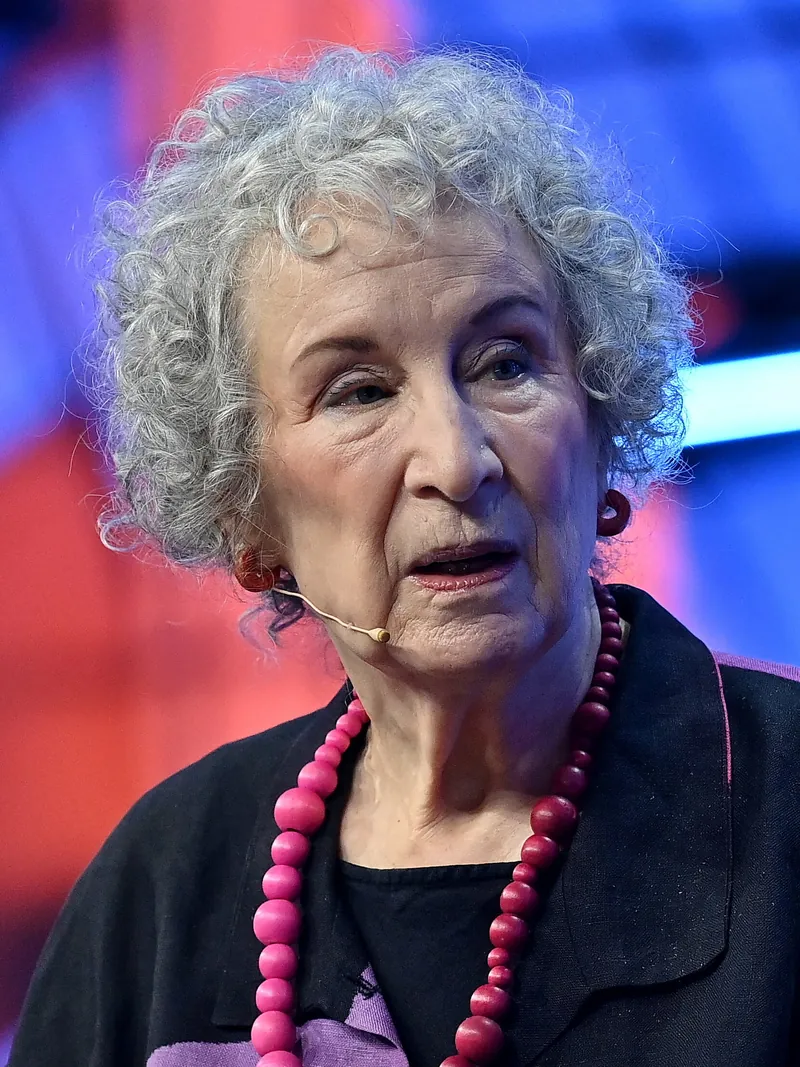
The Testaments by Margaret Atwood Review: A Propulsive, Prize-Winning Return to Gilead
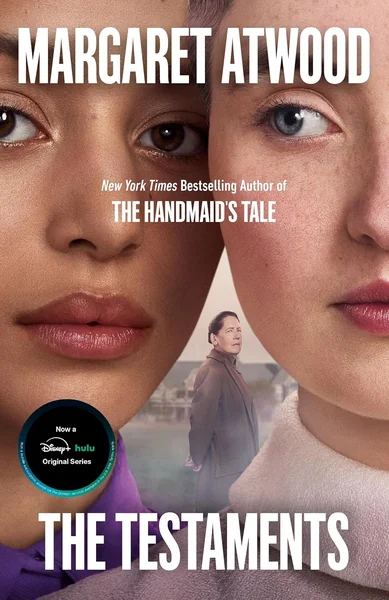
Margaret Atwood's The Testaments, the Booker Prize-winning sequel to The Handmaid's Tale, returns to the theocratic republic of Gilead fifteen years on, delivering a thriller-paced narrative through three distinct female voices — Aunt Lydia, Agnes Jemima, and Daisy — whose converging stories expose the regime's internal rot. Now a Hulu Original series, this media tie-in edition from Vintage keeps one of contemporary fiction's most celebrated sequels firmly in the spotlight.
LuvemBooks Verdict
Best for
Readers of politically charged literary fiction who want to return to Gilead with the pacing of a thriller — whether they're coming fresh, following the Hulu series, or finally ready to see what happened after The Handmaid's Tale.
Worth it if
You want a propulsive, plot-driven sequel that delivers narrative momentum, a surprisingly rich interiority for Aunt Lydia, and genuine hope alongside the dread — especially if you're watching the Hulu adaptation.
Skip if
You prize the elliptical, unsettling ambiguity of the 1985 original above all else — The Testaments trades that moral fog for clarity and catharsis, and that trade-off is real and deliberate.
What readers & critics say
Wikipedia's summary of the critical record notes that Sarah Crown in Literary Review praised The Testaments as "politically and emotionally satisfying," while observing it lacks, compared to The Handmaid's Tale, "the richness and the sense of jeopardy" — a consequence of Atwood's exchange of ambiguity for clarity. The Washington Independent Review of Books credited Atwood with "saber-sharp prose and clever wit" in developing the novel's carefully foreshadowed plot surprises, while Kirkus Reviews noted that what Atwood left unsaid in the first novel "generated more horror and outrage," implicitly framing the sequel's greater legibility as a meaningful tonal shift.
“What Atwood left unsaid in the first novel generated more horror and outrage.”
— Kirkus ReviewsAsk LuvemBooks
Was this helpful?
- Is it worth reading?
- The Testaments delivers on both the literary and thriller registers it sets out to occupy: the Booker Prize and global number-one bestseller status reflect a rare alignment of critical and commercial recognition. Serena Davies described it as 'a blockbuster of propulsive, almost breathless narrative, stacked with twists and turns worthy of a Gothic novel,' and USA Today credited its power to 'Atwood's capacity to surprise, even writing in a universe we think we know so well.' The key caveat, as noted in the Literary Review, is that it trades the richness and unresolved jeopardy of the original for something more legible and plot-driven — a meaningful tonal shift, though not a diminishment of the sequel's achievement.
- Similar books
- Readers drawn to The Testaments for its politically charged dystopia and female-centred narratives might also explore Kazuo Ishiguro's Never Let Me Go, which similarly uses restrained, documentary-style narration to expose an oppressive social order. Naomi Alderman's The Power offers a comparable inversion of patriarchal structures with thriller pacing. For another multi-voice narrative set inside a collapsing authoritarian world, Viet Thanh Nguyen's The Sympathizer rewards the same reader. Those who want to return to the source should, of course, read or reread The Handmaid's Tale itself.
- Who should read this?
- Readers who want politically charged literary fiction with the momentum of a thriller will find The Testaments precisely calibrated for them. It is an especially strong fit for fans of the Hulu adaptation looking to deepen their engagement with Gilead, and for readers of The Handmaid's Tale who have been waiting for more time with Aunt Lydia and the world Atwood built. Those who prize the original novel's elliptical dread and refusal to resolve should approach with tempered expectations — the sequel is a different, more kinetic kind of story, and deliberately so.
- Tell me about the adaptation
- The Hulu Original series adaptation of The Testaments stars Ann Dowd reprising her acclaimed role as Aunt Lydia, alongside Chase Infiniti as Agnes and Lucy Halliday as Daisy — the three central voices of the novel. Atwood coordinated the writing of the novel directly with the television production, communicating to producers where her sequel was taking key characters, a degree of cross-medium collaboration that makes the two properties unusually intertwined. This Vintage edition is a media tie-in timed to the series, making it a natural companion read for viewers.
- What are the main themes?
- At its core, The Testaments examines how authoritarian systems sustain themselves through complicity — and how that same complicity contains the seeds of their undoing. Aunt Lydia's first-person narrative is the novel's primary vehicle for this: it gives readers access to the internal logic of a woman who enforces Gilead's brutality while simultaneously working against it. The novel also engages with questions of female agency under patriarchy, the transmission of testimony across generations, and — more explicitly than its predecessor — the possibility of political hope and resistance.
- Is this a good book club pick?
- The Testaments is a strong book club choice, particularly for groups who have already read The Handmaid's Tale and want to debate the merits of the sequel's tonal shift. The three-narrator structure — Aunt Lydia, Agnes Jemima, and Daisy — gives groups distinct character perspectives to compare, while the central question of whether the novel's cathartic resolution enriches or diminishes Atwood's world offers a genuinely contested critical conversation. The Literary Review's observation that it is 'politically and emotionally satisfying' but lacks the original's 'richness and sense of jeopardy' is itself a productive prompt.
Summarize this book
Follow up
Synthesized from verified book data & published reviews · How we review
Press Enter to ask. Answers come from our editorial Q&A — start typing to see related questions.
Age & Reading Level
Recommended age
Ages 16+
Reading level
Adult
4 content notes · who it suits
Content to know about
Best for: Adults / mature 16+ — themes of authoritarian violence, sexual coercion, and institutional complicity require a reader equipped to engage with morally complex, politically dark material.
Skip if you are seeking the unresolved moral ambiguity and elliptical dread of The Handmaid's Tale — The Testaments moves toward cathartic resolution and thriller momentum instead.
Our Review
What the Novel Actually Is and Does
Significance: Sequel, Prize, and Cultural Moment
Strengths: Pace, Structure, and Surprise
The Central Critique: Clarity Over Ambiguity
Who This Book Is For
Sources & Further Reading
The key facts and claims in this review are grounded in the retrieved, verified sources listed below.
- Cited in this review
- 1
thebookerprizes.com
- 2
- Further reading
- 3
en.wikipedia.org
- 4
kirkusreviews.com
- 5
- 6
- 7
- 8
- 9
penguinrandomhouse.ca
Related reading
Adjacent titles worth exploring. We haven't reviewed these yet, so they link out to Amazon.